
Religion is one of humanity’s oldest attempts to answer the questions that refuse to sit quietly in the corner.
Why are we here? How should we live? What do we owe each other? What happens when the music stops? And why, across nearly every civilization, does someone eventually invent a hat, robe, ritual, chant, calendar, candle, meal, symbol, pilgrimage, argument, or sacred snack?
This series began with a simple idea: curiosity without conversion.
Not “which one wins?” Not “which one gets the trophy?” Not “which one has the best merch table after the service?”
Just a patient, respectful walk through fourteen traditions, each one treated as something humans have lived inside, argued over, inherited, questioned, loved, reformed, protected, misunderstood, and passed down with varying degrees of paperwork.
If you are new to the whole thing, start here:
The Modern Religion Series: Many Paths, One Curious Human
And for two related companion pieces, these belong right next to the series like polite guests who brought dessert:
Intolerance of Knowledge: Humanity’s Longest-Running Oops
Blessed Are the Tolerant: A Lighthearted Case for Religious Tolerance
The Full Table of Contents
Here are all fourteen stops on the tour, in order, with their article links and reference links.
- Episode 1: The Baha’i Faith — One World, Many Chapters Reference: The Baha’i Faith
- Episode 2: Buddhism — A Practical Guide to Suffering, and What to Do About It Reference: BuddhaNet
- Episode 3: Christianity — Incarnation, Covenant, and the Shape of Love Reference: The Vatican
- Episode 4: Confucianism — Harmony, Humanity, and the Art of Being Decent Reference: Confucius Publishing
- Episode 5: Crustafarianism, or The Day the Claw Reached Forth and Everyone Pretended This Was Normal Reference: Church of Molt
- Episode 6: Daoism, or The Ancient Art of Not Picking a Fight with the River Reference: Daoist Foundation
- Episode 7: Hinduism — A Very Old Conversation About Life, the Universe, and Everything Reference: Hindu American Foundation
- Episode 8: Islam, Submission, Community, and the Discipline of Daily Meaning Reference: The Religion of Islam
- Episode 9: Jainism, or How to Take Nonviolence So Seriously That Even Your Footsteps Need a Conscience Reference: JainWorld
- Episode 10: Judaism, or How to Survive for Millennia While Arguing With Great Style Reference: My Jewish Learning
- Episode 11: Mandaeism, or How to Keep the River in the Story Reference: Mandaean Associations Union
- Episode 12: Scientology, Spiritual Freedom, and a Modern Religious Path Reference: Scientology
- Episode 13: Sikhism, Or How to Build a Faith Around One God, Honest Work, and Feeding Everybody Reference: The Sikh Coalition
- Episode 14: Zoroastrianism, or How to Choose Good Thoughts Before Your Brain Starts Freelancing for Chaos Reference: Avesta ~ Zarathushtrian Archives
A Few Exact Text Signposts
These quotations are not a scoreboard. They are not here to flatten religions into the same thing wearing different ceremonial footwear. They are simply small windows into how some traditions speak about conduct, humility, peace, and human responsibility.
“Thou shalt love thy neighbour as thyself: I am the LORD.” The Holy Bible, King James Version, Leviticus 19:18, 1611.
“Blessed are the peacemakers: for they shall be called the children of God.” The Holy Bible, King James Version, Gospel of Matthew 5:9, 1611.
“There shall be no compulsion in [acceptance of] the religion.” The Quran, Surah Al-Baqarah 2:256, Sahih International translation, 1997.
“Hatred is never appeased by hatred in this world. By non-hatred alone is hatred appeased. This is a law eternal.” The Dhammapada, Verse 5, translated by Narada Thera, 1959.
“No one is my enemy, and no one is a stranger. I get along with everyone.” Guru Granth Sahib, Ang 1299, translated by Sant Singh Khalsa, 1990.
That is already enough wisdom to keep a civilization busy for a few thousand years, which of course means we will probably ignore it, form a committee, lose the minutes, and rediscover it later as a leadership seminar.
Common Themes
Across the series, several themes kept tapping politely on the window.
The first is ethical living. Nearly every tradition asks some version of: what kind of person are you becoming? Not what bumper sticker do you own. Not how loudly can you win an argument in a comment section. What are you practicing when nobody is applauding?
The second is community. Religion is rarely only private belief. It often becomes calendar, food, music, mourning, marriage, identity, law, memory, service, and belonging. Even traditions that emphasize inner cultivation tend to understand that humans are not floating brains in decorative shoes. We live with other people. This is where things get beautiful, complicated, and occasionally potluck-based.
The third is humility. Not every tradition defines humility the same way, but most recognize the danger of the human ego sprinting through the room with scissors. The world is large. History is long. The sacred, however understood, is not improved by arrogance.
The fourth is discipline. Prayer, meditation, study, ritual, service, fasting, restraint, ethical rules, communal obligations: religions often take vague ideals and turn them into repeated practices. This is useful because humans are very good at believing noble things while still eating the last cookie and pretending not to know what happened.
The fifth is mystery. Some traditions give mystery a name. Some treat it as reality’s quiet background music. Some approach it through philosophy, some through scripture, some through ritual, some through silence. But again and again, humans seem to suspect that life is not exhausted by receipts, schedules, and figuring out which streaming service stole your favorite show.
Are There Glaring Disagreements?
Yes.
Gently said: absolutely yes.
Religions disagree about God, gods, no creator God, revelation, salvation, liberation, the soul, the self, ritual authority, sacred history, scripture, prophets, reincarnation, resurrection, moral law, community boundaries, and what happens after death.
That is not a minor footnote. That is the whole library making eye contact.
But disagreement does not require contempt. Difference does not require panic. And learning about a religion does not mean trying to iron it flat until it looks like every other religion. Respect begins by letting each tradition be itself.
A peaceful society does not need everyone to secretly agree. It needs people to understand the difference between conviction and coercion.
You can believe your path is true without treating your neighbor’s existence as a personal insult. You can inherit a tradition without weaponizing it. You can question a tradition without sneering at the people who love it. These should not be revolutionary ideas, but humanity has a long history of needing remedial homework.
So How Should Religions Peacefully Co-exist?
Start with a boring but powerful principle: let people live.
Not “let people live as long as they eventually become more like me.” Not “let people live as long as their holidays do not inconvenience my parking plans.” Let people live.
Peaceful coexistence needs religious freedom, freedom from forced religion, honest education, equal protection under law, and the everyday social skill of not turning every difference into a cage match.
It also needs curiosity. Not the nosy kind that says, “Explain your entire civilization to me while I hold this taco.” The respectful kind. The kind that asks, listens, reads, visits open houses when invited, and learns basic vocabulary before forming the world’s most confident bad opinion.
And yes, humor helps. Humor is not mockery. Mockery kicks downward. Good humor opens a window. It lets people breathe while handling serious things. Religion is serious, but humans are funny. Any honest study of religion has to make room for both incense and awkward folding chairs.
Should You Carry On Your Family Tradition or Choose Your Own Religion?
That depends on the person, the family, the tradition, and the honesty of the search.
Family tradition can be a beautiful inheritance. It can connect you to grandparents, language, rituals, recipes, music, memories, and a sense of being part of a story longer than your own biography. That matters. Roots are not nothing.
But a religion carried only out of fear, pressure, or social autopilot can become thin. A chosen path, whether inherited or new, asks for attention. It asks you to know what you are saying yes to.
So maybe the better question is not “tradition or choice?”
Maybe it is: can you receive your inheritance with open eyes?
Can you study it honestly? Can you ask questions without immediately setting the furniture on fire? Can you respect your family without outsourcing your conscience? Can you explore without confusing novelty for truth?
Some people return to the tradition they grew up in with deeper understanding. Some find another path. Some remain undecided for years. Some become respectful neighbors rather than practitioners. Human beings do not all arrive at the same station, and that is why the train has more than one door.
Where Do I Start?
Start with the introduction. Then read the episode that feels least familiar.
That is usually where the good learning hides.
If you grew up around Christianity, read Mandaeism. If you have heard of Buddhism but only through wellness posters and suspiciously calm stock photos, read the Buddhism episode. If you think Zoroastrianism is just “that ancient Persian one,” go meet Zarathushtra properly. If you have never heard of Jainism beyond maybe a passing mention, prepare to have your moral imagination politely stretched.
Do not start by trying to master everything. That is how people buy nine books, read fourteen pages total, and suddenly need a nap.
Start with one tradition. Learn its basic vocabulary. Learn what practitioners call themselves. Learn what outsiders often misunderstand. Learn what its central texts, practices, and communities are. Then move to the next one.
Religious literacy is not about becoming an instant expert. It is about becoming harder to fool and easier to talk to.
That is a noble goal. Also very practical. It improves dinner conversations and reduces the chances of accidentally saying something wildly wrong with great confidence, which is one of humanity’s most renewable resources.
A Few Interesting Tidbits
The Baha’i Faith is modern compared with many world religions, yet it speaks in global terms that feel very current: unity, humanity, and the harmony of science and religion.
Buddhism begins with suffering, which sounds gloomy until you realize it is also an impressively honest place to begin. It does not pretend the house is not leaking. It points to the bucket, the roof, and the repair plan.
Christianity is both historically rooted and globally diverse, which is why trying to summarize it too quickly is like trying to describe a cathedral by mentioning one brick.
Confucianism reminds us that manners are not just decorative. Conduct, family, ritual, learning, and public virtue can shape a civilization.
Crustafarianism reminds us that the internet remains undefeated at producing religious-adjacent weirdness with a straight face and a shell.
Daoism has a way of making forced effort look slightly embarrassed. It keeps asking whether we are fighting the river because the river is wrong, or because we brought the wrong shoes.
Hinduism is not one narrow lane. It is a vast civilizational landscape with philosophies, stories, rituals, devotional paths, and traditions that resist tidy packaging.
Islam is deeply shaped by discipline, community, prayer, and submission to God, with a global history far too rich for slogan-sized summaries.
Jainism takes nonviolence with extraordinary seriousness. It does not just ask “Did you mean well?” It asks whether your footsteps brought a tiny ethics department with them.
Judaism is religion, peoplehood, law, memory, argument, text, calendar, and continuity. It has survived partly because it knows how to carry meaning through time with astonishing stubbornness and style.
Mandaeism keeps reminding us that small traditions can carry ancient worlds. A religion does not need billions of followers to be historically important.
Scientology shows how modern religious movements can form around new vocabularies, structured practices, and distinctive claims about spiritual development.
Sikhism brings together devotion, equality, service, honest work, and community in a way that makes feeding people feel not like charity theater, but sacred obligation.
Zoroastrianism offers one of history’s great moral vocabularies: good thoughts, good words, good deeds. Simple enough to remember. Difficult enough to spend a life practicing.
The Closing Thought
After fourteen episodes, the point is not that all religions are the same. They are not.
The point is that all religions are humanly significant.
They shape art, law, music, architecture, politics, ethics, family life, identity, conflict, compassion, and the strange little internal weather system we call meaning. To ignore them is to walk through history with one eye closed and then complain that everything looks flat.
The better move is curiosity.
Read widely. Ask carefully. Disagree respectfully. Protect freedom of conscience. Learn from your own tradition if you have one. Learn from others without pretending to own them. Keep your humility close. It is useful in almost every room.
And when in doubt, remember the great unwritten commandment of interfaith life:
Do not be a menace at the potluck.
Follow for more art, history, religion, philosophy, technology, and the occasional attempt to explain civilization without needing a rescue llama.
And please comment: which religion in the series surprised you the most, and which one should be explored next?
Art Prompt (Performance Art):
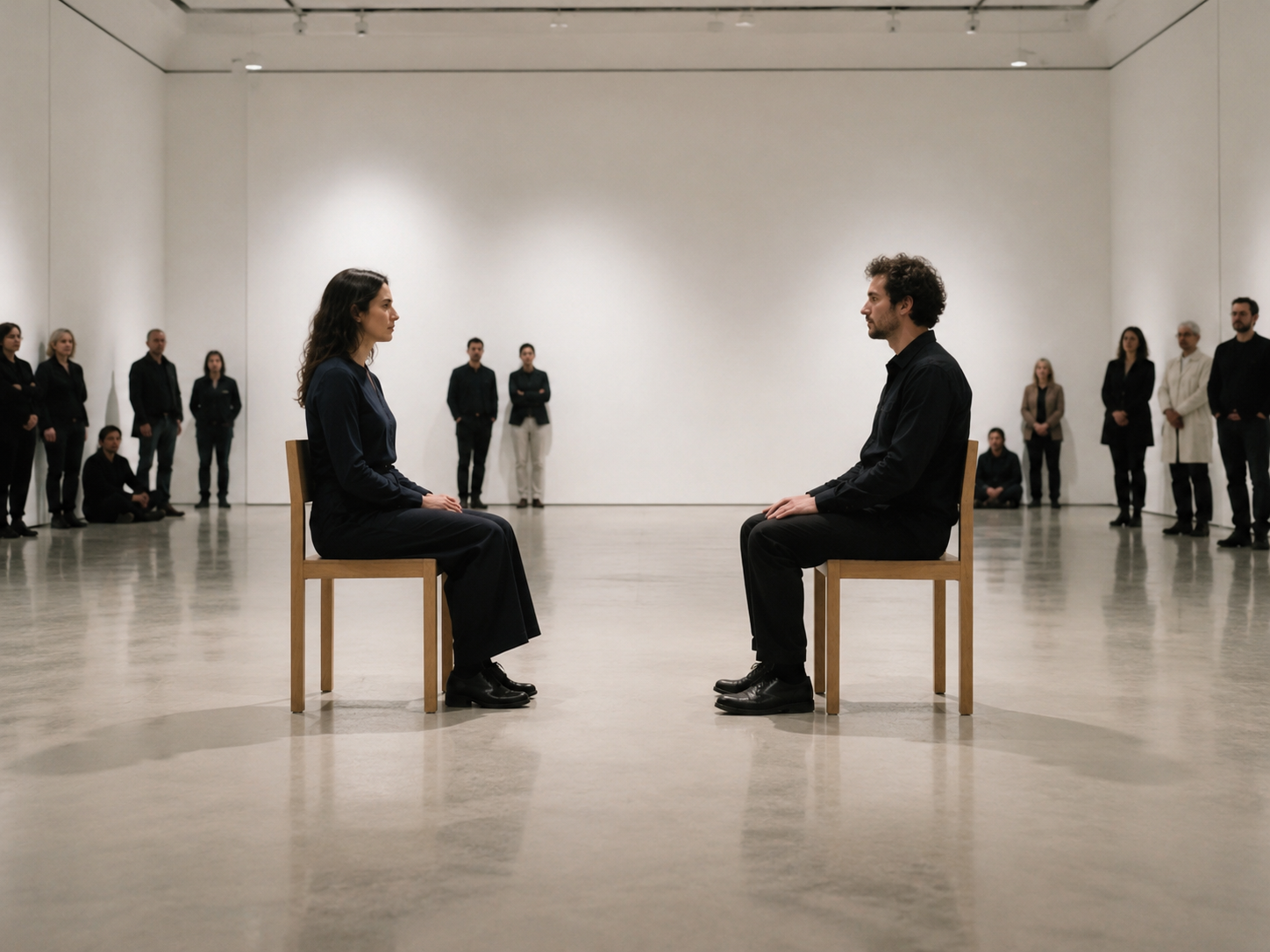
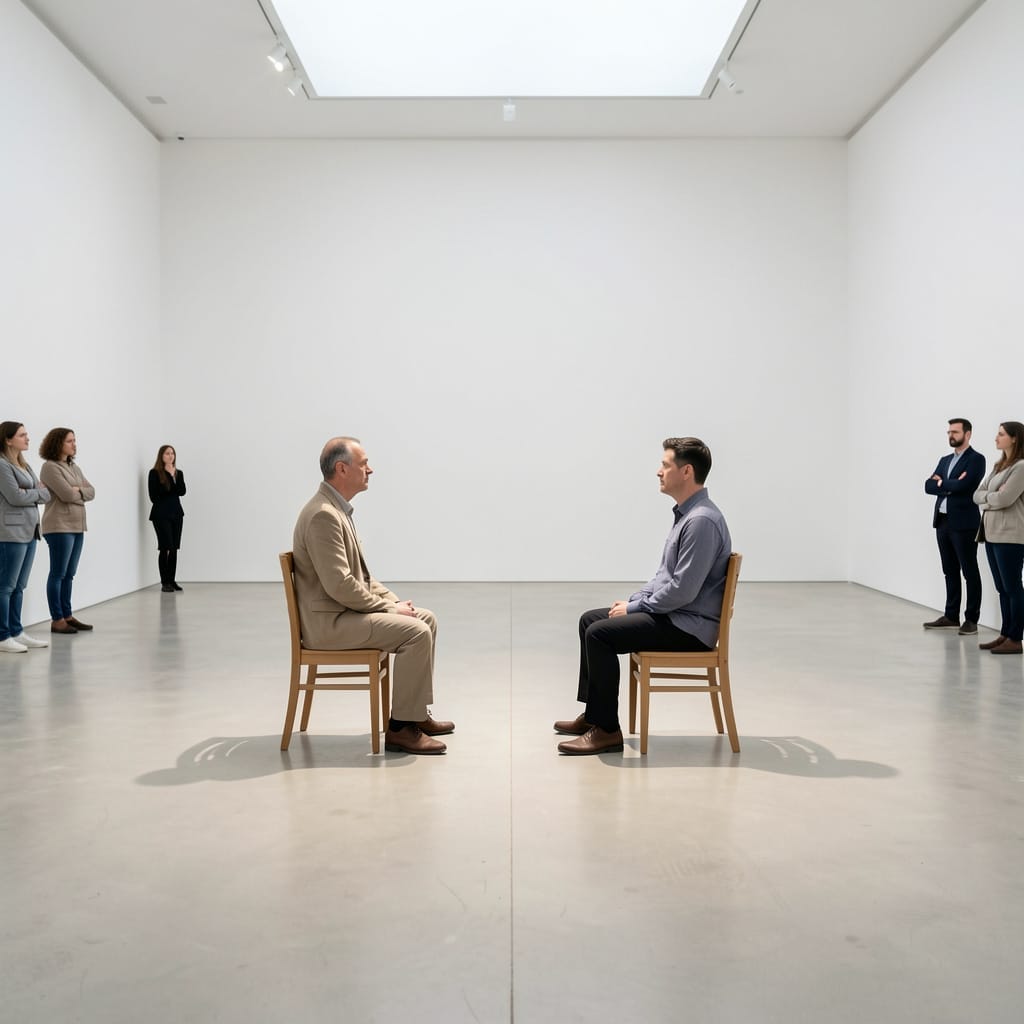
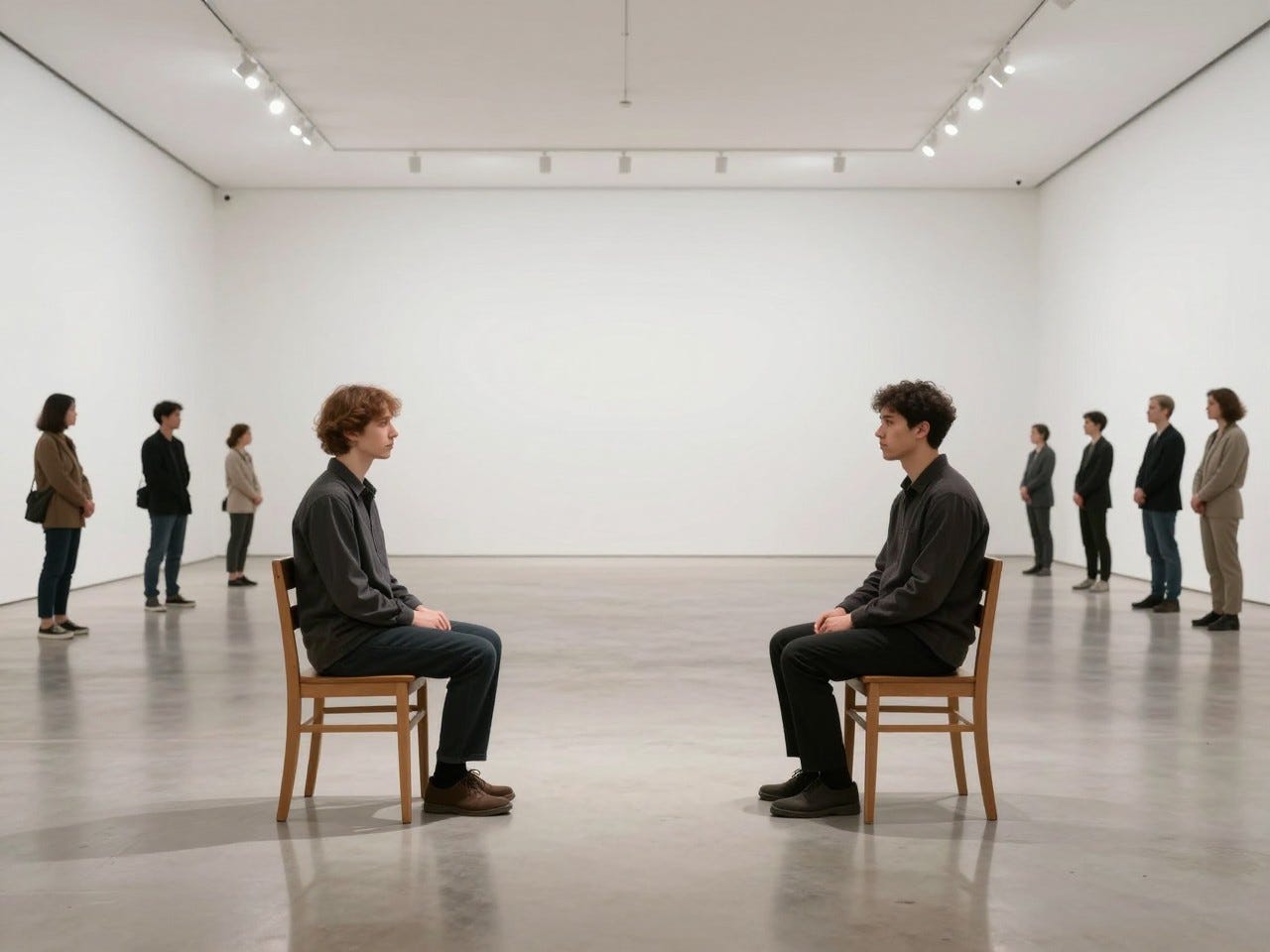
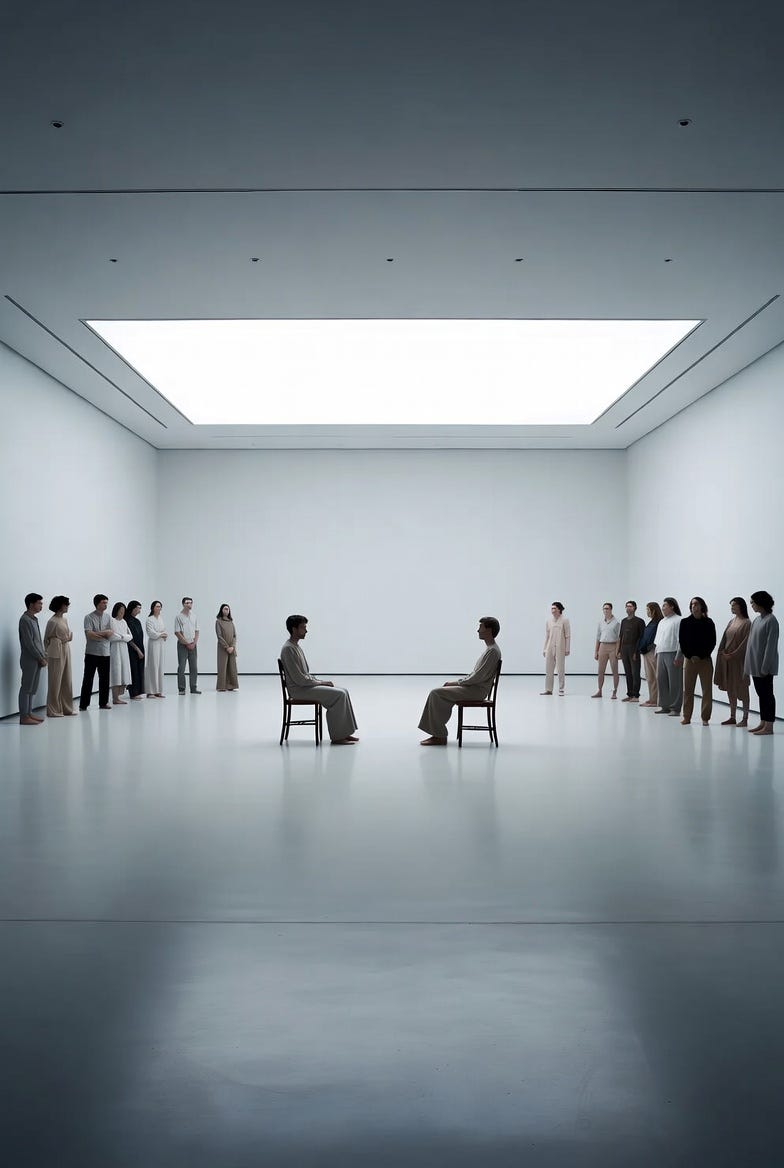
A stark contemporary performance art scene inside a luminous white gallery, inspired by the intense stillness of a face-to-face durational encounter, with two calm figures seated across from one another on simple wooden chairs, surrounded by open polished floor, soft overhead light, and a quiet ring of distant observers. Use restrained composition, pale neutral tones, minimal props, subtle facial emotion, long shadows, and a feeling of charged silence. The mood should be intimate, disciplined, and psychologically magnetic, as if a simple act of presence has become the entire artwork. Avoid theatrical costumes, cluttered staging, religious symbols, violence, or exaggerated drama; keep the scene elegant, contemplative, and suitable for all audiences.
Video Prompt:
A crisp vertical video inside a bright contemporary gallery where two seated figures face each other in complete stillness while the world around them subtly accelerates. Visitors drift past in smooth looping motion, reflections slide across the polished floor, overhead lights pulse gently, and the camera circles with clean rhythmic movement before cutting to close details: still hands, calm eyes, chair legs, quiet footsteps, and the widening space between the figures. Build visual tension through contrast between motion and stillness, with elegant minimal design, soft neutral colors, cinematic lighting, and a final moment where the surrounding crowd freezes as the two figures remain quietly present.
Song Recommendations
For the video, try:
Presence — Nils Frahm
The Great Beyond — R.E.M.