Some artists find a style.
Yves Klein found a color, stared into the void, hired reality as a stage prop, and then spent the rest of his much too short career behaving like ordinary painting had personally insulted him.
And honestly, good for him.
Klein is one of those artists who makes you realize that a lot of art history is really just a long parade of people asking, “What if we did things normally?” followed by one glorious troublemaker replying, “Counterpoint: absolutely not.”
If you have ever looked at a vast field of saturated blue and felt your brain go strangely quiet, or seen a performance piece and thought, “This is either genius or someone has escaped supervision,” then you are already halfway to understanding Yves Klein.
Who was he?
Yves Klein was a French artist born in Nice in 1928 and dead by 1962, which means he managed to leave a crater in modern art before many people even finish figuring out their email folders. A solid overview of the basics lives at Britannica, and the Centre Pompidou gives a particularly useful sketch of how unusual his path really was.
He did not come up through the classic story of academy training, stern professors, and charcoal dust floating nobly through a studio window. He had no formal art education. His parents were both painters, so he grew up around art, but he initially threw a surprising amount of energy into judo. Not hobby judo either. Real judo. Serious judo. Go-to-Japan-and-get-a-fourth-dan-black-belt judo.
That matters more than it first appears.
Because Klein did not think like a careful little easel painter fussing over polite arrangements of fruit. He thought in terms of discipline, gesture, ritual, force, presence, and total commitment. Even when he made something that looked simple, there was usually a whole philosophy crouching behind it like a tiger in an expensive gallery.
What is he known for?
First, the blue.
If art history had a hall of fame for colors with main-character energy, his would be in there wearing sunglasses indoors. Klein became famous for the intensely saturated hue now called International Klein Blue, and the Museum of Modern Art has a crisp entry on one of his blue monochromes here.
These paintings are fascinating because, on paper, they sound almost ridiculous.
A monochrome? Just one color? That is the whole plan?
Yes. That was the plan. And somehow it works.
Klein treated blue not as decoration but as an event. Not just a shade, but an atmosphere. He wanted color to stop acting like it existed merely to describe objects and instead become the experience itself. He was not trying to paint a blue thing. He was trying to make blue hit you like weather.
Second, the performances.
Klein did not stay politely inside the borders of painting. He made the notorious Anthropometries, in which paint-covered models pressed their bodies onto surfaces under his direction. The Guggenheim has a helpful entry on one of these works here. He also made sponge works, fire paintings, and one of the most famous photographic stunts in modern art, Leap into the Void, which the Metropolitan Museum of Art explains here.
That piece is one of the great reminders that modern art occasionally looks at gravity and says, “You are not the boss of me.”
What was his style?
Klein is usually associated with Nouveau Realisme, but that label only gets you part of the way there. He was also a precursor to performance art, conceptual art, minimalism, installation thinking, and the general modern habit of asking whether the idea, event, or gesture might be just as important as the finished object.
Which is a thrilling development if you like art.
Which is a deeply irritating development if you were hoping the rules would stay stable for five consecutive minutes.
His style combined spectacle and austerity. On one day he gives you a monochrome so stripped down it feels like a meditation chamber with better pigment. On another day he stages an artwork that sounds like a dare, a ritual, a prank, and a manifesto all at once.
That tension is the magic. Klein could be grandiose, mystical, theatrical, dead serious, and faintly absurd, often in the same breath. He made art that feels ceremonial, but not dusty. Spiritual, but not sleepy. Elegant, but never timid.
Who taught him?
Not some legendary master painter with a beard like a weather system.
His early influences came from his artist parents, from the visual culture around him, from his study of judo, and from his spiritual reading, especially Rosicrucian thought. In other words, Klein was assembled out of art, philosophy, athletic discipline, mysticism, and an absolutely heroic refusal to stay in one lane.
That combination helps explain why his work can feel less like traditional painting and more like a metaphysical stunt coordinated by a man who might also know how to throw you over his shoulder.
Did he use any special techniques?
Oh, magnificently yes.
He worked with pure pigments, unusual binders, sponges, gold leaf, fire, and live models. He cared deeply about preserving the vivid intensity of his trademark blue. He also embraced public action as part of artistic practice, which meant the process itself could become the artwork.
He did not merely make pictures.
He orchestrated situations.
Sometimes that meant a monochrome. Sometimes a body imprint. Sometimes a fake newspaper announcing an impossible leap. Sometimes a room emptied into near-nothingness. Klein kept asking where art actually lived: in the object, in the action, in the viewer, in belief, or in the charged space between all of them.
Very inconvenient questions.
Very productive questions.
Who did he work with?
He moved in serious company. Pierre Restany helped frame Nouveau Realisme and became one of Klein’s key collaborators in defining the movement around him. He knew Arman from his judo life long before the art-historical label makers got busy. And in the case of Leap into the Void, photographers Harry Shunk and Janos Kender helped turn one of his boldest gestures into one of modern art’s most enduring images.
He also worked with performers and models in ways that made authorship feel slippery. Was the artwork the pigment? The impression? The choreography? The performance? The audience’s shock? Klein’s answer was basically, “Why are you asking me to pick only one?”
Fair point.
Was he wealthy?
Not in the simple fairy-tale sense of the glamorous genius reclining on velvet while success rains from the heavens like applause confetti.
He had ambition the size of a cathedral, but that does not always mean stable finances. His judo school had to close for financial reasons, and his art career was intense, fast, and compressed into only a few years. Klein built cultural wealth far more decisively than ordinary wealth.
Which, to be fair, is the more art-historical move.
When was he most popular?
His real burst of activity and notoriety came in the late 1950s and early 1960s, basically the brief period when he was detonating idea after idea into postwar European art. But he is one of those artists whose afterlife may be even bigger than his lifetime fame. His influence spread into performance art, conceptual practice, installation logic, body art, monochrome painting, and the broader idea that an artwork can be an event, proposition, or atmosphere rather than just a framed object politely minding its business on a wall.
So if you have ever encountered contemporary art and muttered, “Wait, that counts?” you may be living in a house partly built by Yves Klein.
Anything else left to tell?
Yes, and this is the delightful part: Klein had the nerve to be both severe and flamboyant.
That is not easy.
A lot of artists can do solemn. A lot can do spectacle. Klein somehow managed solemn spectacle. He could make a rectangle of blue feel like theology, then pivot into a public gesture so audacious it practically arrived with its own trumpet section.
He understood that modern life was hungry for intensity. Not just images, but experiences. Not just objects, but charged moments. He sensed that art could be less about depicting the visible world and more about making you aware of invisible things: space, presence, faith, sensation, immateriality, awe, absurdity, the whole strange package.
And that is why he still matters.
Because beneath the mythology, the stunts, the famous blue, and the delightful aura of a man one conversation away from trying to patent the sky, he was wrestling with a real question:
How do you make the invisible feel undeniable?
That is not a small question.
That is a career-sized question.
In Yves Klein’s case, it was also a blue one.
If you have a favorite Klein work, drop it in the comments. And if you enjoy art history with a little mischief in its bloodstream, follow along, because there are plenty more gloriously unmanageable artists ahead.
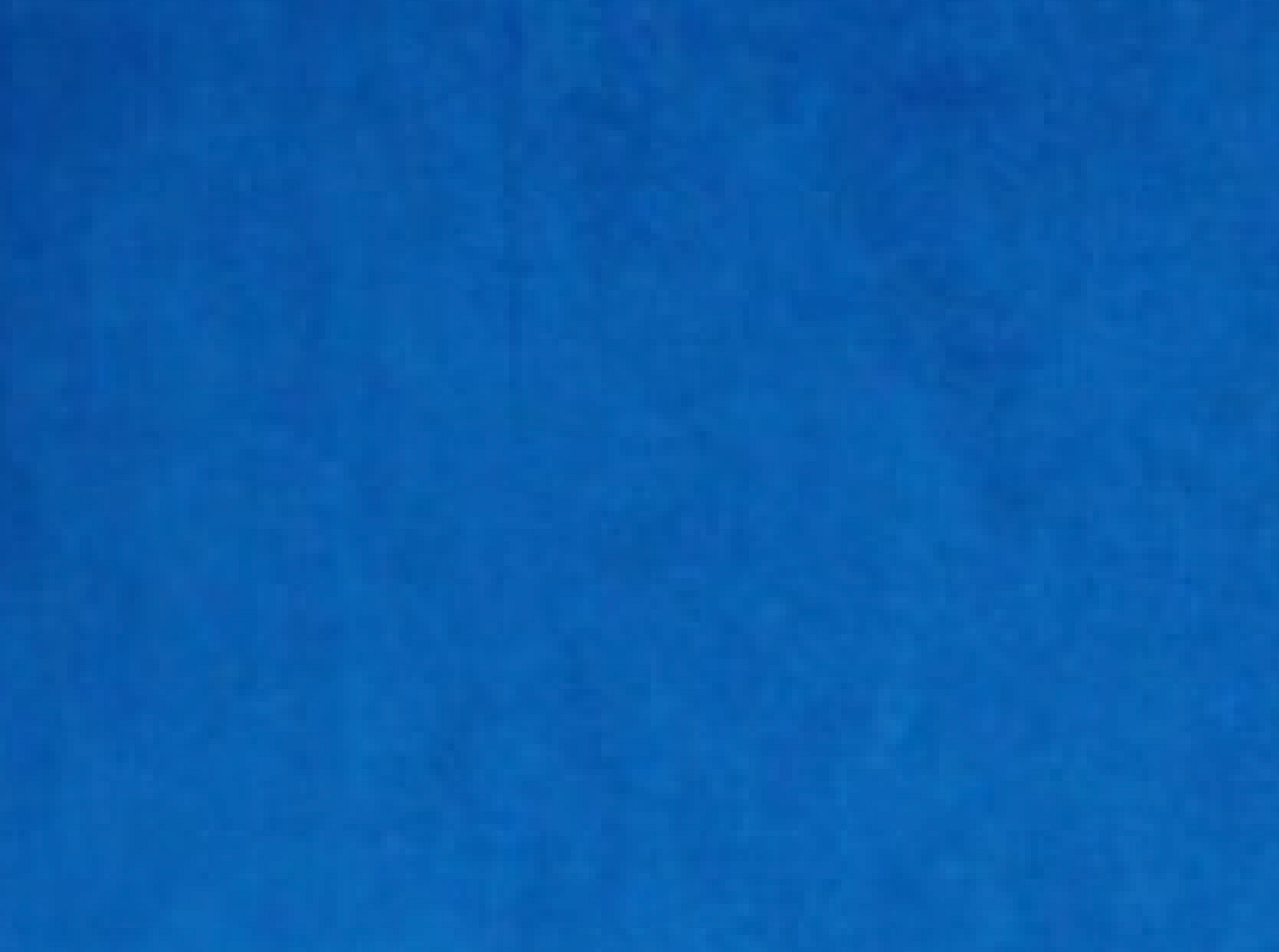
Art Prompt (Monochrome Abstract): A vast luminous field of intensely saturated ultramarine fills the entire composition, with a velvety matte surface that seems to absorb sound and emit silence. The texture is rich with suspended pure pigment, soft granular bloom, and subtle atmospheric variations that make the surface feel both infinite and intimate. The image should be minimalist yet emotionally immense, with no figures, no objects, and no distraction from the overwhelming presence of color. Let the mood feel spiritual, modern, immaculate, and slightly theatrical, as if pure blue has become a sacred room of air and light.
Video Prompt: Begin with a full frame of deep ultramarine matte texture, then introduce slow drifting pigment clouds, delicate surface shimmer, and subtle pulses of light moving across the color like breathing. Let the camera glide almost imperceptibly through the blue field, revealing velvety grain, floating dust, and waves of luminous saturation. Add elegant motion that builds from stillness into hypnotic visual rhythm, with soft cinematic zooms, atmospheric particles, and a feeling of immersive modern mysticism.
Song Suggestions:
- Blue Bell Knoll — Cocteau Twins
- Singularity — Jon Hopkins