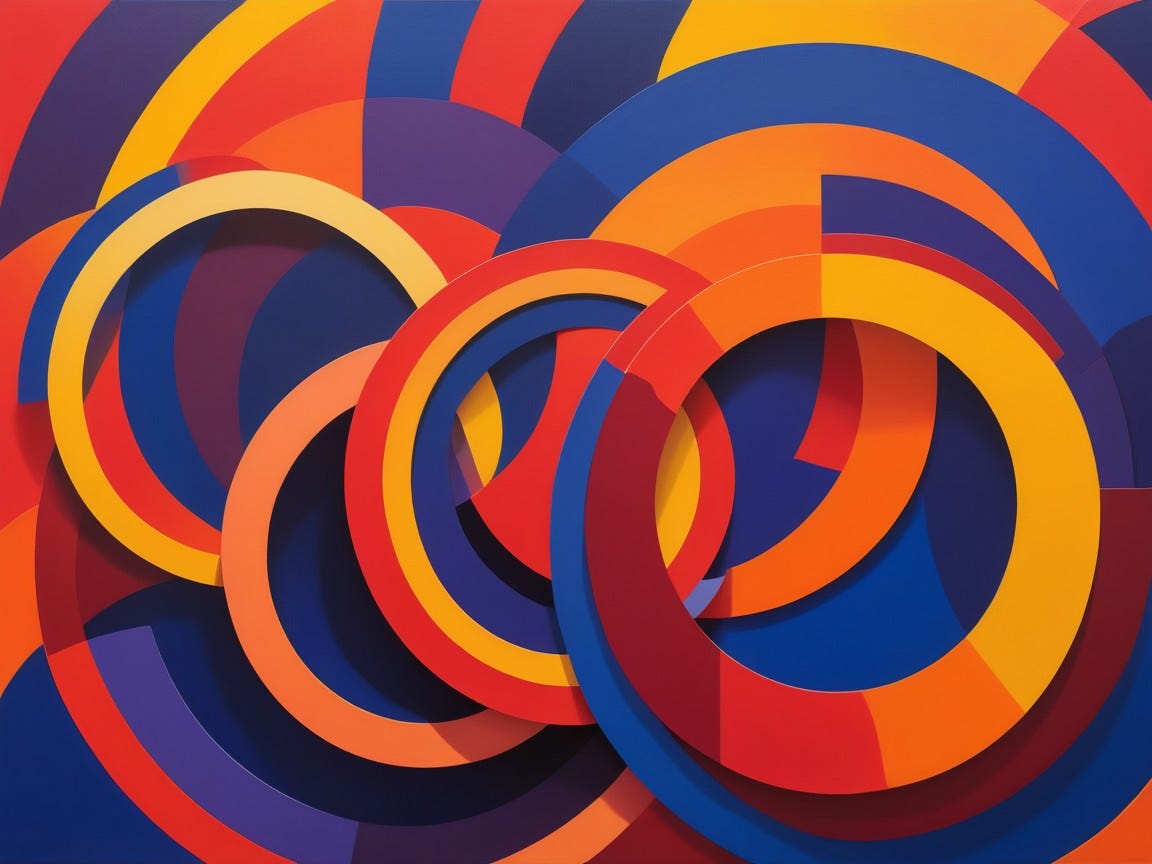
There are artists who paint things.
And then there are artists who look at color, squint a little, and say, “What if this moved?”
Enter Sonia Delaunay, who did not come here to gently arrange colors like polite dinner guests. She came to throw them into a dance, spin them around, and send them sprinting across canvases, clothing, books, and probably anything else that stayed still long enough.
If you have ever looked at a painting and felt like it was vibrating slightly, congratulations. You have stepped into Sonia’s world.
Who Is This Artist?
Sonia Delaunay was born in 1885 in what is now Ukraine, then part of the Russian Empire. She later moved to Paris, which, at the time, was essentially the global headquarters for “Let’s Reinvent Art Entirely.”
She became a central figure in a movement called Orphism, which sounds like a secret society but is actually about color, rhythm, and abstraction.
She was also one of the first artists to fully blur the line between “fine art” and “design,” which means she didn’t just paint. She made textiles, fashion, book designs, stage sets, and generally refused to keep her creativity inside a frame.
What Is She Known For?
Color. But not in a quiet, “this blue is nice” way.
More like: “This blue is going to collide with this red at high speed and create a visual jazz performance.”
Sonia Delaunay is best known for:
- Bold, geometric compositions
- Circular and rhythmic patterns
- Using color relationships to create movement
- Bringing abstract art into everyday life
She was also the first living female artist to have a retrospective at the Louvre, which is the art world equivalent of getting a standing ovation from history itself.
What Is Her Style?
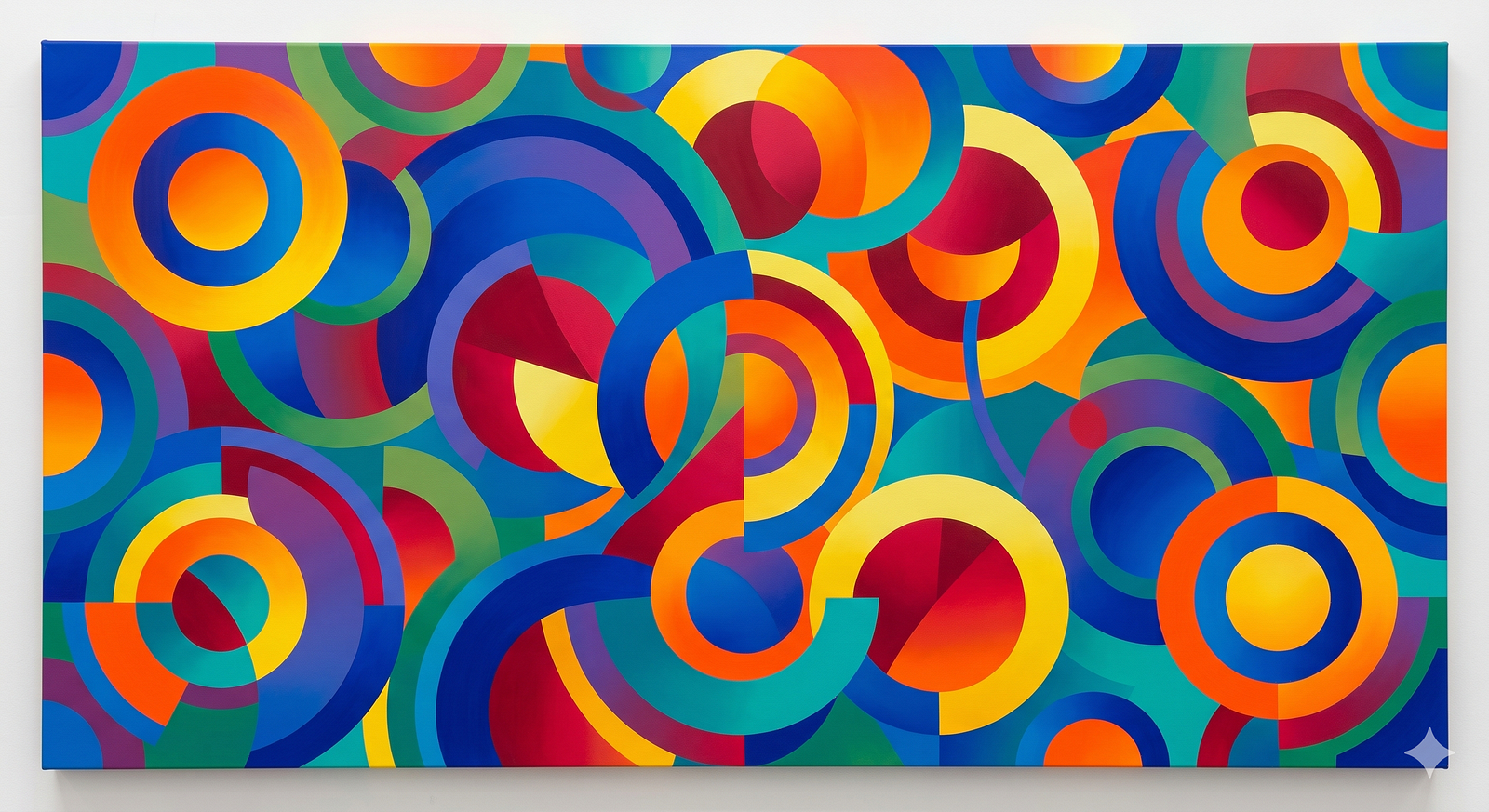
Her style lives somewhere between painting and music.
Not metaphorically. Structurally.
Orphism, the movement she helped define, is all about:
- Color as the main subject
- Rhythm through repetition and contrast
- Movement without actual motion
Imagine a painting that feels like it has a tempo.
That is Sonia.
Her work often uses:
- Circles and arcs
- Contrasting colors placed side by side
- Repetition that creates a sense of visual pulse
It is less “look at this object” and more “experience this energy.”
If you want to see that energy in action, take a look at Colored Rhythm at The Met, Portuguese Market at MoMA, and Prose on the Trans-Siberian Railway and of Little Jehanne of France at Tate.
Who Taught Her?
She studied art in Germany and later in Paris, absorbing influences from Post-Impressionism and early abstraction.
But the real turning point was her partnership with Robert Delaunay, who was also deeply invested in color theory and abstraction.
Together, they basically looked at traditional art and said, “What if we removed the subject entirely and just kept the part that makes your brain light up?”
And then they did exactly that.
Does She Use Any Special Techniques?
Yes, and this is where things get interesting.
Sonia Delaunay treated color like a system rather than decoration.
She used:
- Simultaneous contrast (placing colors next to each other to intensify their effect)
- Repetition to create rhythm
- Geometry to structure movement
Instead of shading or perspective, she relied on color relationships to create depth and motion.
In other words, she made your eyes do the work.
If you want a few more official places to browse, Tate’s artist page and MoMA’s artist page are both good rabbit holes to fall into on purpose.
Who Did She Work With?
Aside from Robert Delaunay, she collaborated with:
- Writers and poets on illustrated books
- Fashion designers and manufacturers
- Theater productions
She also ran her own fashion and textile business, which is not something most painters casually do between canvases.
She designed:
- Dresses
- Costumes
- Interiors
So if you ever wanted to live inside a painting, Sonia was already working on that decades ago.
If you want to see that side of her work, there is also Costume Design for Cleopatra at The Met.
Was She Wealthy?
At times, yes.
At other times, not so much.
Like many artists, her financial situation fluctuated, especially during the wars.
But unlike many artists, she actively built commercial ventures around her work, which helped sustain her career.
She was not waiting around for the art world to catch up. She brought the art to the world instead.
When Was She Most Popular?
Her influence began in the early 20th century and grew over time.
She was especially prominent in:
- The 1910s and 1920s (early abstraction and Orphism)
- The interwar period (fashion and design expansion)
- Later decades, when her work was rediscovered and celebrated more widely
Today, her impact is everywhere, even if people do not realize it.
Modern graphic design, fashion patterns, and abstract visuals all carry echoes of what she was doing long before it was trendy.
Tell Me More, Please
Here is one of the most delightful details:
One of her earliest breakthroughs came from making a patchwork blanket for her child.
That is right.
A blanket.
She combined pieces of fabric in bold, contrasting colors, and suddenly realized she had created something far more dynamic than traditional painting.
That moment helped spark her entire approach to color and abstraction.
So yes, one of the foundations of modern abstract design came from what was essentially a very stylish baby blanket.
Anything Else Left to Tell?
She did not believe art should be locked away in galleries.
She believed it should be lived in.
Worn. Used. Experienced daily.
Which is a refreshingly practical take from someone who was also redefining how humans perceive color.
Final Thought
Sonia Delaunay did not just paint.
She orchestrated color.
She turned visual space into rhythm, movement, and energy without needing a single recognizable object.
And she did it across canvases, clothing, and environments like it was the most natural thing in the world.
If you ever find yourself staring at a bold pattern and thinking, “Why does this feel like it is moving?”
You already know who to thank.
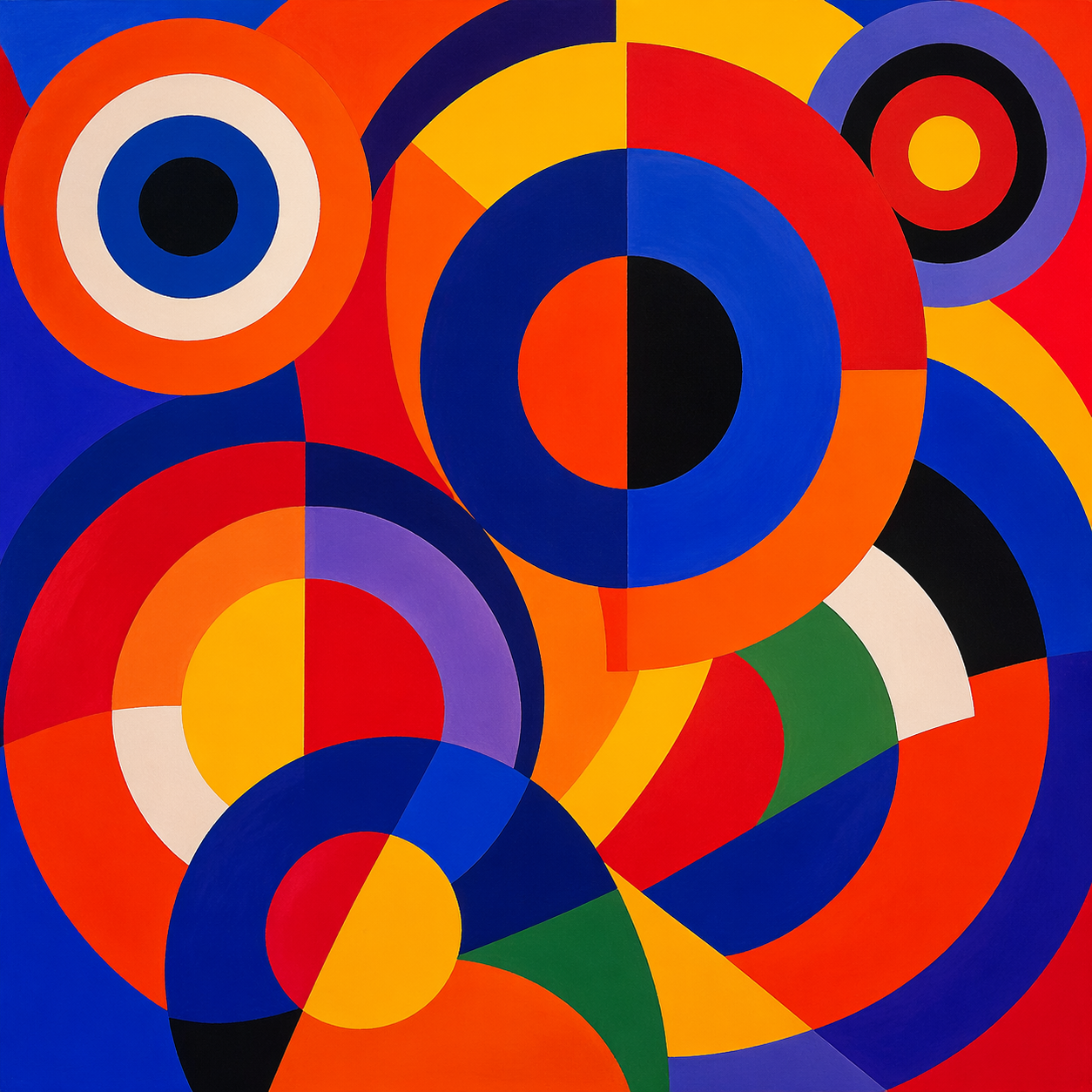
Art Prompt (abstract modernism):
A vibrant composition of overlapping circular forms and geometric arcs, filled with bold contrasting colors like electric orange, deep cobalt blue, radiant crimson, and luminous yellow, arranged in rhythmic repetition across the canvas, with sharp edges and smooth gradients creating a sense of visual motion and pulsation, dynamic balance between warm and cool tones, clean modernist aesthetic, flat perspective with no shading, high energy and harmonious chaos, crisp shapes floating and interlocking in a lively dance of color
Video Prompt:
A seamless animated sequence of bold circular and geometric shapes in vivid contrasting colors rotating, expanding, and sliding across the frame in rhythmic patterns, colors shifting dynamically between warm and cool tones, smooth transitions and looping motion creating a hypnotic visual flow, crisp modern abstract style with energetic movement and synchronized pacing, visually engaging and fast-paced with a sense of continuous motion and harmony
Songs to Pair with the Video
- Runaway — AURORA
- Sun Models — ODESZA
Follow along for more artists who decided normal was optional, and drop a comment if this one made your brain feel like it just did a light workout in color theory.