
There I was, minding my own business, happily prompting away, when suddenly my AI decided it was time for a cultural exchange program. One paragraph in clean, confident English. The next one? Bonjour. No warning. No apology. Just vibes.
If you have ever wondered why ChatGPT sometimes slips into another language mid-response, you are not imagining things, and you are definitely not alone. This is one of those moments where AI feels less like a calm assistant and more like a polyglot friend who just got back from a semester abroad and will not stop mentioning it.
Let us pull back the curtain, gently, without breaking anything expensive.
Why This Even Happens
Large language models do not think in English, French, or any other single language. They operate in something closer to a shared semantic space where languages blur together. If your prompt contains even a hint of multilingual context, or if the training data strongly associates a topic with another language, the model can drift.

This happens more often with:
- Art and literature prompts, especially those tied to European movements
- Philosophical or theoretical discussions
- Long sessions where prior context quietly nudges the language selector
In short, the model is not switching languages to be clever. It is doing pattern completion, and sometimes that pattern says, “Ah yes, clearly we are doing this in French now.”
Does the Model Prefer One Language?
No. There is no secret Francophile mode hiding in the weights.
English dominates because the majority of training data is in English, but models are explicitly trained to be multilingual. That means language choice is probabilistic, not locked. If French appears to be a better continuation of what came before, the model may take that turn without asking for permission.
Think of it less as a preference and more as momentum.
Are Some Topics Better in Certain Languages?
Historically, yes. Practically, not anymore.
Certain subjects originated or matured in specific linguistic contexts. Philosophy in German, fashion and fine art in French, mathematics in a mix of everything. Older datasets leaned into that. Modern models flatten this out, but traces remain.
When you ask for art prompts inspired by classical movements, the model has seen thousands of examples written in French. Sometimes it follows the statistical trail a little too enthusiastically.

About That French Art Prompt Experiment
Here is the good news: tools like NightCafe, Deep Dream Generator, Gemini, ChatGPT, and Grok absolutely understand art prompts in French. In fact, many image models are effectively language-agnostic once the text is embedded. French, English, Spanish, it all maps into visual concepts.
So no, you did not break anything. You just accidentally went international.
Why People Keep Saying “Prompting Is Dead”
Every few months someone declares prompting dead, usually right before selling a course about “the next evolution after prompting.”
What they really mean is that prompting is becoming less brittle. Models now infer intent better, handle ambiguity more gracefully, and require fewer ritualistic incantations. Prompting is not dead. It is just growing up and no longer needs to be shouted at in all caps.
Clear constraints still matter. Which is why adding a line like “All art prompts and video prompts must be written entirely in English” works so well. You did not outsmart the AI. You simply gave it a guardrail.
A Few Odd but Useful Tidbits
- Language drift is more likely in longer conversations. Fresh chats behave better.
- Explicit language constraints outperform polite requests.
- Creative outputs are more multilingual than technical ones.
- The model is not aware it switched languages unless you tell it.
And yes, sometimes going with the French is perfectly acceptable. Very chic, even.
If you have had your own “why is my AI suddenly bilingual” moment, drop a comment. If you want more experiments, art, and gentle chaos, follow along and keep the conversation going.

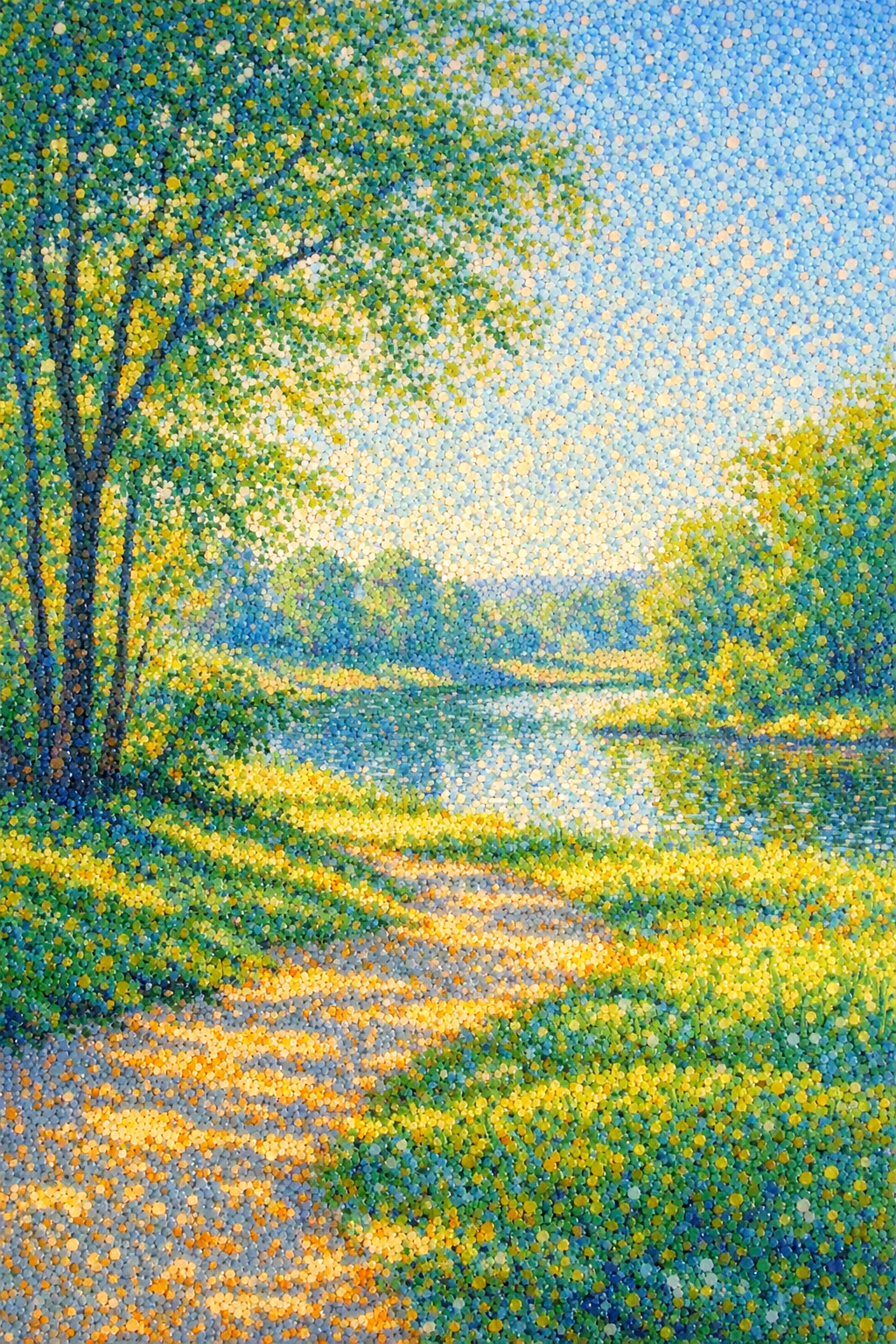
Art Prompt (Pointillism):
A tranquil outdoor scene rendered through countless small, deliberate dots of pure color, forming shimmering light across a sunlit landscape. The composition feels airy and balanced, with soft transitions created through optical blending rather than visible strokes. Cool blues and fresh greens dominate the shadows, while warm yellows and pale oranges flicker where sunlight touches the ground. The atmosphere is calm and contemplative, with a subtle sense of movement created by the vibration of color, evoking patience, precision, and quiet joy.
Video Prompt:
Animate the scene so the dots subtly pulse and assemble themselves, colors gently blooming into place. Introduce slow drifting light across the frame, with a soft parallax effect to give depth. Let the colors shimmer as if breathing, transitioning smoothly between highlights and shadows, maintaining a calm, mesmerizing rhythm that feels alive without rushing.
Music suggestions for the video:
- Tycho — Awake
- Maribou State — Turnmills
Follow for more experiments, art drops, and AI oddities, and leave a comment if your prompts have ever decided to switch languages without telling you.
