You wake up tired.
You tell yourself, “It’s fine. I’ll just power through.”
By 10:17 a.m., you’ve opened the same email four times and still don’t know what it says. At 2:00 p.m., you’re bravely reorganizing your desktop icons as if that counts as strategic thinking. By 4:00 p.m., you are 78% coffee and 22% regret.
So what actually happens to productivity when you’re tired?
Let’s talk about it.
Your Brain on “Low Battery Mode”
When you’re sleep-deprived, your brain doesn’t politely underperform.
It improvises.
Your prefrontal cortex, the part responsible for focus, decision-making, and not sending risky emails, becomes… optimistic but unreliable. According to the CDC, adults generally need 7 or more hours of sleep per night for optimal functioning, and chronic sleep loss affects attention, reaction time, and judgment in ways that are measurable and not flattering.
In other words, you don’t just feel less productive.
You are less productive.
You just think you’re crushing it because your tired brain is also in charge of evaluating how well you’re doing.
That’s like letting your dog grade its own obedience test.
But I Should Always Work Hard… Right?
Yes. Work hard.
But working tired is different from working hard.
There’s a reason both Scrum and Extreme Programming emphasize sustainable pace. The Agile Manifesto crowd didn’t say, “Deliver value and also see how long you can survive on espresso and vibes.” They explicitly promote a steady, sustainable rhythm, typically around a standard 40-hour workweek, not heroic 70-hour coding marathons fueled by gas station snacks.
And no, that doesn’t only apply to software engineers.
Sustainable pace applies to anyone whose job requires thinking, judgment, coordination, or interacting with humans without accidentally starting a small war.
So… everyone.
“But I’m Actually More Creative When I’m Tired!”
This is where it gets interesting.
Some people do feel more creative when tired. There’s research suggesting that when you’re fatigued, your brain is less inhibited and may make looser associations. That can help with brainstorming or abstract thinking.
However:
Creative spark does not equal consistent execution.
You might come up with a wild, brilliant idea at 1:00 a.m. But if you try to implement it at 1:30 a.m., there’s a solid chance you’ll accidentally delete your production database or text your boss something that begins with “Hear me out…”
Fatigue lowers your mental filters.
Sometimes that’s useful.
Often it’s chaotic.
What About High-Stakes Jobs?
Now we leave the cozy world of missed deadlines and enter the “please don’t do that tired” category.
Operating heavy machinery? Handling firearms? Flying planes? Performing surgery?
Sleep deprivation impairs reaction time in ways comparable to alcohol intoxication. The National Highway Traffic Safety Administration notes that drowsy driving is a significant factor in crashes each year. That should make all of us reconsider the phrase “I’m fine to drive.”
Fatigue in these environments isn’t quirky.
It’s dangerous.
Which brings up a fair question…
Why Do Doctors, Nurses, and Pilots Work Such Strange Hours?
Great question.
Part of it is historical culture. Part of it is coverage requirements. Hospitals and airlines don’t close at 5 p.m. because humans have a dramatic flair for getting sick or needing to travel at inconvenient times.
Over the years, many industries have implemented duty-hour restrictions and regulated rest periods because the data became too obvious to ignore. Fatigue-related errors are real, measurable, and expensive.
We’ve slowly learned that exhaustion is not a badge of honor.
It’s a risk factor.
Is Productivity When Tired Totally Personal?
Yes and no.
There are individual differences. Some people tolerate sleep loss better than others. Some are night owls. Some are terrifyingly cheerful at 5:30 a.m.
But even “high performers” show cognitive decline under sustained fatigue. You might handle one bad night fine. You won’t handle weeks of it well.
The sneaky part?
You adapt emotionally before you adapt cognitively.
You stop noticing how foggy you are.
Which means you confidently make slower decisions with worse judgment while believing you are functioning at peak brilliance.
That’s not a productivity hack.
That’s a plot twist.
The Productivity Illusion
When you’re tired, you often:
- Confuse motion with progress
- Overestimate how long simple tasks will take
- Underestimate how long complex tasks will take
- React more emotionally
- Reread the same paragraph five times
- Create elaborate to-do lists instead of finishing the first item
You feel busy.
But your output quality drops.
And the cost of fixing tired mistakes later often exceeds the time you “saved” by pushing through.
So What Do We Actually Do?
You don’t need to turn into a sleep monk who meditates in linen robes.
But you can:
- Protect your sleep like it’s a business asset (because it is).
- Schedule deep work when your energy is naturally higher.
- Avoid high-risk tasks when you’re clearly exhausted.
- Stop glorifying burnout as ambition.
There’s a reason performance-oriented communities obsess over recovery. Athletes don’t say, “I’ll just lift until I collapse.” They train. They rest. They adapt.
Your brain is not exempt from biology.
Final Thought Before You Yawn
Working hard is noble.
Working tired is sometimes unavoidable.
But pretending fatigue has no cost is like pretending gravity is optional.
You can try.
Gravity will win.
If this resonated, drop a comment with your most ridiculous “I tried to work tired” moment. And follow along for more mildly educational chaos about productivity, tech, and the strange ways humans operate.
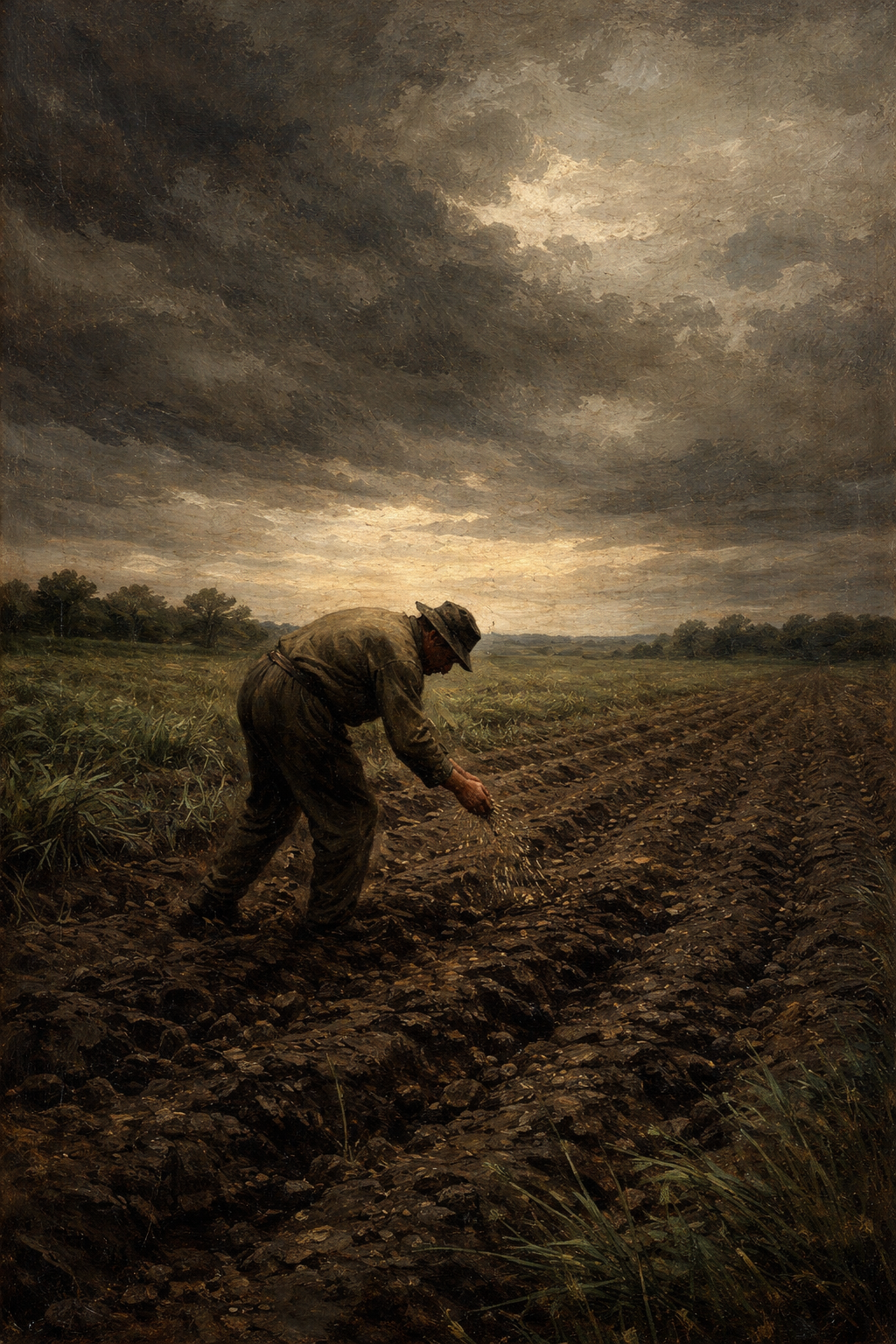
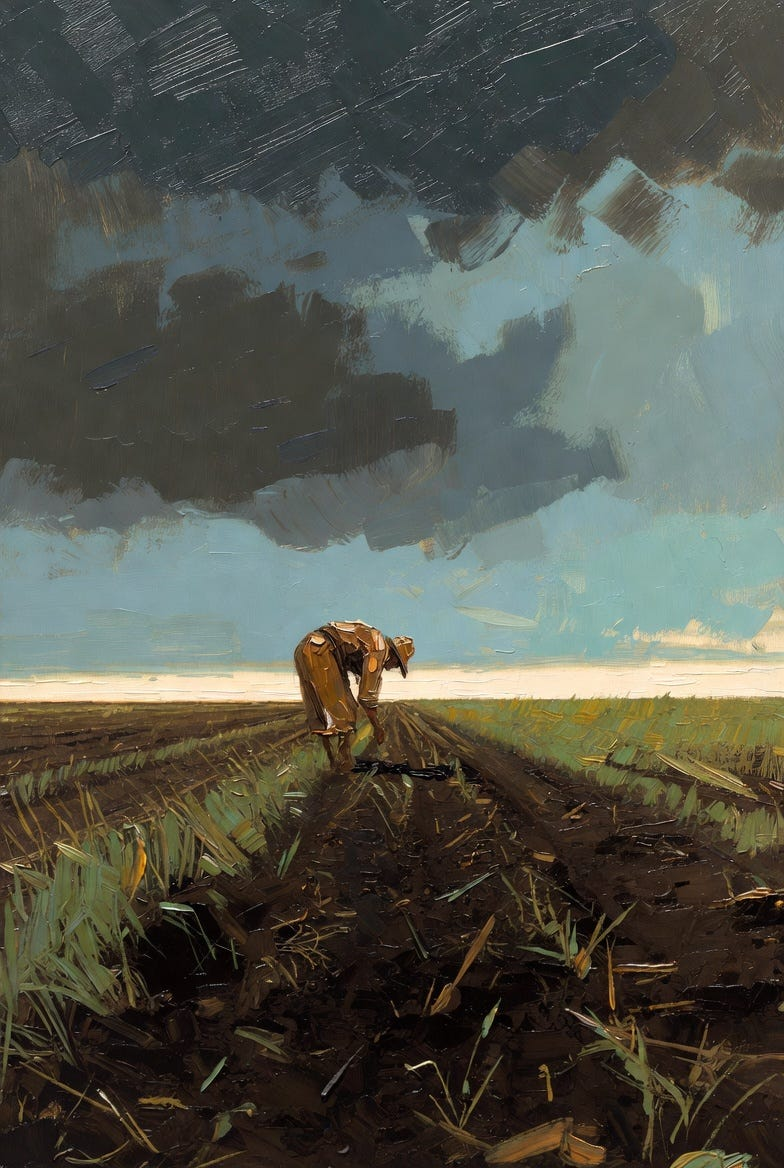
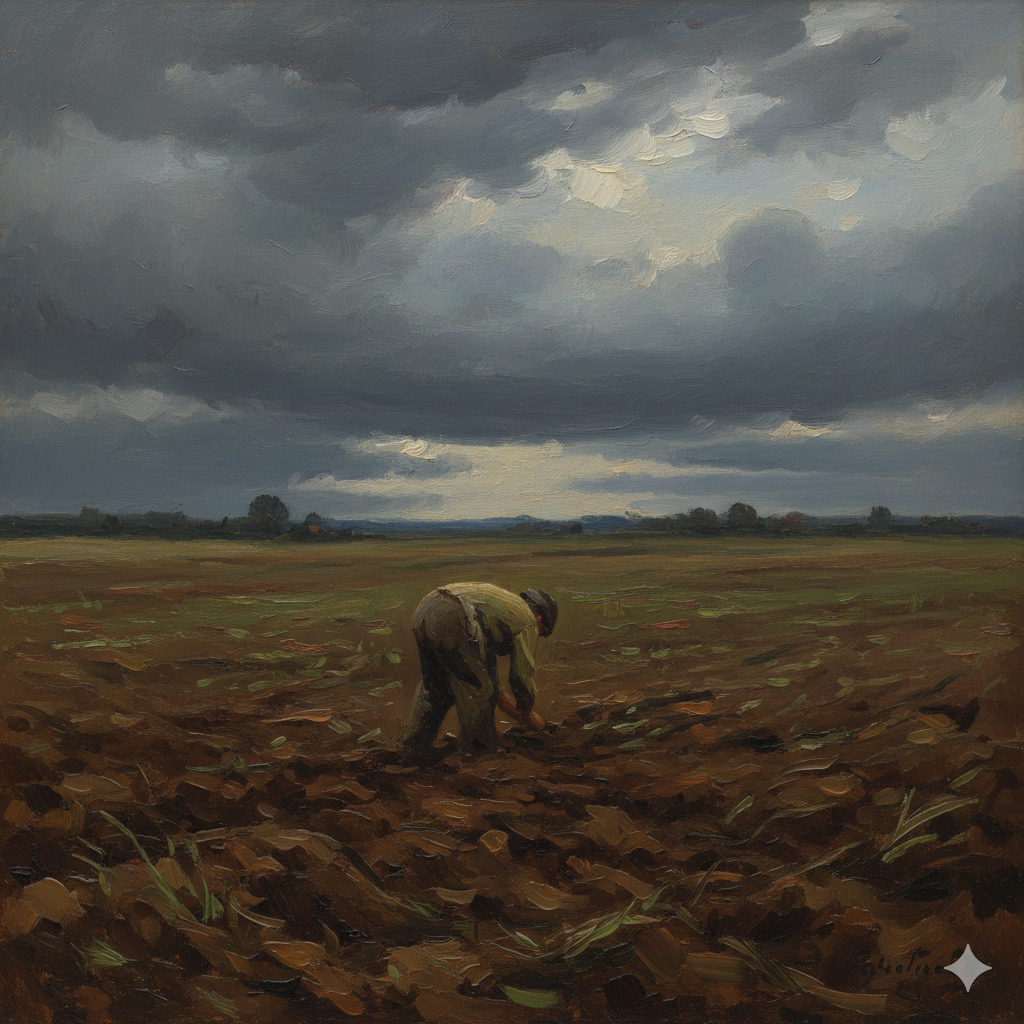
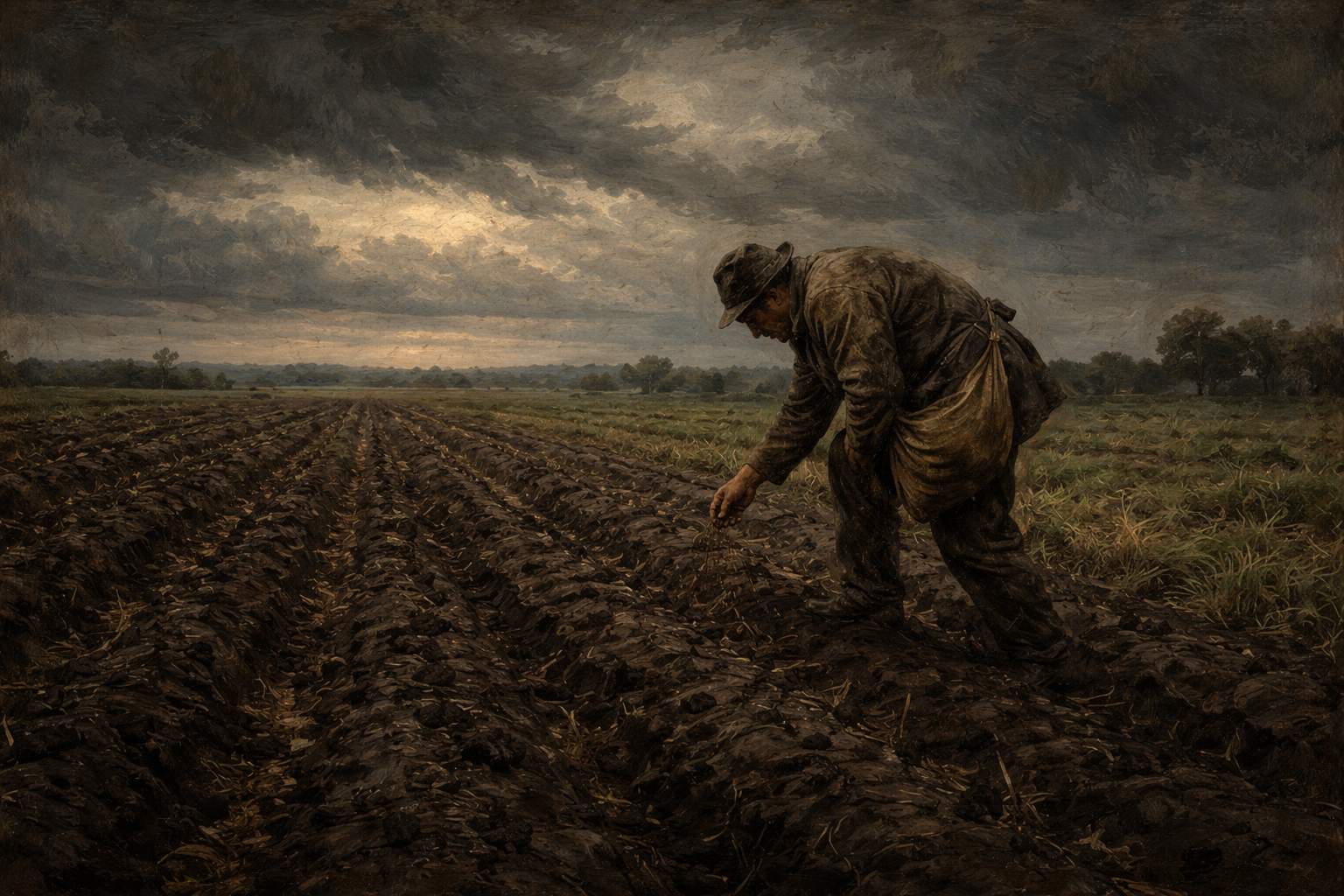
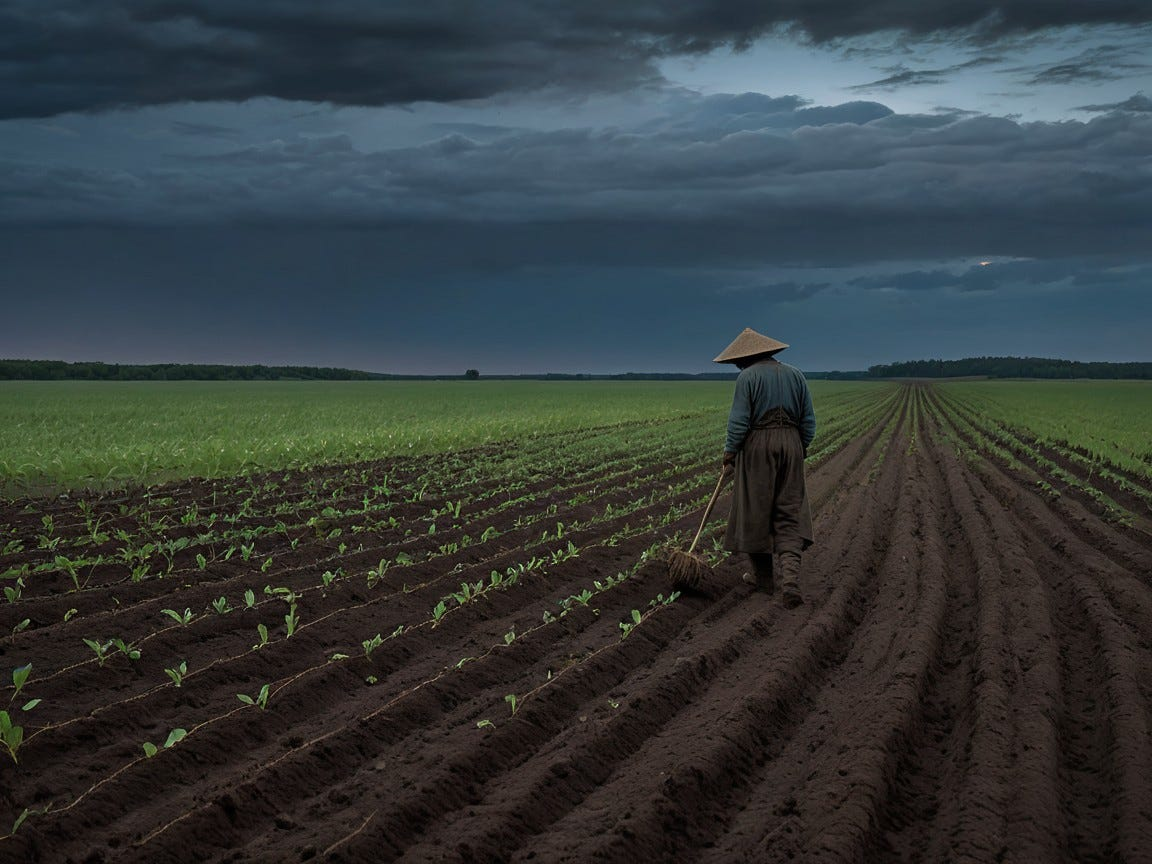
Art Prompt (Realism): A quiet rural field at dusk under a heavy, overcast sky, dark soil stretching toward the horizon in textured, deliberate brush strokes, a solitary peasant figure bent over planting seeds, earth-toned palette dominated by deep browns, muted greens, and soft gray-blues, low horizon line emphasizing the vast sky, thick, tactile paint conveying the weight of labor, moody lighting that suggests both resilience and melancholy, naturalistic proportions, subtle wind rippling through sparse crops, atmosphere dense and contemplative, as if the air itself carries the scent of soil and approaching rain.
Video Prompt: Start with a dramatic downward tilt from a brooding gray sky to a wide, windswept field at dusk, wind visibly bending sparse crops as a lone farmer moves steadily across dark soil; quick cuts alternate between close-ups of rough hands pressing seeds into earth and wide cinematic shots of the vast horizon; clouds roll rapidly overhead in time-lapse, shadows sliding across the ground; dust and light particles swirl through the air as the color palette shifts from cool gray-blue to warmer amber tones near sunset; end with a powerful wide shot as the wind intensifies and the figure stands tall against the glowing horizon, cinematic, immersive, high contrast, emotionally stirring.
Song Recommendations:
Dog Days Are Over — Florence + The Machine
Harder, Better, Faster, Stronger — Daft Punk