AI can generate a thousand lines of code before you finish your coffee. It can draft documentation, tests, diagrams, marketing copy, and a small novella about ducks who learn DevOps. Meanwhile, you are still blinking at the screen, trying to remember why you opened the tab in the first place.
This is the quiet mismatch of our time: machines output at warp speed, humans consume at snack speed.
Nothing is broken. Nothing is wrong. But the speed gap is very real.
AI does not think faster than you. It simply does not get tired, bored, or distracted by a notification about socks being on sale. It produces relentlessly. Humans, on the other hand, read, interpret, doubt, connect ideas, and occasionally stare into space wondering if we should really refactor that thing right now.
So the question is not “Why is AI so fast?” The question is “What should we do about it?”
First, a small comfort: more output does not mean more value.
A model can generate ten implementations. You will still ship one. It can write fifty test cases. You will still debug the three that matter. The bottleneck has simply moved. It is no longer typing speed. It is judgment.
And judgment is stubbornly human.
There is a noticeable trend here. Early AI output felt like a magic trick. Then it felt like noise. Now it is settling into something more useful: drafts that are good enough to react to, shape, and discard quickly. Quality has not increased in a straight line, but relevance has. The best outputs are not the longest ones. They are the ones that give you something to push against.
This is where things get interesting.
Trying to manually consume everything AI produces is a losing game. That way lies a future where you scroll endlessly, nod thoughtfully, and ship nothing. The smarter move is to use AI as a filter against itself. Ask it to summarize, cluster, rank, compare, and flag anomalies. Let it reduce ten options to three, and then let your brain do what it does best: choose with context.

In other words, do not drink from the firehose. Build a valve.
There is also a psychological shift that helps. Stop thinking of AI output as answers. Treat it as raw material. Like sketches pinned to a wall. Most of them are not precious. Their job is to exist so that better ideas can emerge faster.
One unexpected side effect of this speed mismatch is clarity. When output is cheap, intent becomes expensive. The better you are at stating what you actually want, the less you drown in irrelevant brilliance. Vague prompts create verbose chaos. Clear prompts create leverage.
A fun irony here: AI makes thinking slower again. Not because it is inefficient, but because it forces you to decide what matters. When everything is possible instantly, priorities stop being optional.
If you want to explore how this plays out in real projects, tools, and workflows, you can poke around at https://lumaiere.com where experiments, art, and practical chaos tend to collide. If long-form writing is your thing, there is also more over at https://medium.com/@DaveLumAI without any obligation to read it all at once. Please do not try.
If any of this resonates, drop a comment. Tell me how you are coping with the speed gap, or how it is coping with you. And if you enjoy watching ideas get stress-tested in public, give me a follow. The firehose is not slowing down, but we can at least aim it.
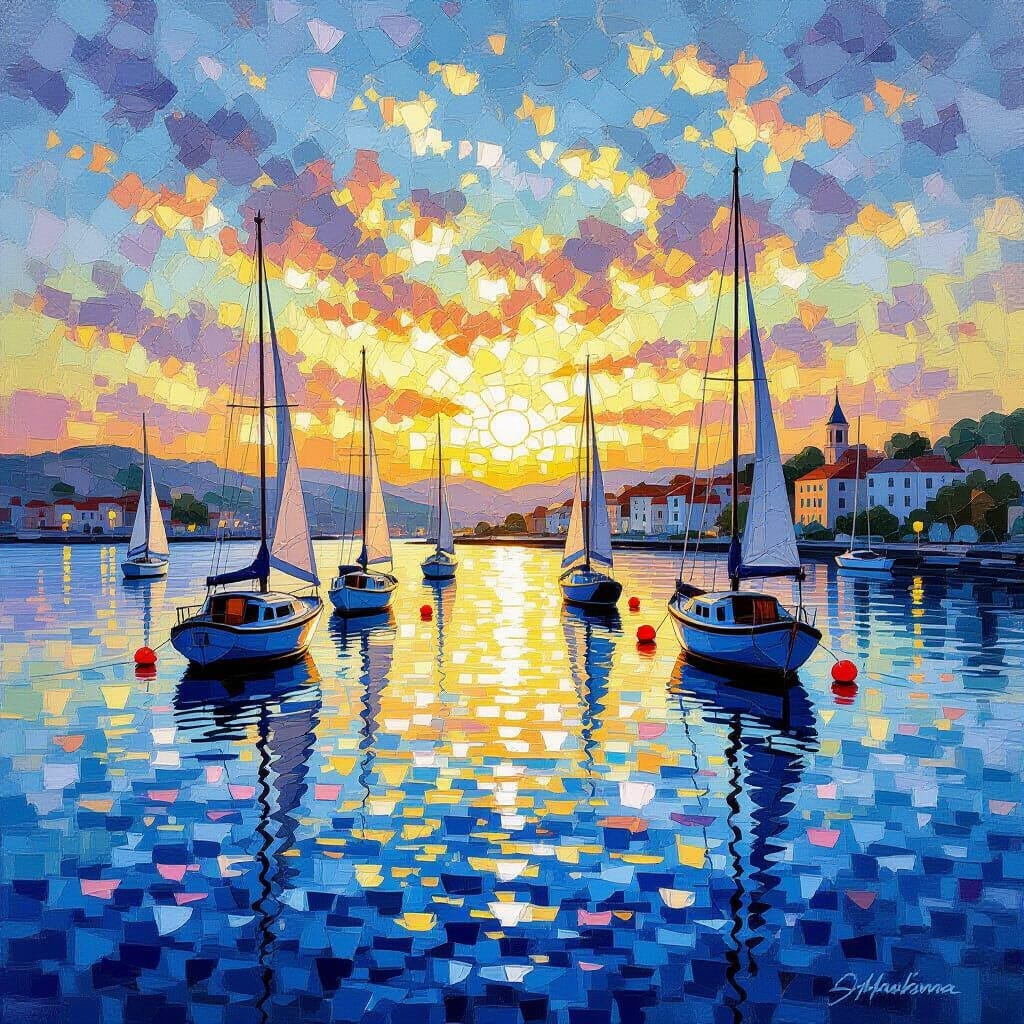
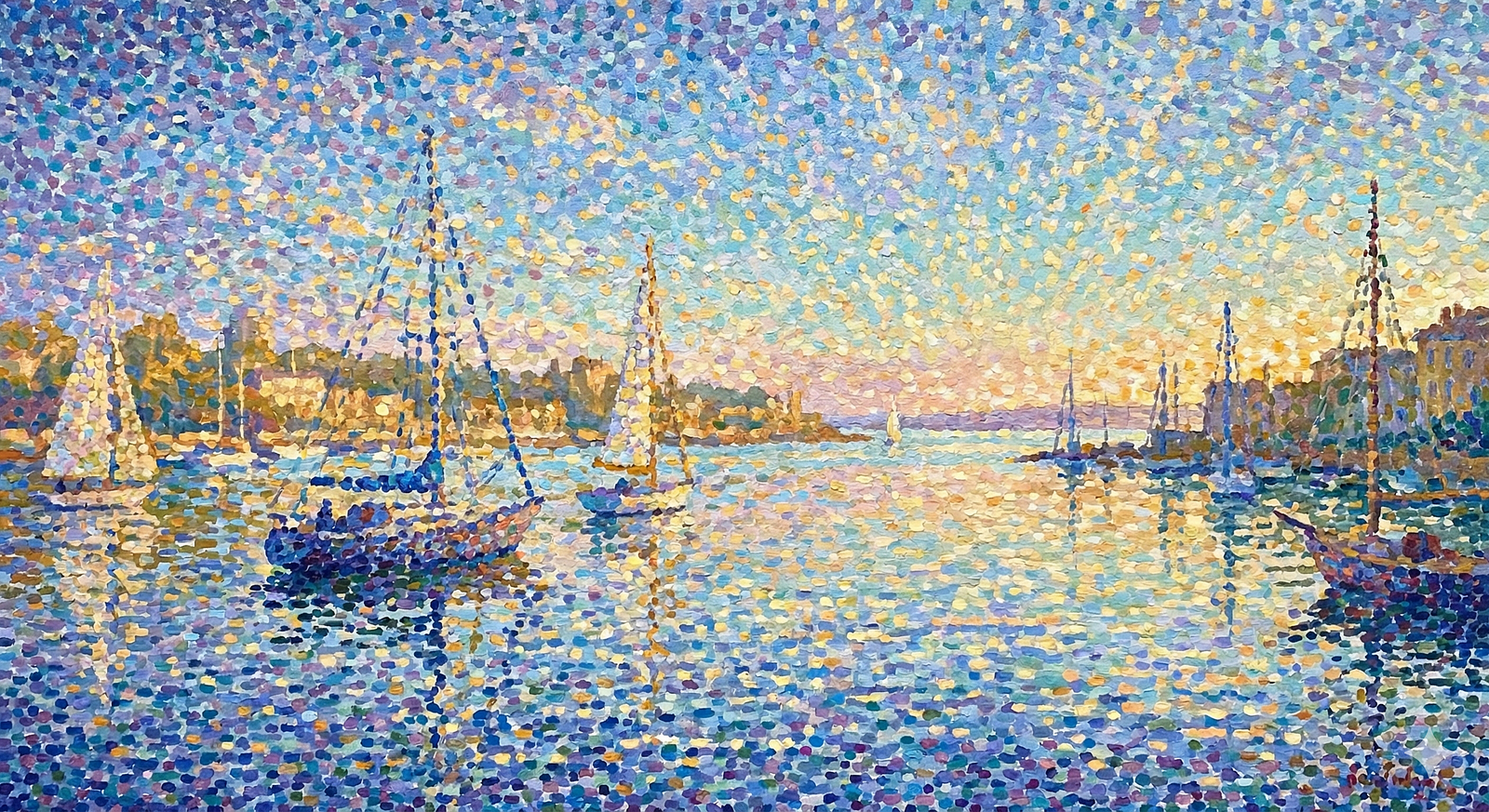
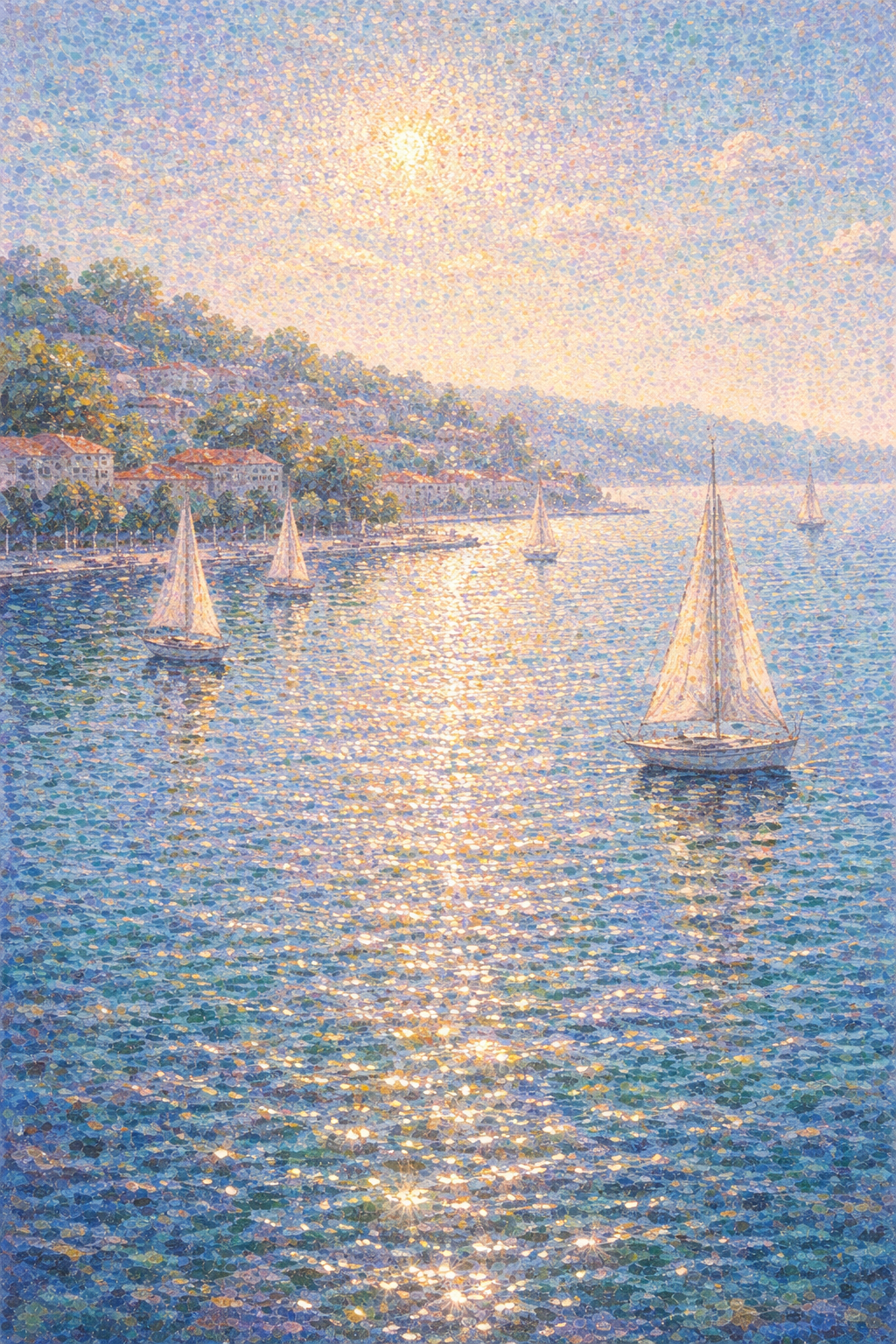
Art Prompt (Pointillism): A luminous coastal harbor scene composed entirely of tiny, deliberate dots of pure color, where sunlight fractures into shimmering blues, soft lilacs, warm golds, and gentle greens. Sailboats drift calmly across reflective water, their forms suggested rather than outlined, blending into a vibrant atmosphere that feels alive with motion despite its stillness. The composition balances precise structure with airy openness, creating a calm, meditative mood as if the air itself is sparkling. The horizon glows subtly, and the entire image hums with quiet energy and refined optimism.
Video Prompt: Transform the scene into a living mosaic where countless points of color subtly pulse and ripple. The water glitters as dots gently shift and reassemble, sailboats gliding forward as if carried by invisible currents. Sunlight flickers rhythmically across the surface, with colors breathing in and out to create hypnotic motion. The camera weaves lightly through the scene, creating a sense of immersion and momentum without ever feeling rushed, as if the painting itself has decided to exhale.
A couple of tracks that pair nicely with this visual mood:
- Loop-Finder — Yosi Horikawa
- Aether — Rival Consoles