Prioritization sounds elegant until you actually try it.
On paper, it feels like a crisp executive skill practiced by calm adults with tasteful notebooks. In real life, it is usually you, three tabs, two deadlines, one weird email, a project that matters in five years, another that matters in five minutes, and a to-do list behaving like a raccoon in a pantry.
So let us clear something up right away: prioritization is not the art of doing everything in the right order.
It is the art of accepting that some things will not get done now, some things should not get done by you, and some things were never important in the first place but dressed themselves up in urgency and hoped nobody would notice.
That is the whole game.
How do I pick what should be worked on next?
Start by asking a brutally unromantic question: What changes the future the most if I move it forward today?
Not what is loudest. Not what arrived last. Not what makes you feel the busiest. What actually changes the board?
A useful first pass is the Eisenhower Matrix: urgent and important, important but not urgent, urgent but not important, and neither. It is not magic, but it is very good at exposing impostors. A surprising amount of must-do-now work turns out to be someone handing you their stress like a warm potato.
After that first cut, I like a second filter that is less famous and more useful:
What is the consequence of delay?
That question is glorious because it strips the drama off everything. Some tasks get mildly grumpier if you wait. Others quietly become expensive, embarrassing, or structurally catastrophic. Feed the dog? Strong candidate for today. Reorganize your desktop icons for the seventh time? I believe in your journey, but maybe not right now.
Should I work on the most important thing first?
Usually yes.
But not in the cartoon version of yes.
You should work on the most important thing first when it has one or more of these qualities: it compounds, it prevents damage, it unblocks other work, or it is difficult enough that your best brain needs to touch it before the day gets covered in fingerprints.
That said, there are three perfectly respectable reasons to not begin there.
First, the important thing may be blocked. If you cannot do the thing until someone sends the file, approves the budget, or stops circling back and actually answers the question, then banging your forehead against the wall is not noble. It is cardio.
Second, the important thing may require a warm start. Some work needs runway. If a tiny setup task gets you from I cannot even look at this to fine, I am in, then the small task is not procrastination. It is ignition.
Third, your energy may be mismatched. Writing strategy at 11:30 p.m. when your brain has turned into soup is how bad PowerPoints are born.
So yes, do the most important thing first whenever possible. But define first like an adult, not like a productivity cult.
Should I work on the shortest thing first?
Sometimes, and with zero shame.
The shortest thing first is smart when you are clearing friction, creating momentum, or preventing a pile of tiny obligations from breeding in the dark. Two-minute tasks are dangerous partly because each one is small enough to look harmless and together they form a bureaucratic swamp.
But shortest-first is terrible as a governing philosophy. If you spend all day harvesting low-effort completions, you can end the afternoon with twelve check marks, no meaningful progress, and the eerie sensation that your life is now being managed by paper cuts.
So here is the sane version:
Use short tasks to clear drag. Use important tasks to create progress.
Those are not the same thing.
Should I pay off the highest interest debt first, and do I care if that affects my tax return?
Purely mathematically, the highest interest rate debt usually goes first. The Consumer Financial Protection Bureau lays out the two classic approaches here: the avalanche method, which attacks the highest rate first, and the snowball method, which attacks the smallest balance first for motivation.
If your goal is to pay the least total interest, avalanche wins.
If your goal is to keep yourself emotionally engaged because you are a human being and not a spreadsheet with knees, snowball can absolutely win in practice.
As for taxes: yes, you care, but probably less often than people hope. The IRS notes here that interest tied to personal spending, including ordinary credit card debt, is generally not deductible. Some business, investment, or qualified home-related interest may be treated differently, which is exactly why tax questions love to arrive wearing a fake mustache. If serious money is involved, let an actual tax professional look at your specific situation before you make heroic assumptions.
So the short version is this:
Highest interest first for math. Smallest balance first for behavior. Tax effects matter when the debt type actually has tax treatment worth discussing.
How do I decide what is important?
Importance is not a mystical aura floating above a task.
It is usually some combination of five things:
- Impact: If this goes well, what changes?
- Urgency: If I wait, what gets worse?
- Compounding: Does this create future options, skills, assets, trust, or money?
- Leverage: Does this move one thing or ten things?
- Obligation: Is there a real commitment, dependency, or consequence attached to it?
That is why answering three emails can feel productive and still be less important than one awkward phone call you have been avoiding for a week. The phone call may unlock money, clarity, a decision, a repair, or the end of an unnecessary feud with reality.
Importance is also seasonal. A thing can be unimportant in April and absolutely decisive in August. Priorities are not carved into stone tablets. They are negotiated with time, context, risk, and the fact that your available energy is not the same on Tuesday as it is on Friday.
Should I work on the most important thing with short-term value, or the most important thing even though I will not see a return for years?
Welcome to the real argument.
This is where people get trapped into choosing between be responsible and build the future, as if the only two settings are panic and legacy.
The better answer is to run two lanes at all times:
One lane keeps the lights on. One lane changes your life later.
Bills, clients, maintenance, deadlines, health, and commitments live in the first lane. Skills, systems, assets, relationships, reputation, and long-horizon projects live in the second.
If you ignore the first lane, your future gets interrupted by very present disasters. If you ignore the second lane, your life becomes an endless loop of urgent maintenance with nicer folders.
That is why some of the most important work does not look dramatic on a daily basis. It looks boring. It looks like investing, writing, exercising, learning, documenting, automating, building an audience, deepening a relationship, or fixing a process that keeps biting you every Thursday.
Short-term value keeps you alive. Long-term value keeps you from repeating the same year ten times.
How is the value of something determined?
Value is not one thing. It is a stack.
A task can have financial value, strategic value, emotional value, reputational value, learning value, and preventive value.
That last one gets ignored constantly, which is a mistake. Preventive value is the glorious, underappreciated magic of doing things before they become expensive.
Backups have preventive value. Exercise has preventive value. Documentation has preventive value. Replacing the weird noise in your car before it graduates into a budget event has preventive value.
A lot of smart prioritization is really just becoming less enchanted by immediate visible rewards. Humans love a quick result. We will fold three towels, answer four messages, and alphabetize a spice rack to avoid one ambiguous project that would actually improve our future. I say we because I, too, have met the siren song of suspiciously tidy nonsense.
This is where the rough spirit of the 80/20 rule can help. Not as a religion. More as a reminder that a small number of choices often drive a ridiculous share of outcomes. Find the few actions with outsized effect and protect them from the parade of smaller, louder nonsense.
A practical way to make the call when everything looks important
When the list starts screaming, run each item through this order:
- What breaks if I do nothing?
- What grows if I do something?
- What is blocking other things?
- What can only be done by me?
- What am I pretending is urgent because it is emotionally easier than the real work?
That fifth question is doing a lot of heavy lifting.
Many of us do not struggle with prioritization because we lack intelligence.
We struggle because avoidance can wear a necktie.
The inbox looks official. The spreadsheet looks responsible. The color-coded plan looks visionary.
Meanwhile the genuinely important task is sitting in the corner like, Hello, yes, I am still the one that matters.
Rude, but fair.
Any other interesting tidbits?
A few.
First, priorities are not moral judgments. Doing laundry instead of inventing the future does not make you a coward. Sometimes the highest-leverage move is stabilizing your life enough that your brain can stop trying to host twelve emergency broadcasts at once.
Second, speed is not the same thing as importance. Some tasks are fast because they are simple. Some tasks are slow because they are transformative. Confusing the two is how people become legendary responders and mediocre builders.
Third, reversibility matters. If a decision is easy to undo, do not hold a senate hearing about it. Save your premium thinking for choices with real consequences.
Fourth, hidden maintenance is still work. The world is full of things that keep functioning only because somebody quietly remembered to update, patch, renew, refill, repair, schedule, reconcile, clean, or check. Respect the invisible machinery. It is often the reason the visible machinery gets to look impressive.
And finally: the best prioritization system is the one that helps you choose before the day chooses for you. Not the prettiest one. Not the most expensive one. Not the one recommended by a man on the internet who owns four whiteboards and calls sleep a mindset problem.
The one that helps you make fewer foolish choices with a limited amount of time, energy, money, and attention.
That is the art.
Not doing everything. Not pleasing everyone. Not winning against time itself like some caffeinated wizard.
Just choosing, with slightly more honesty and slightly less panic, what deserves your next good hour.
If this piece saved you from rearranging your desk instead of your life, follow along at LumAIere.com, wander through the shop, and then drop a comment telling me which fake emergency keeps trying to run your calendar.
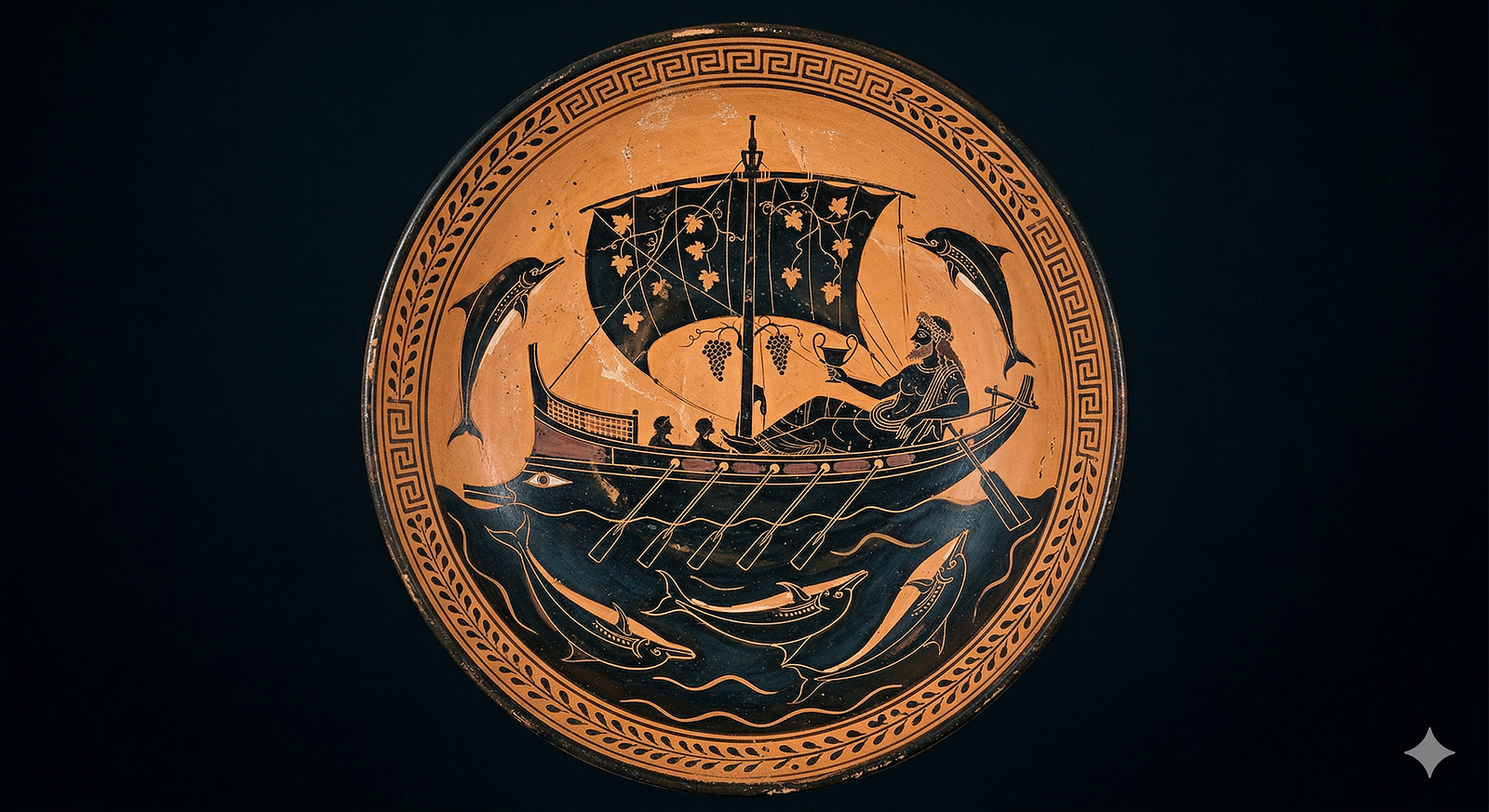
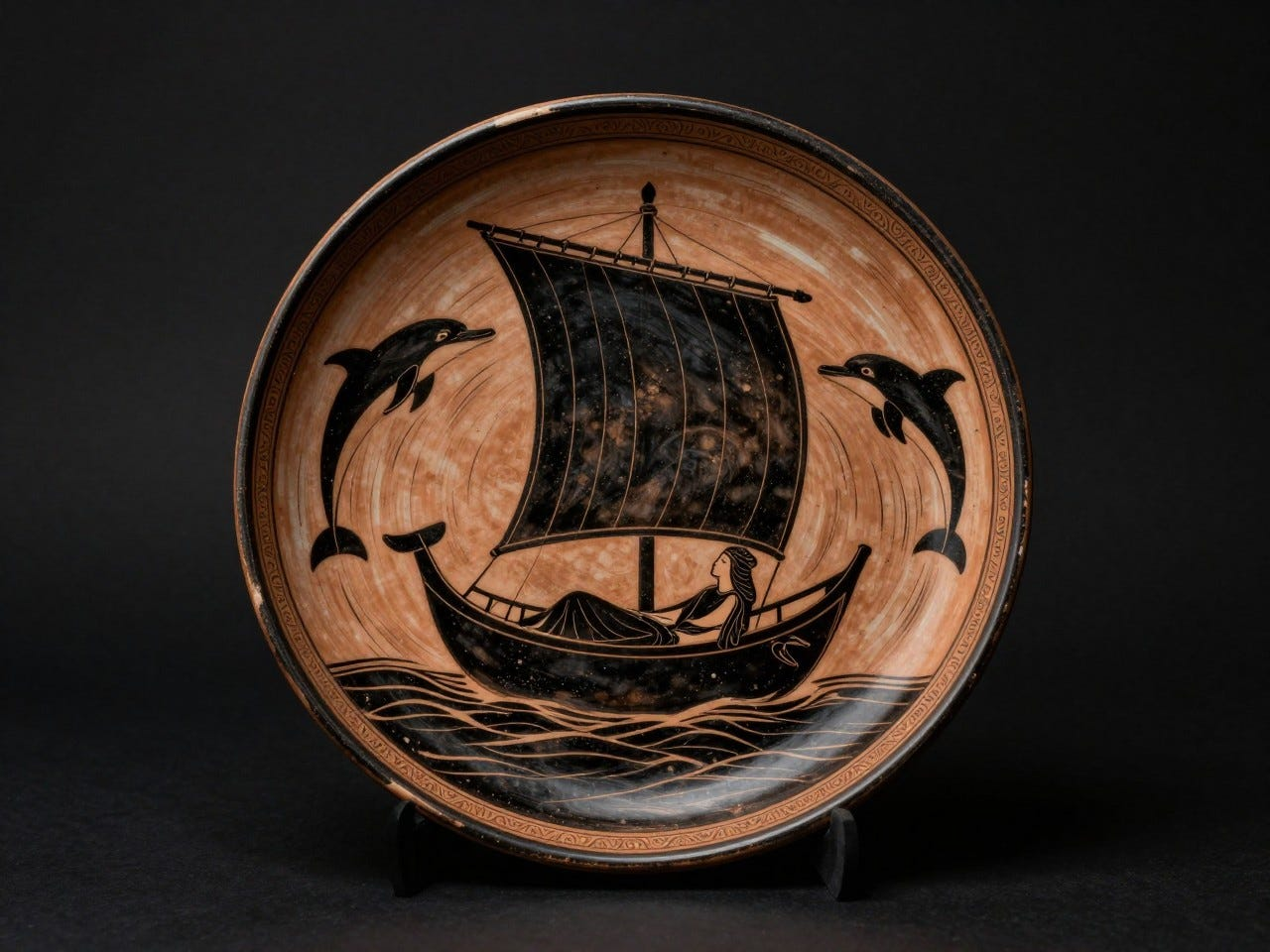
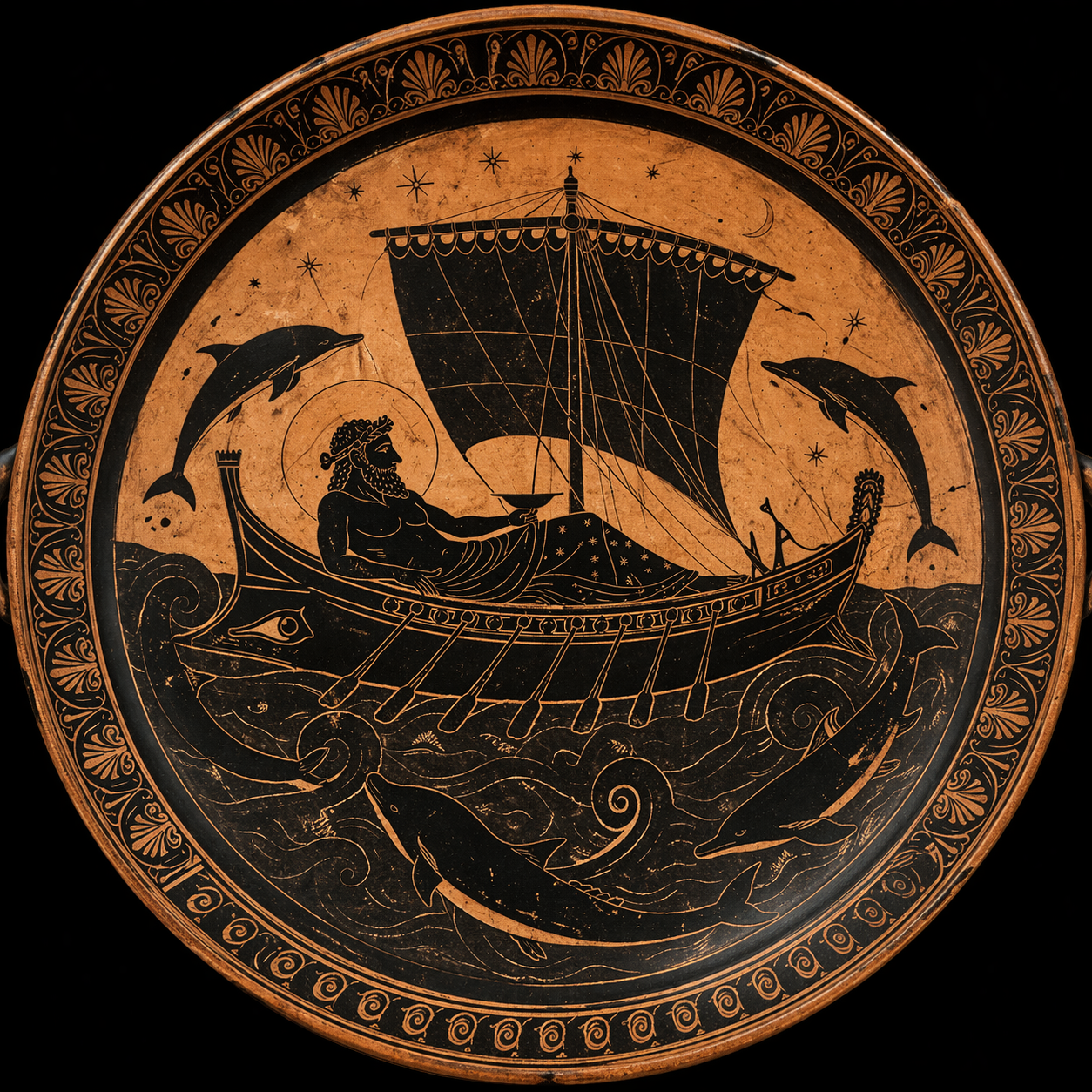
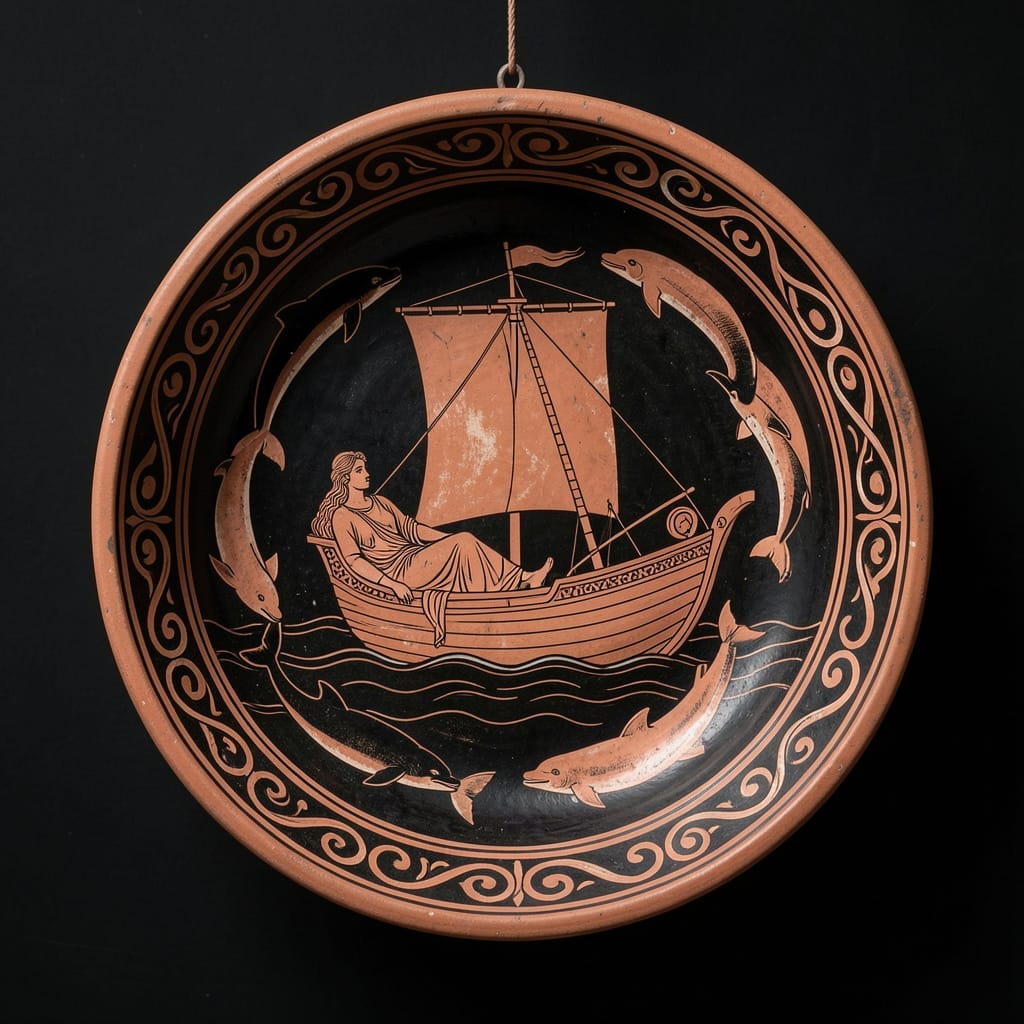
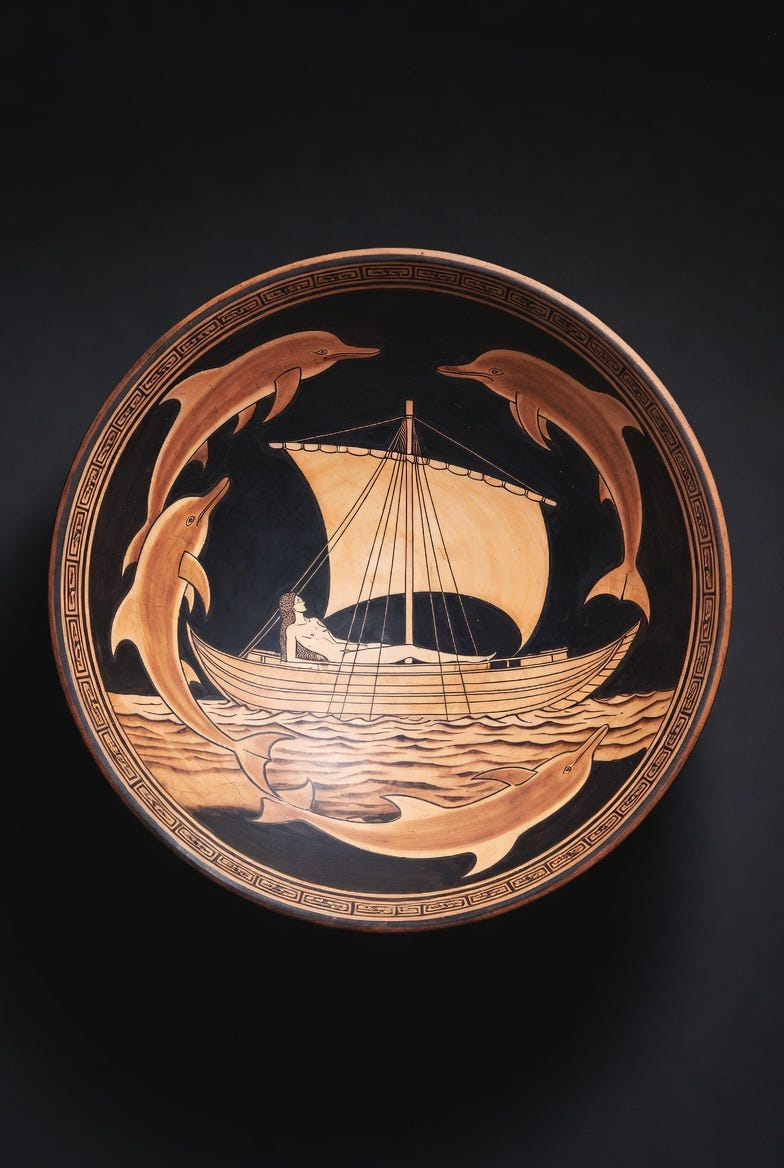
A circular painted vessel interior suspended against a deep matte black field, centered on a long narrow ship gliding across stylized wine-dark water. A serene divine figure reclines beneath a square sail while sleek dolphins curve around the hull in rhythmic arcs, their bodies forming a graceful ring of motion. Render the scene in lustrous black-figure pottery style with warm terracotta clay, razor-sharp incised contour lines, restrained pale highlights, and elegant ornamental bands hugging the rim. Keep the composition balanced, ceremonial, and graphic, with crisp silhouettes, mineral texture, fired-earth warmth, and a faint sense of age polished by centuries. The mood should feel calm, sacred, mysterious, and quietly exuberant, as if myth has been flattened into geometry without losing any of its pulse.
Open with a rapid spinning reveal of a terracotta vessel interior snapping into full frame against black. Let the painted ship drift forward as the sail catches an invisible gust and the dolphins begin circling in clean rhythmic loops around the hull. Add gleaming glaze highlights, subtle fired-clay texture, and sharp incised lines that flash as the camera pushes in with confident, beat-synced bursts. Use quick rotational transitions, sudden close crops on fins, sail, and reclining figure, then pull back to the full circular composition as if the ancient image has briefly come alive inside the ceramic surface. Keep the motion graphic, elegant, ceremonial, and hypnotic, ending on a crisp freeze with the dolphins locked mid-arc like a timeless emblem.
Songs to Pair With It:
- Andata — Ryuichi Sakamoto
- Eyes Be Closed — Washed Out