
Let’s start with the Schultüte — that mysterious, oversized cone of joy German kids clutch on their very first day of first grade. Picture a cardboard cone bigger than a six-year-old, stuffed with sweets, crayons, toys, and occasionally something practical (like a pencil sharpener, which is the German way of saying “fun is temporary, homework is forever”).
The ceremony? Families gather at the school — often with grandparents and plenty of photos in the making. Children proudly carry their Schultüte into the building, showing it off before the opening ceremony. Usually there are songs, speeches, maybe a performance from older students. Then the new first graders are led into their classroom for the very first time. Here’s the twist: the cone isn’t opened until after school, at home with family, so the magic lasts a little longer.
Why did the tradition start? Back in the 19th century, schools in Saxony and Thuringia wanted to soften the intimidating leap into formal schooling. The story went that cones “grew” on a special tree in the teacher’s garden, and when they were ripe, kids would start school. The myth faded, but the cones — and the sugar — remained.
And the payoff? It’s meant to get kids excited for what comes next: 13 years of school in the German system (unless a child switches paths into vocational training). That cone is really just the starter fuel for the marathon.

Driving in Germany: Equal Parts Precision and Adrenaline
Driving in Germany is not just transport — it’s an Olympic sport with paperwork. Here’s what makes it different from the U.S.:
- Autobahn rules: Some sections have no speed limit. Sounds thrilling, but you’d better stick to the right lane unless overtaking — camping in the left lane can earn you honks sharp enough to rattle your license plate.
- No right turn on red: In the U.S., you can turn right at a red after stopping. In Germany, nein — unless there’s a little green arrow sign posted. If not, you wait.
- Narrow streets: When a street squeezes too tight, the car facing the “yield” sign must give way. No sign? Then the driver on the side with the obstruction waits.
- Intersections without lights: Priority-to-the-right is king. Whoever’s on your right has the right of way, regardless of how fancy your car is.
- Four-way stops: Don’t exist. Seriously, Americans, you invented this headache — Germans skipped it.
- Traffic circles: Unlike in the U.S., cars inside the circle have right of way. Entering traffic yields.

German Foods: More Than Just Pretzels
If you think German cuisine is just bratwurst and beer, you’re missing 80% of the menu.
Schnitzel
It isn’t one dish — it’s a family. Wiener Schnitzel (veal), Schweineschnitzel (pork), Jägerschnitzel (mushroom sauce), Rahmschnitzel (creamy sauce), Zigeunerschnitzel (pepper sauce), Holsteiner (with egg and anchovies), and more. Each region has its spin, and nearly every Gasthaus claims their grandmother’s schnitzel recipe is the best.
Sausages
Germany boasts over 1,500 types of sausage. Weißwurst (Bavarian veal, eaten before noon), Thüringer Rostbratwurst (spiced and grilled), Blutwurst (blood sausage), Currywurst (sliced and slathered in ketchup-curry sauce), and dozens of regional salamis. The difference? Sausage is fresh or cooked, while salami is cured and air-dried — perfect for tucking into a backpack for a hike.
Bread: The National Obsession
If sausages are Germany’s soundtrack, bread is its heartbeat. With more than 3,000 recognized types of bread, from dense rye (Roggenbrot) to soft Brötchen rolls, every bakery feels like a museum of carbs. Germans take bread so seriously they even have a Bread Institute (yes, really) to document varieties. Forget toast — here, bread is an art form.

Cheese and Dairy
While Switzerland may steal the spotlight, Germany has its own cheesy delights: Allgäuer Bergkäse (mountain cheese), Handkäse (a tangy specialty from Hesse, often eaten with music — that is, onions), and Quark, the versatile fresh dairy somewhere between yogurt and cream cheese, beloved in both savory and sweet dishes.
Desserts Worth the Calories
- Black Forest Cake (Schwarzwälder Kirschtorte): Chocolate sponge, whipped cream, cherries, and a splash of cherry brandy.
- Apfelstrudel: Paper-thin dough wrapped around spiced apples, raisins, and breadcrumbs.
- Berliner: A jam-filled doughnut with no hole, eaten on New Year’s Eve and during Carnival season.
- Bienenstich (Bee Sting Cake): A yeast-based cake with caramelized almond topping and a creamy filling — sweet enough to forgive the name.
Beer and Beyond
Beer needs no introduction: the Reinheitsgebot of 1516 set the rules, and today Germany has over 1,500 breweries. But don’t overlook regional wines (like Riesling from the Mosel Valley) or schnapps, often homemade and served with a wink after dinner.

Extra Tidbits Worth Dropping at a Party
- Germans recycle with near-military precision. Put a yogurt cup in the wrong bin, and you may get a neighborly lecture.
- Beer purity law (Reinheitsgebot) dates back to 1516, dictating beer could only be made with water, barley, and hops. Yeast was added later (discovered by accident — thank you, science).
- You can buy beer at McDonald’s. Enough said.
- German McDonald’s breakfasts often include Nutella packets and pretzels — proof globalization has limits.
Art Prompt:
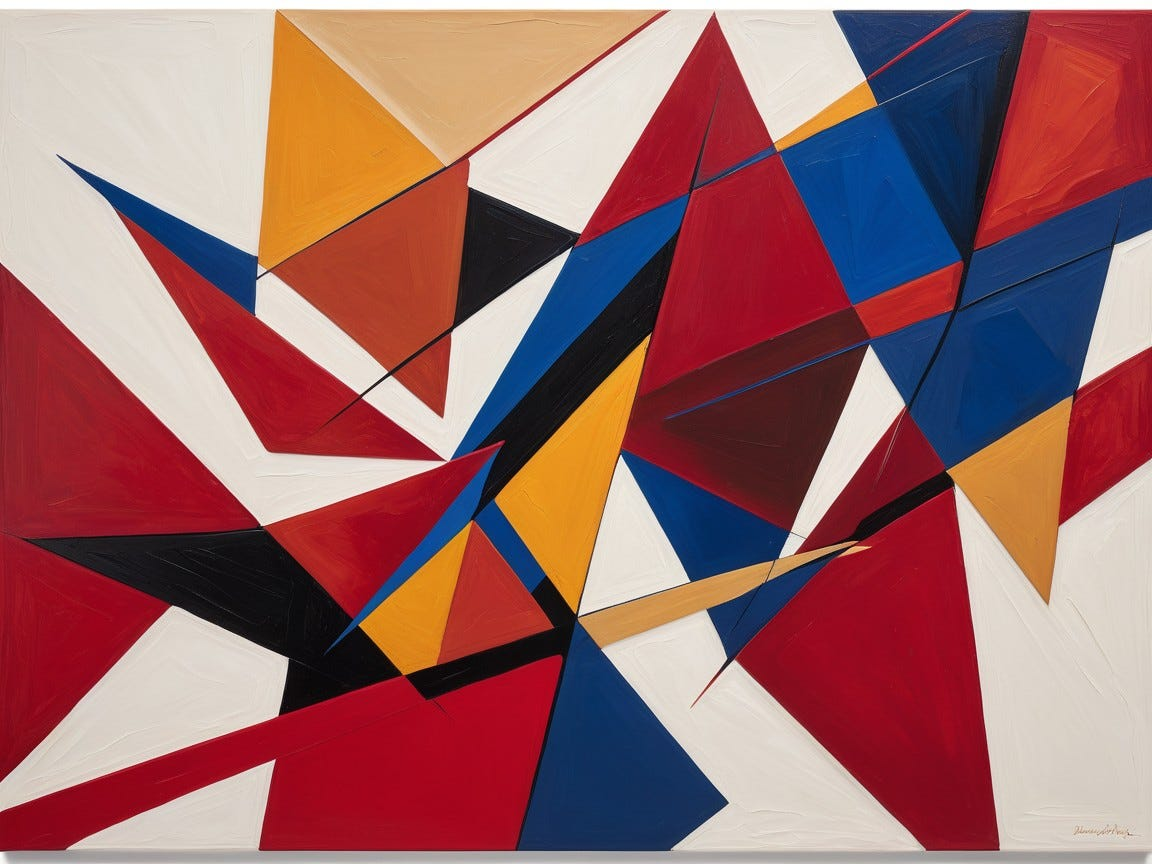
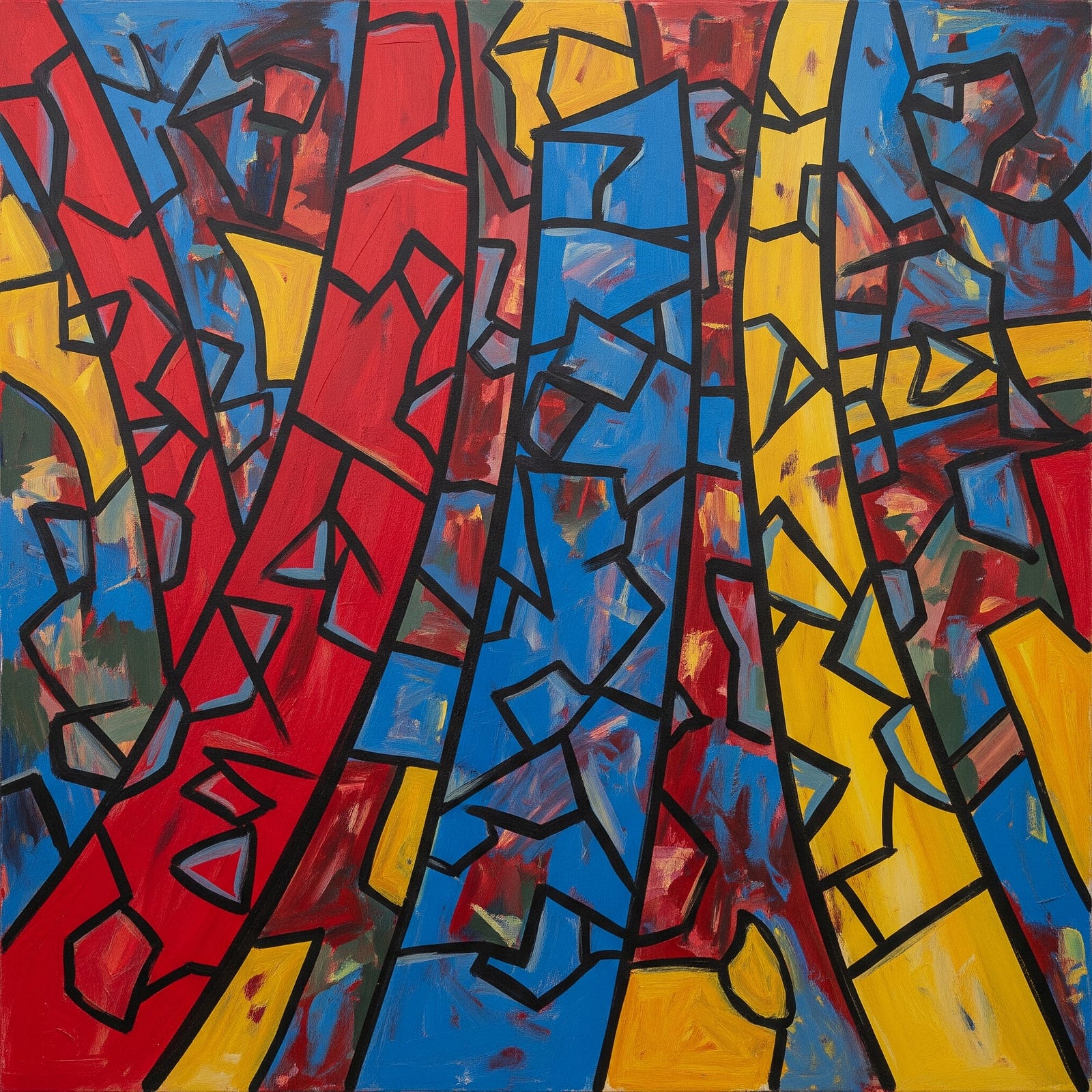
A vibrant tableau of sweeping, fragmented planes in bold crimson, cobalt, and ochre, layered with fractured outlines that distort familiar forms into geometric abstraction. Shapes overlap like shards of glass, creating rhythm through repetition and dissonance. The canvas pulses with restless energy — broad, assertive brush strokes clash with softer smears, evoking a sense of both chaos and deliberate control. The atmosphere feels urgent, modern, and emotionally raw, as if the world has been reassembled through fractured memory.
Video Prompt:
Camera sweeps across bold crimson, cobalt, and ochre shapes shattering and reforming in rhythmic motion. Fragments pulse with kinetic energy, rotating, colliding, and dissolving like shards of living glass. Wide-angle pans reveal sweeping, fractured landscapes of color, then zooms collapse into tight, vibrating textures of paint strokes. Each transition pulses in sync with a hypnotic beat, radiating urgency and raw emotional force.
Songs to Pair With the Video
- “Lotus Flower” — Radiohead
- “Open Eye Signal” — Jon Hopkins
What do you think — would you unwrap a Schultüte today if it meant sitting through another 13 years of algebra? And do you think America should skip the four-way stop and go full German circle? Comment below and follow for more deep dives into the quirks of culture, cars, and cuisine.