
Robotic Process Automation (RPA) is the quiet backstage crew of the business world — software robots that follow rules so precisely they’d make a Swiss watch blush… except we’re not using that metaphor, so imagine instead a librarian who never forgets where every single book is and reshelves them perfectly every time.
What is it? RPA is a technology that uses software “bots” to perform structured, rule-based tasks by mimicking human interactions with digital systems. Think data entry, invoice processing, or copying information from one system to another — if it’s predictable, RPA can probably handle it.
Is it still relevant? Absolutely. While the AI hype train roars past at breakneck speed, RPA remains quietly indispensable for organizations drowning in repetitive, rules-driven processes. Its strength lies in reliability rather than creativity.
Pros and Cons
Pros:
- Accuracy and speed — no coffee breaks, no typos.
- Works with existing systems without overhauling them.
- Scales easily once processes are mapped.

Cons:
- Useless for processes that require judgment or unstructured decision-making.
- Can be brittle — small changes in software interfaces may break bots.
- Initial setup can take longer than expected.
Strengths and Weaknesses RPA shines when processes are stable, repetitive, and clearly documented. It struggles when workflows change often or involve exceptions not covered in the rules.
What is it used for? Banking compliance checks, HR onboarding, insurance claim processing, order entry, and customer data migration — basically, the unglamorous but mission-critical work that keeps companies running.
An Example A logistics company uses RPA to pull order data from emails, input it into an ERP system, and generate shipping labels automatically — cutting the time from 10 minutes per order to under 30 seconds.

Alternatives
- Business Process Management (BPM) tools for broader process redesign.
- API integrations for more robust, code-driven automation.
- Low-code automation platforms like Zapier or Make for simpler tasks.
Famous Art Connection? RPA hasn’t inspired a gallery wall yet, though the hypnotic repetition of its processes could make a good conceptual art piece.
Popularity Trends Gartner and Forrester data show steady adoption growth through the 2010s, peaking in buzz around 2019–2021. Popularity is now plateauing as AI-driven automation steals headlines, but RPA remains a key tool in enterprise arsenals.

History and Origins The term “RPA” emerged in the early 2000s, evolving from screen-scraping and workflow automation tools of the 1990s. Companies like Blue Prism, UiPath, and Automation Anywhere popularized it.
Inventor No single inventor — RPA grew organically from multiple software automation pioneers.
Top Users Finance, insurance, healthcare, telecommunications, and manufacturing sectors lead adoption. Big names include Deloitte, Accenture, AT&T, and major banks.

Similar to… Macros, screen scraping, and API automation — but with enterprise-grade management and governance baked in.
Does it work well with AI? Yes. AI can handle unstructured tasks (like reading messy handwriting) while RPA handles the structured parts (like moving that data into a database). The two together form Intelligent Automation.
Tech Stack Often built on .NET, Java, or Python back ends; supports integration via APIs, databases, and UI-level automation.
Best Tools UiPath, Blue Prism, Automation Anywhere, and Microsoft Power Automate.
Tidbits
- Some companies report ROI in less than a year.
- RPA bots can be attended (triggered by humans) or unattended (running on schedules).
- Analysts predict the market will keep growing modestly, even with AI integration on the rise.
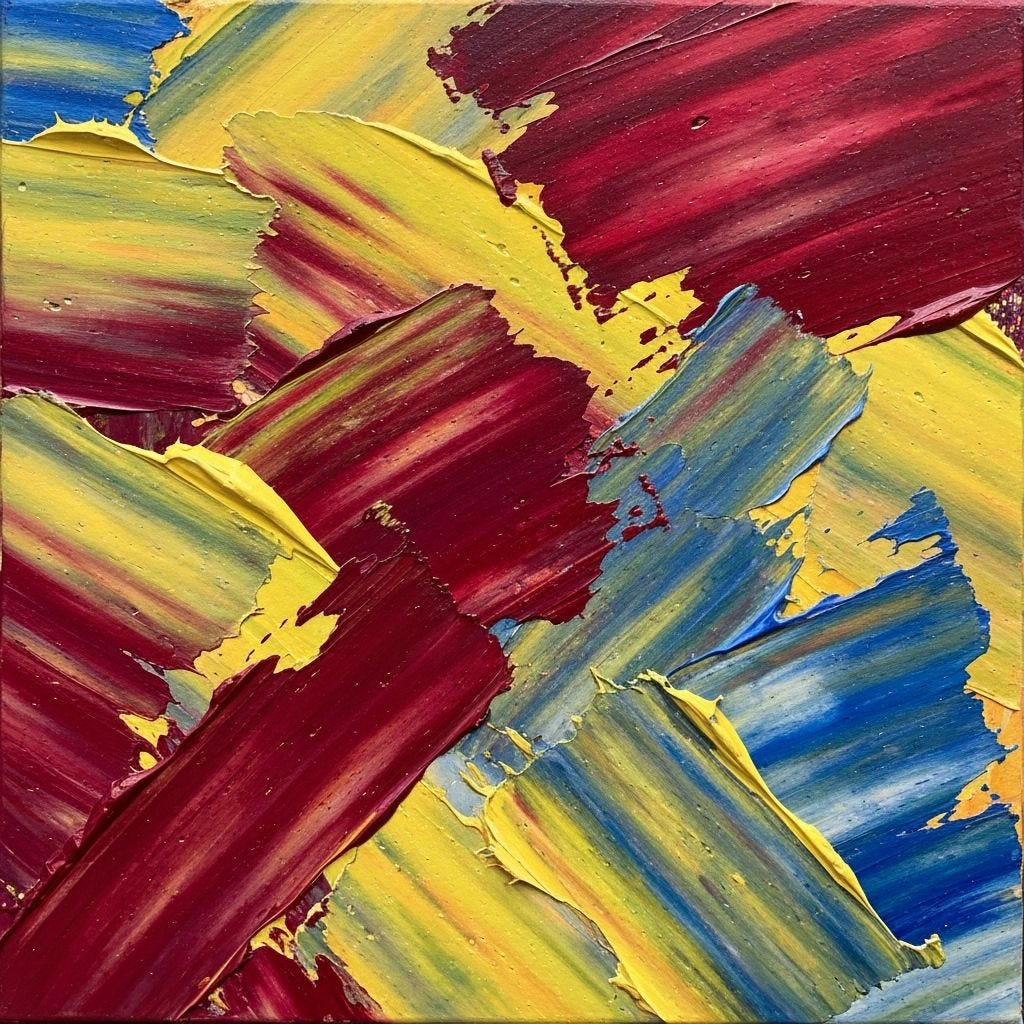
Art Prompt: A vast expanse of bold, fractured color fields explodes across the canvas, where deep crimsons bleed into searing yellows and cool cobalt swaths. Paint is applied in sweeping, impulsive strokes, layered so thick they create ridges and valleys like a tactile map of emotion. The composition feels both chaotic and intentional, with jagged intersections of color meeting in electric tension, evoking raw energy and unfiltered expression.

Video Prompt: Paint bursts onto the screen in rapid, forceful strokes — deep crimsons colliding with blazing yellows and cool cobalt waves. The colors fracture and merge in fast, hypnotic motion, ridges of paint catching shifting light. The camera darts between sweeping gestures and tight close-ups of textured valleys, creating an urgent, pulsing rhythm as if the canvas itself is breathing with raw emotion.
Pair it with:
- Strange Mercy — St. Vincent
- Satellites — Mew
Follow for more breakdowns like this, and drop your thoughts in the comments — what’s the most repetitive task you’d happily hand off to a bot?