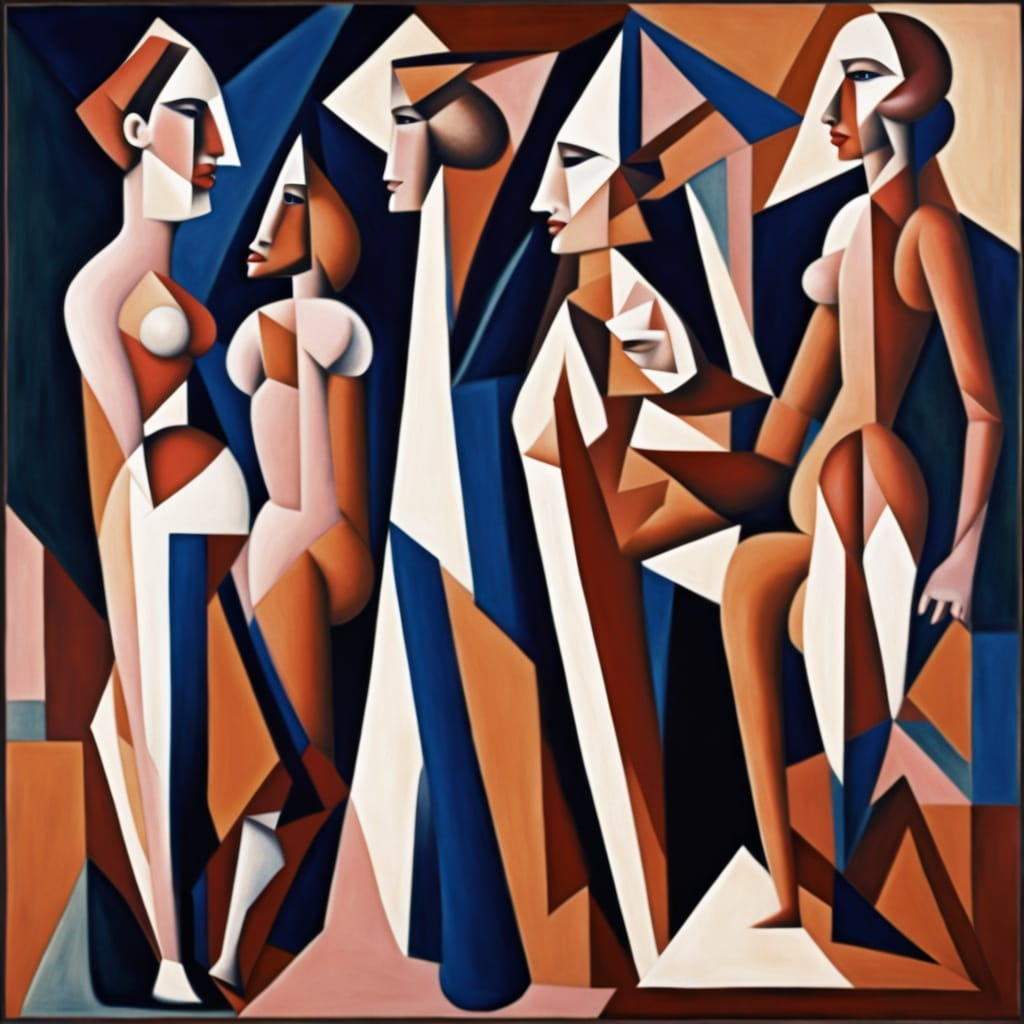

PyTorch isn’t just a machine learning library — it’s the friend who shows up to the party with protein bars and a whiteboard and somehow convinces everyone to start lifting tensors instead of weights.
What is it? PyTorch is an open-source machine learning library developed primarily by Facebook’s AI Research lab (FAIR). It’s like NumPy got swole and decided to go GPU hunting. It’s built on Torch, which was written in Lua (because of course it was). PyTorch replaced that Lua stuff with Python, added automatic differentiation, and turned it into the darling of researchers and engineers alike.
Is it still relevant? Yes. Extremely. PyTorch is one of the top two deep learning frameworks globally (the other being TensorFlow). It’s the go-to for academia, bleeding-edge AI startups, and the occasional ambitious high schooler who thinks building a neural net over the weekend sounds fun.
Pros and Cons?

Pros:
- Dynamic computation graphs: PyTorch builds graphs on-the-fly. Need to change your model in the middle of a forward pass because your cat walked on the keyboard? Go ahead. It won’t flinch.
- Pythonic and intuitive: You write PyTorch like you write regular Python. It doesn’t feel like you’re speaking a different dialect of angry compiler warnings.
- Strong GPU acceleration: CUDA support is baked in like chocolate chips in a warm ML cookie.
- Tight community and documentation: If Reddit, Stack Overflow, or Hugging Face forums were bars, they’d all be talking PyTorch.
Cons:
- Slightly less optimized for production compared to TensorFlow + TensorFlow Serving
- The learning curve is still “intermediate algebra meets systems design” for total beginners
What’s it used for? Computer vision, natural language processing, generative models (hello GANs and diffusion!), reinforcement learning, audio classification, biomedical data… basically, if it’s AI and not cursed legacy code, PyTorch can do it.
Can you give me an example? Sure! Here’s the world’s fastest neural net that does almost nothing but still looks cool:
import torch
import torch.nn as nn
import torch.optim as optim

# Dummy model
model = nn.Sequential(
    nn.Linear(10, 50),
    nn.ReLU(),
    nn.Linear(50, 2)
)
# Fake data
x = torch.randn(16, 10)
y = torch.randint(0, 2, (16,))
# Training setup
criterion = nn.CrossEntropyLoss()
optimizer = optim.Adam(model.parameters(), lr=0.001)
# One training step
outputs = model(x)
loss = criterion(outputs, y)
loss.backward()
optimizer.step()
What are the alternatives?
- TensorFlow: The other elephant in the AI room. Big in production, less charming in syntax.
- JAX: From Google, used in bleeding-edge ML research and in households that say “vectorize or die”.
- MXNet, Chainer, CNTK: Yes, they exist. No, you don’t need to use them in 2025 unless you’re a time traveler from 2017.

Is it the subject of any famous art? No. But if Picasso had access to GPUs, I have no doubt “Guernica” would be an attention map visualization.
How popular is it? PyTorch is wildly popular in academia, Kaggle competitions, and even production environments now. It’s used by Meta, Tesla, OpenAI (at least sometimes), Amazon, Salesforce, and probably your weird neighbor who’s training a chatbot to emotionally replace his dog.
Is it rising or falling? Still rising, especially with Meta backing it and contributions from AWS, Microsoft, and the broader open-source horde. Its flexibility in research and improved deployment tools are pushing it into more production roles too.
When was it most popular? You’re looking at it. From 2021 through 2025, PyTorch has taken the research community by storm. Its graphs are dynamic and so is its fanbase.
History? Born in 2016, PyTorch was the spiritual successor to Torch, which was strong but… Lua. In 2019, PyTorch 1.0 launched with stable APIs and eager-to-graph mode. It has been flexing ever since.
Inventor? FAIR — Facebook AI Research. Which makes you wonder: is this the most productive thing to ever come out of Facebook?
What companies use it most?
- Meta (obviously)
- Tesla
- Amazon (AWS has a full-on PyTorch on SageMaker solution)
- Microsoft (yes, despite pushing ONNX)
- Hugging Face (they love PyTorch like pandas love bamboo)
Is it similar to anything else? Yes — TensorFlow, JAX. But PyTorch’s dynamic graphs are more intuitive for people who think in Python and cry in NumPy.
Does it work well with AI? It is AI. Like, half of modern LLMs and vision models are PyTorch babies.
What tech stacks does it work with?
- CUDA (for GPUs)
- ONNX (for exporting models to other runtimes)
- NumPy, pandas, scikit-learn
- Flask, FastAPI, Django (for deployment)
- Lightning, Hugging Face Transformers, and Triton (to make you look smarter)
Tools that work best with it?
Interesting tidbits?
- PyTorch was behind the first few versions of GPT and many diffusion models.
- It moved to the Linux Foundation, ensuring it stays open and community-driven.
- The mascot is a flame. Because it’s lit. 🔥

Art Prompt: A bold, angular interior scene composed of intersecting planes and fractured forms, depicting five distorted female figures arranged in a confrontational pose. The background is a chaotic collage of sharp, overlapping geometric shapes in shades of terracotta, pale rose, deep blue, and muted ivory. Faces are mask-like and eyes are intense, rendered with a sense of primal abstraction. The mood is tense and enigmatic, with a sense of ritual or symbolic presence. Brushwork is fierce and deconstructed, evoking the early Cubist disruption of form and perception.
Video Prompt: Begin with a slow zoom into an angular, Cubist interior where five fragmented female figures come into view. Their movements are stilted and geometric, as if animated collage pieces. Shapes shift and recombine around them in bursts of terracotta, rose, and deep blue. The scene pulses with an abstract rhythm — planes rotate, eyes flicker, and mask-like faces dissolve into shifting forms. Light fractures and refracts through the collage, mimicking the tension of a psychological ritual. Loop with a glitch effect that resets the geometry, making it perfect for looping visuals.
Suggested Songs:
- Ghost Voices — Virtual Self
- So Will Be Now… — John Talabot
If you’re into machine learning, or just like your frameworks served hot and dynamic, smash that follow and let me know in the comments: what’s your PyTorch moment?