If you ever wanted proof that history occasionally hands one exhausted lawyer the keys to a collapsing empire and says, “Good luck, champ,” allow me to introduce Alexander Kerensky.
Kerensky is one of those figures who tends to get overshadowed by the louder, scarier, and more slogan-friendly men who came after him. Lenin gets the posters. Trotsky gets the dramatic prose. Stalin gets the cold shiver. Kerensky gets remembered as the guy in the middle, which is unfair, because being “the guy in the middle” in Russia in 1917 was roughly like being asked to referee a knife fight during an earthquake while the building is on fire.
And yet, for a brief moment, he stood at the center of Russia’s best shot at becoming something like a democratic state rather than a monarchy on one side or a one-party dictatorship on the other.
That alone makes him worth knowing.
So who was Kerensky?
Alexander Kerensky was born in 1881 in Simbirsk, later known as Ulyanovsk, which is already a mildly rude historical coincidence because that is also the city associated with Vladimir Lenin. Imagine being born in the same place as your future historical replacement. That is not ideal branding.
He studied law in St. Petersburg, got involved in radical politics, and made a name for himself as a lawyer defending political dissidents. Later he entered the Duma, Russia’s parliament, where he became known as a gifted speaker and a leading figure on the moderate socialist left. He was not a Bolshevik, and he was not trying to build a dictatorship of the proletariat. He was a reformer who wanted Russia to become freer, more representative, and more modern without setting the whole country on fire.
History, unfortunately, had other hobbies.
What was happening in Russia at the time?
By the time Kerensky rose to prominence in 1917, Russian society was a gigantic pile of dry timber waiting for one more spark.
Tsar Nicholas II had already spent years convincing people he was not the man for the job. The 1905 Revolution had forced the regime to create the Duma, but the monarchy never became meaningfully stable or genuinely democratic. Reform came in grudging drips, reaction came in buckets, and public trust was about as sturdy as a paper umbrella in a hurricane.
Then came World War I, which hit Russia like a brick through a stained-glass window.
The army took terrible losses. Supplies were a mess. Transportation broke down. Inflation ate people alive. Food shortages turned cities into pressure cookers. Soldiers were exhausted, workers were angry, peasants wanted land, and just about everyone had reached the point where “Maybe the entire system should go away” stopped sounding radical and started sounding practical.
So when the February Revolution of 1917 broke out, it was not one neat little political tantrum. It was the accumulated fury of war, incompetence, hunger, and a monarchy that had worn out whatever patience the country had left.
The tsar abdicated. Suddenly the old order was gone.
And now came the awkward part: what exactly do you replace an autocracy with when the floor is still shaking?
What was happening in the world?
The world beyond Russia was not exactly calm either.
Europe was still deep in World War I. Britain and France desperately wanted Russia to stay in the fight because if Russia collapsed, Germany could shift more strength to the Western Front. So while ordinary Russians were looking around and saying, “We would actually like bread, peace, and not dying,” the Allies were basically saying, “That is all very understandable, but could you perhaps keep fighting for a while longer?”
This created one of the great political nightmares of Kerensky’s life.
He was trying to build a freer Russia in the middle of a catastrophic war, while balancing domestic demands for peace against international pressure to continue the war. That is like trying to host a dinner party where one table wants soup, the other wants revenge, and the kitchen is on fire.
Why is Kerensky important?
Kerensky mattered because, for a brief time, he was the bridge between revolutionary energy and constitutional possibility.
After the February Revolution, he became one of the few major figures with a foot in both of the main power centers: the Provisional Government and the Petrograd Soviet. That made him unusually important and unusually doomed. In 1917 Russia had what historians often call “dual power,” meaning the formal government had authority on paper, while the Soviet had real influence in the streets, factories, and garrisons. That is not a recipe for calm governance. That is a recipe for everybody glaring at each other across a table while the soup gets cold and the country disintegrates.
Kerensky first served as minister of justice, then minister of war, and eventually prime minister. He became famous for his speaking ability, his energy, and his knack for appearing heroic in moments when other politicians looked like damp paperwork.
He also helped push through something genuinely important: a burst of civil liberties that included freedom of speech, press, assembly, and religion, along with universal suffrage and equal rights for women. That part is easy to miss because the story ends badly, but it matters. Kerensky’s Russia was not just “the failed bit before the Bolsheviks.” It was a real democratic opening, however short-lived and however unstable.
That opening deserves more respect than it usually gets.
What is he most known for?
Mostly three things:
First, he became the face of the Russian Provisional Government in its final phase.
Second, he championed continuing Russia’s participation in World War I, which turned out to be politically disastrous.
Third, he lost the power struggle with the Bolsheviks, which is the sort of thing history tends to remember very aggressively.
His biggest gamble was the military campaign usually called the Kerensky Offensive. He hoped a successful offensive would revive patriotic morale, stabilize the front, and strengthen the new revolutionary government. Instead, it fizzled, Russian troops refused to fight with any real conviction, and the government looked weaker than ever. That was the moment when a lot of people began to suspect that stirring speeches were not going to repair an army that had already emotionally clocked out.
Then came the Kornilov affair, another lovely little disaster in which Kerensky’s confrontation with General Lavr Kornilov helped wreck what trust remained between the government, the military, and the public. The right distrusted him. The left distrusted him. The Bolsheviks gained prestige by looking like the only people who seemed prepared to act decisively.
That is the problem with moderation in a revolutionary crisis. It sounds good in a pamphlet. It is much harder when everyone else has either a rifle, a manifesto, or both.
Did Kerensky help society at all, or was he just the man standing nearest the collapse?
He did help, and this is where history should be a little less smug.
Kerensky’s moment in power represented a real, if fragile, democratic experiment. The Provisional Government under his influence expanded civil liberties and tried to move Russia away from arbitrary autocratic rule. There was a genuine attempt to create a freer public life and a more representative political order.
That may not sound flashy next to armored trains and revolutionary slogans, but it matters enormously. Liberalization is often less theatrical than seizure. It does not arrive with as many hats or barricades. But if your goal is a society where people can speak, vote, assemble, publish, and not get tossed into a dungeon every time they annoy the state, then Kerensky’s moment was significant.
His failure also taught a brutal lesson: democracy without stability, legitimacy, food, peace, and a workable power structure is in terrible danger. Kerensky did not simply fail because he was weak or foolish. He failed because he was trying to run a democratic transition in conditions that would have made even excellent leadership look shaky.
That does not make him flawless. It does make him more interesting.
Why did democracy in Russia slip through his fingers?
Because he was trying to land a plane while the wings were being argued over by six political parties, half the army wanted out, peasants wanted land immediately, workers wanted power, the Allies wanted war, the right wanted order, the Bolsheviks wanted revolution, and the existing state machinery was already coughing up screws.
More specifically, Kerensky had several impossible problems at once:
He continued the war when the country wanted peace.
He could not solve the land question fast enough for peasants who were done waiting.
He presided over a government with formal authority but shaky real control.
He alienated both conservatives and radicals.
And he underestimated how quickly disciplined extremists can beat confused moderates when institutions are crumbling.
That last one is a timeless political horror story, by the way.
Is he the subject of any famous art?
Yes, though not in the “everyone has it on a dorm wall next to Van Gogh” sense.
The great Russian painter Ilya Repin made a portrait of Kerensky, and that portrait had a dramatic afterlife of its own. It was later hidden away because Soviet authorities found it politically inconvenient, which is usually a sign that the artwork has wandered into dangerous historical territory. There were also other portraits, including one by Isaak Brodsky, and there are well-known photographs of Kerensky from 1917 in the Library of Congress collections.
So the answer is: yes, he appears in notable art and portraiture, but he is not the star of some universally famous blockbuster painting. He is more the subject of historically charged portraiture, which honestly suits him. Kerensky was never really a mythic icon. He was a man in a suit trying to stop history from becoming worse. That is a harder thing to paint, but a much more human one.
Any interesting tidbits?
A few, because history is never content to be normal.
Kerensky was famous for his oratory. People really did find him electrifying. In another era he might have been remembered as a great reform politician. In 1917 Russia, being a brilliant speaker was a little like bringing a violin to a tank battle.
He was one of the only major figures to hold positions in both the Petrograd Soviet and the Provisional Government, which made him uniquely influential for a time and uniquely vulnerable when those institutions pulled apart.
After the Bolsheviks took power, he escaped, went into exile, and spent much of the rest of his life writing and lecturing about the revolution. There is something profoundly melancholy about that. Imagine spending decades explaining how the road not taken might have gone.
Also, the dates around 1917 can look mildly possessed because Russia was still using the Julian calendar at the time, so you will often see events listed in both Old Style and New Style dates. If Russian history ever seems like it is arguing with itself about what day it is, that is why.
So how should we remember him?
Not as a punchline. Not just as “the guy Lenin beat.”
Kerensky should be remembered as the face of Russia’s brief democratic near-miss: a talented, flawed, overmatched leader who tried to move a collapsing empire toward liberty and representative government while standing in the middle of war, hunger, class fury, military collapse, and political extremism.
He did not save Russian democracy.
But for one strange, fragile, electric stretch of 1917, he was one of the last serious people trying to build it.
And history being the cruel comedian that it is, that may be exactly why he matters.
Friday Night Laugh’s Mini
Kerensky storms into a cabinet meeting and slams both hands on the table.
“Gentlemen, Russia needs unity, discipline, sacrifice, and a shared democratic vision.”
A worker says, “We want bread.”
A soldier says, “We want peace.”
A peasant says, “We want land.”
A general says, “We want order.”
A Bolshevik in the back says, “We want the whole building.”
Kerensky straightens his jacket, clears his throat, and says, “Excellent. I can see we are very close to consensus.”
The janitor peeks in, takes one look around, and says, “I just mopped up one revolution.
I am not starting a subscription plan.”
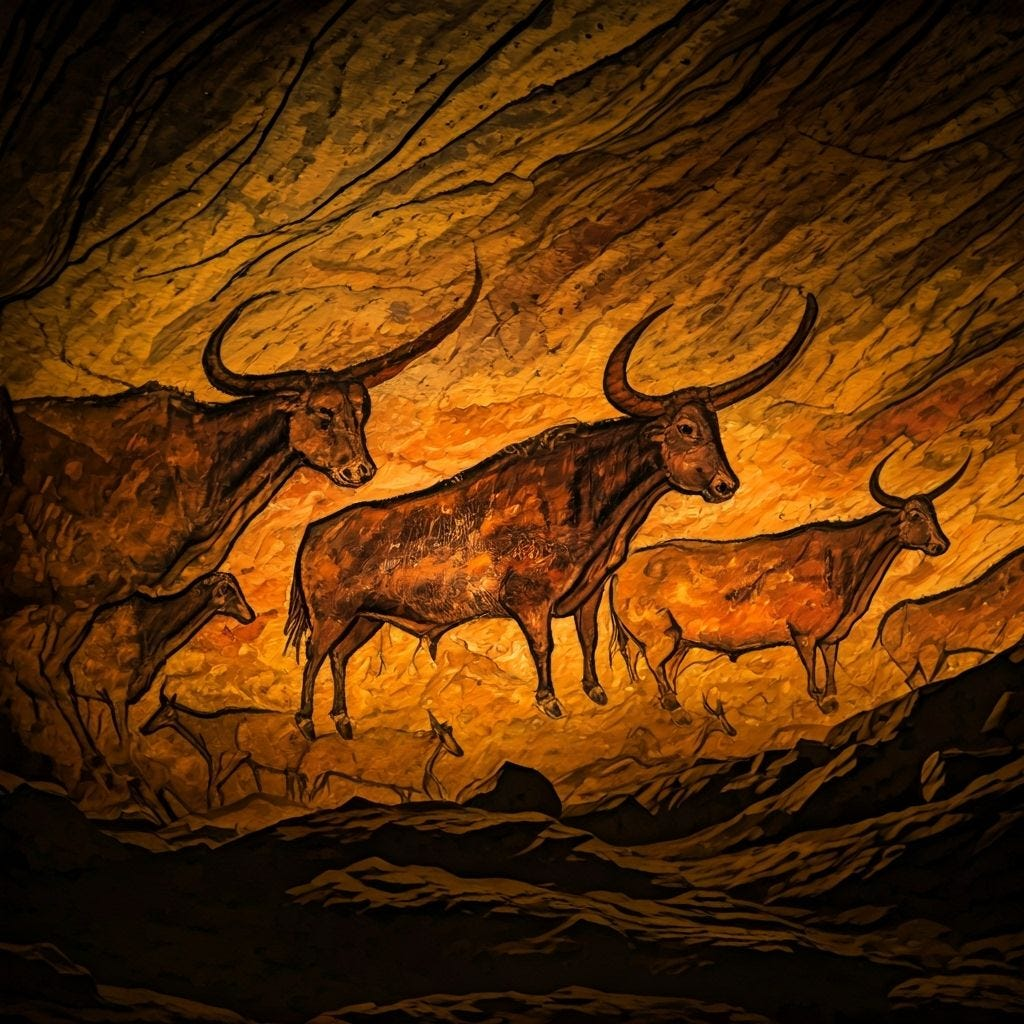
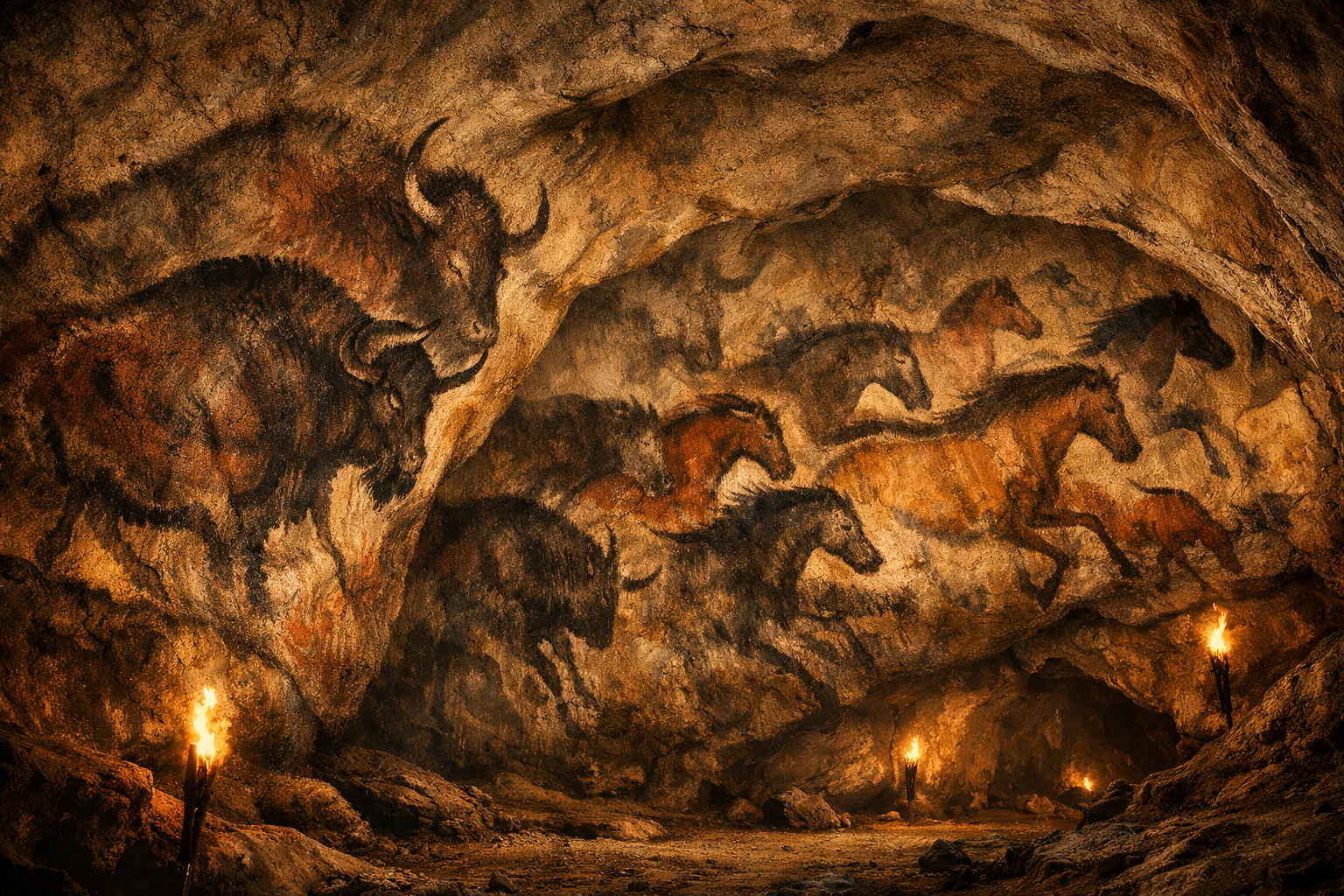
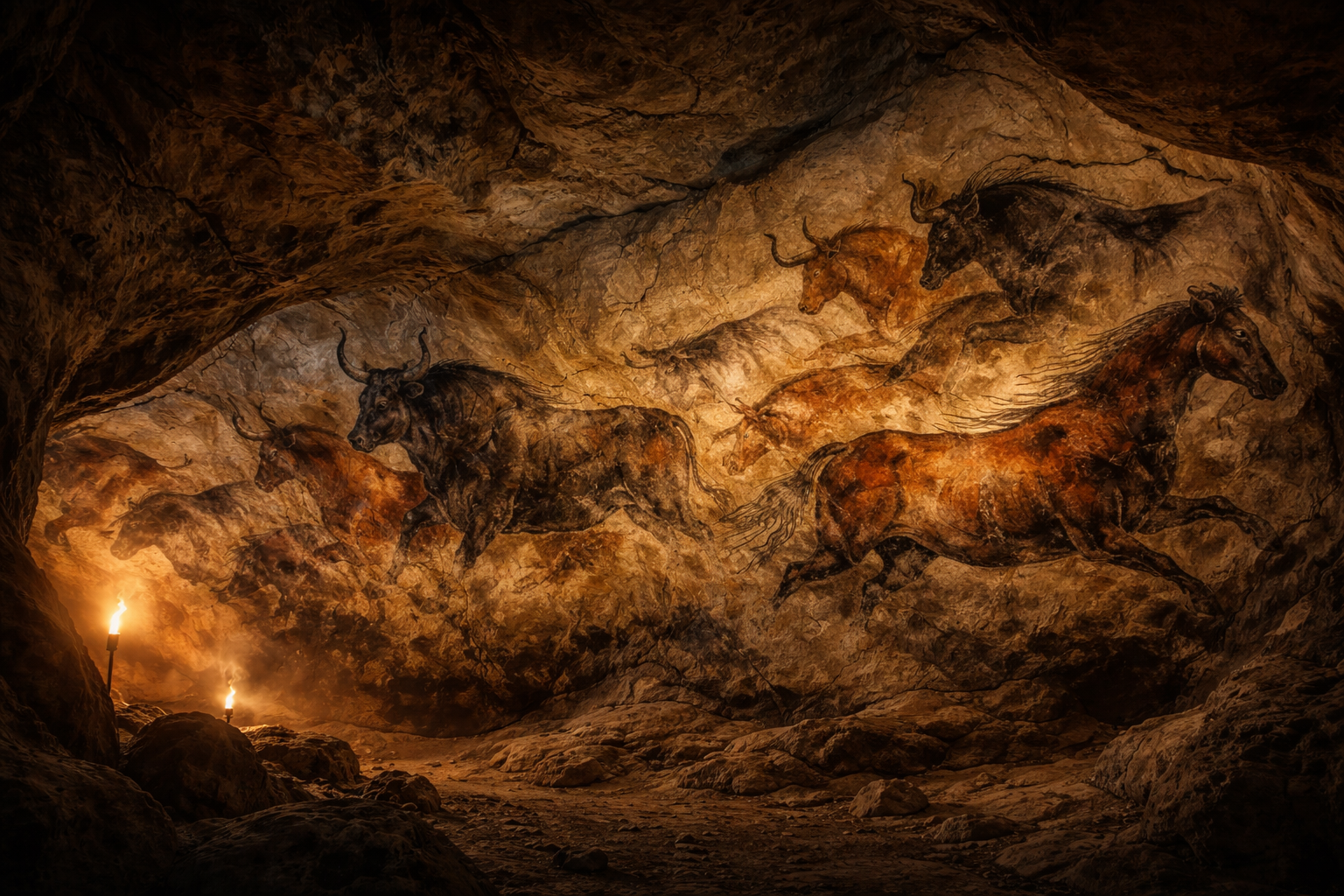
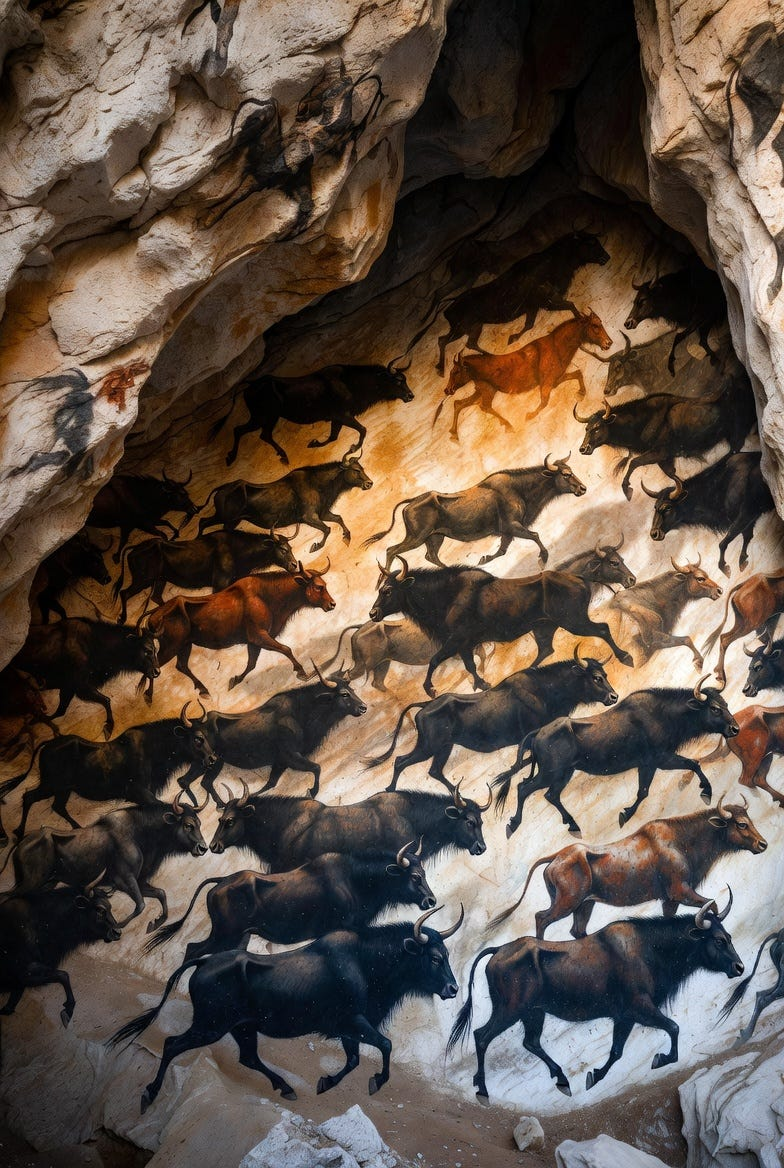
Art Prompt (Prehistoric Art):
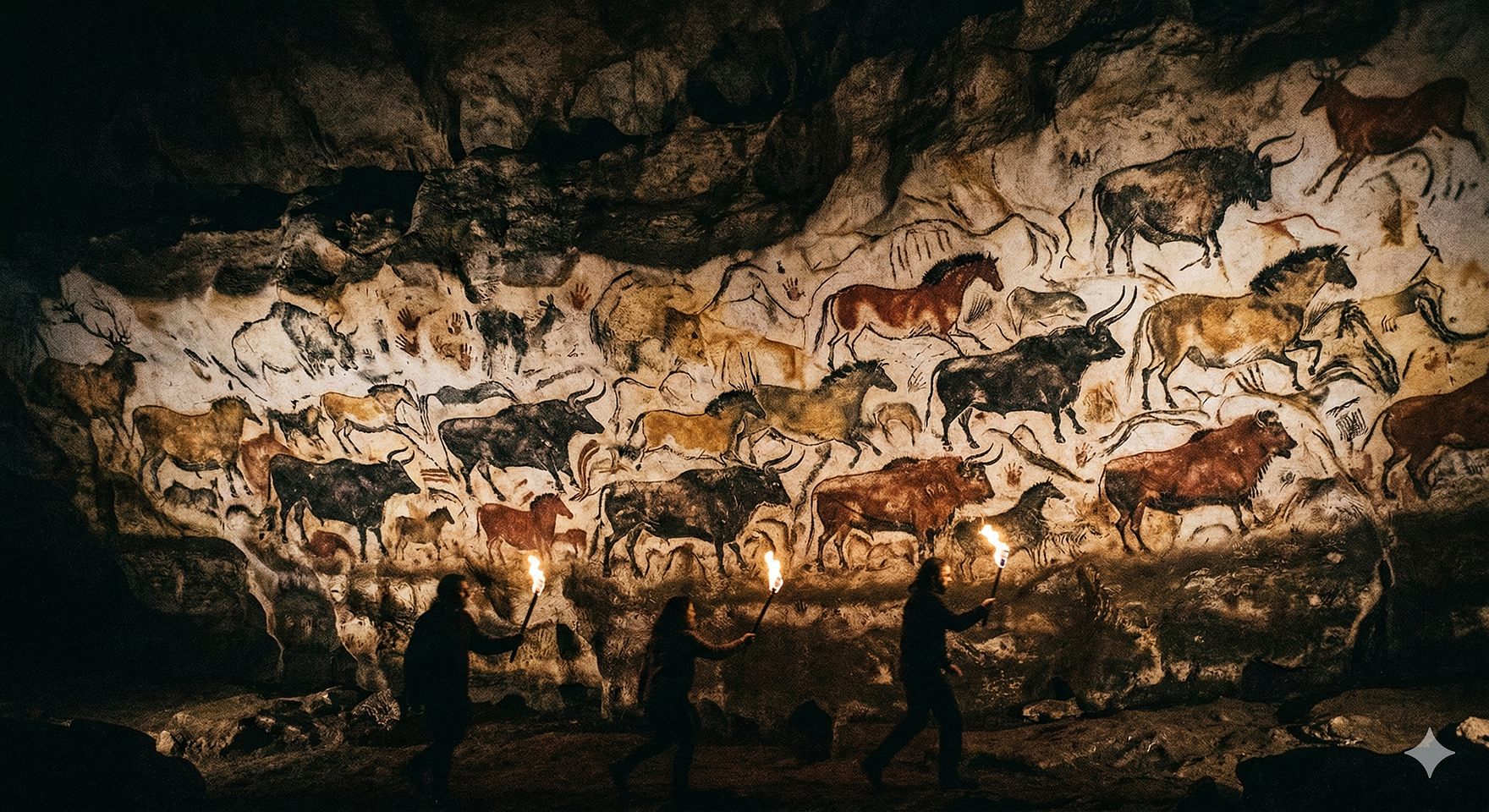
A vast limestone cave chamber illuminated by wavering torchlight, its curved walls alive with sweeping mineral pigments and ancient motion. Across the stone surface, herds of powerful wild bulls and horses surge in overlapping rhythm, their bodies rendered with earthy blacks, iron reds, smoky umbers, and dusty ochres. The contours of the rock are used as natural anatomy, making shoulders bulge and flanks ripple as if the animals were emerging from the cave itself. Shadows flicker unevenly, causing horns, hooves, and sweeping manes to seem to move in pulses. The composition feels primal, immersive, and ceremonial, with raw texture, charcoal smudges, hand-worked pigments, and a reverent atmosphere of mystery, memory, and deep human time.
Video Prompt:
Begin with darkness and the crackle of a torch, then reveal a cave wall in slow, cinematic passes as ancient animal forms emerge from shadow. Let the camera glide along the rock face so the natural curves of the stone make the painted bulls and horses seem to breathe and run. Torchlight should flicker dynamically, causing pigments of red, black, and ochre to shimmer and shift with each movement. Add drifting dust motes, subtle smoke trails, and close-up shots of rough mineral texture before pulling back to show the full chamber alive with rhythmic motion. Keep the pace hypnotic and visually arresting, with the feeling that the paintings are awakening for the first time in thousands of years.
Songs to pair with it
- The Shrine / An Argument — Fleet Foxes
- Lower Your Eyelids to Die with the Sun — M83
Follow for more history with fewer dusty lectures and more glorious human chaos, and drop a comment: was Kerensky doomed from the start, or did Russia actually miss its best democratic chance?
References
- Encyclopaedia Britannica: Aleksandr Kerensky
- Encyclopaedia Britannica: Russian Provisional Government
- Encyclopaedia Britannica: The February Revolution
- Encyclopaedia Britannica: Eastern Front in 1917 and the Kerensky Offensive
- Tretyakov Gallery Magazine: Repin’s Portrait of Kerensky
- Library of Congress: Kerensky portrait photograph