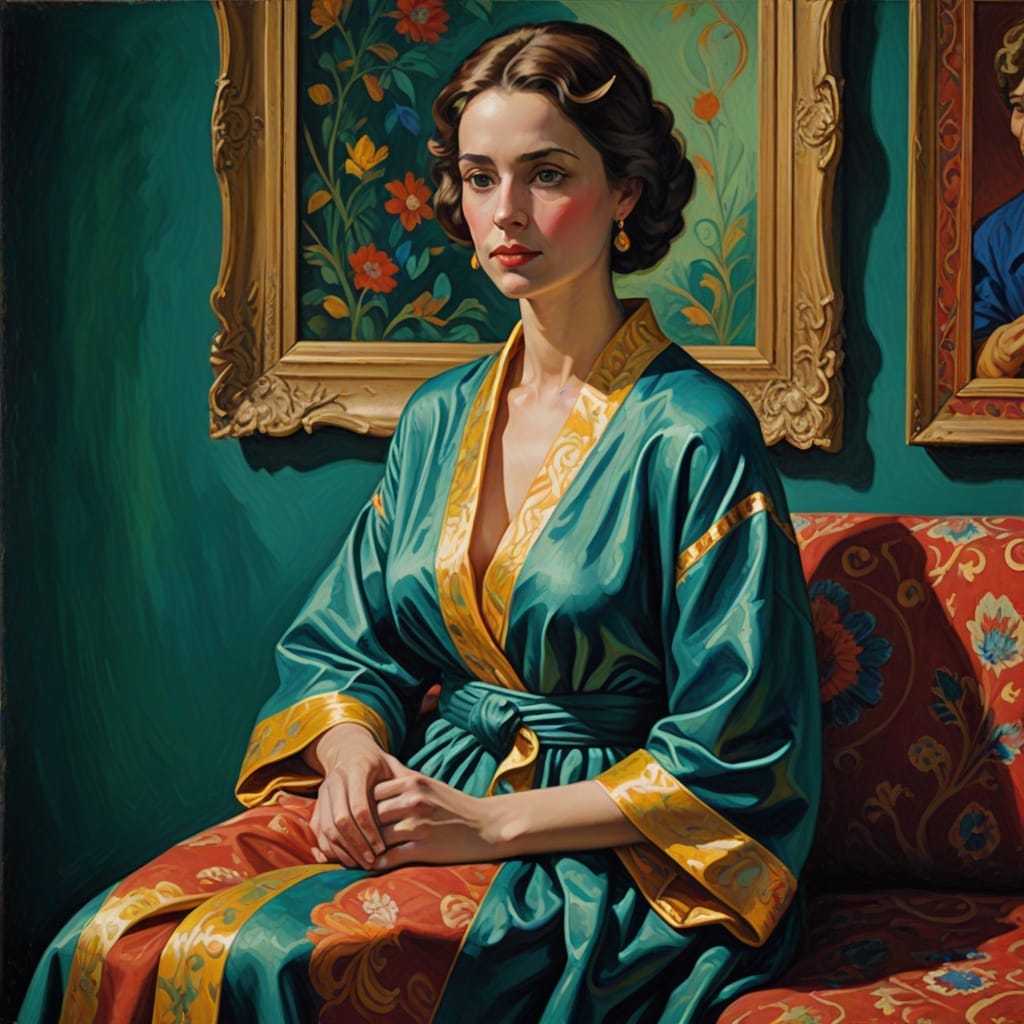
If Fauvism was a loud dinner party where everyone showed up wearing colors that should not legally coexist, Emilie Charmy walked in, kicked a chair backward, sat down like a movie villain, and started painting anyway.
She did not arrive to be “the woman version” of anything. She arrived to make work so confident and so physically painted that you can almost hear the bristles arguing with the canvas.
If you only know the headline version of Fauvism, the one with sunshine, beaches, and colors that look like they were poured straight out of a juice box, Charmy is the plot twist. She has the heat, sure. But she also has nerve. And she uses it like a palette knife.
References you can dive into if you want the receipts:
- https://awarewomenartists.com/en/artiste/emilie-charmy/
- https://uvafralinartmuseum.virginia.edu/exhibitions/emilie-charmy
- https://en.wikipedia.org/wiki/%C3%89milie_Charmy
- https://www.connaughtbrown.co.uk/viewing-room/7-emilie-charmy-the-female-fauve-emilie-charmy/
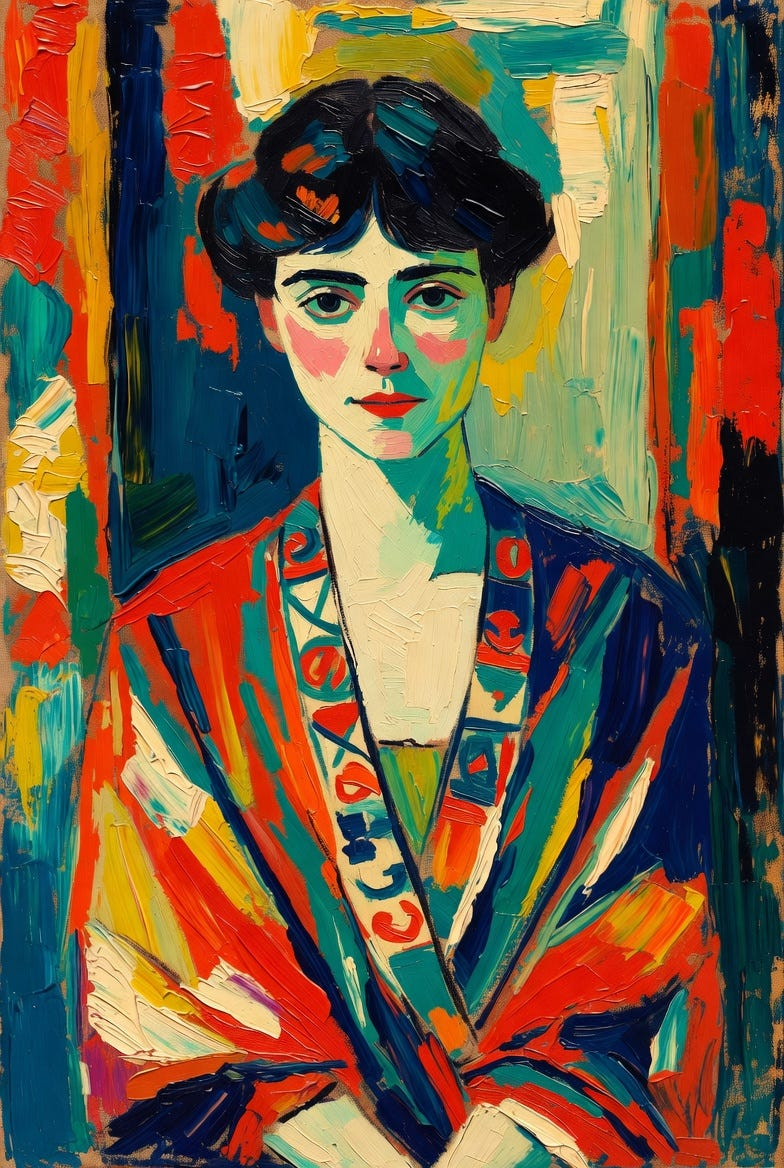
Who is this artist?
Emilie Charmy was a French painter born in 1878 who moved through the big early-modern currents like Impressionism, Post-Impressionism, Fauvism, and the School of Paris, and somehow managed to keep her own voice while doing it.
She was not dabbling. She was not “trying it out.” She built a life around painting at a time when the art world loved the idea of women making art right up until it got bold, messy, ambitious, or uncomfortably honest.
What is she known for?
Charmy is known for painting that feels alive in the paint itself: thick application, assertive color, and brushwork that does not apologize.
She painted portraits, still lifes, interiors, landscapes, and figure subjects. What made people pay attention then and makes people pay attention now is that she did not stay inside the polite lane that society tried to draw around women artists.
Her paintings have that rare combination of being visually punchy from across the room and emotionally complicated once you get close.
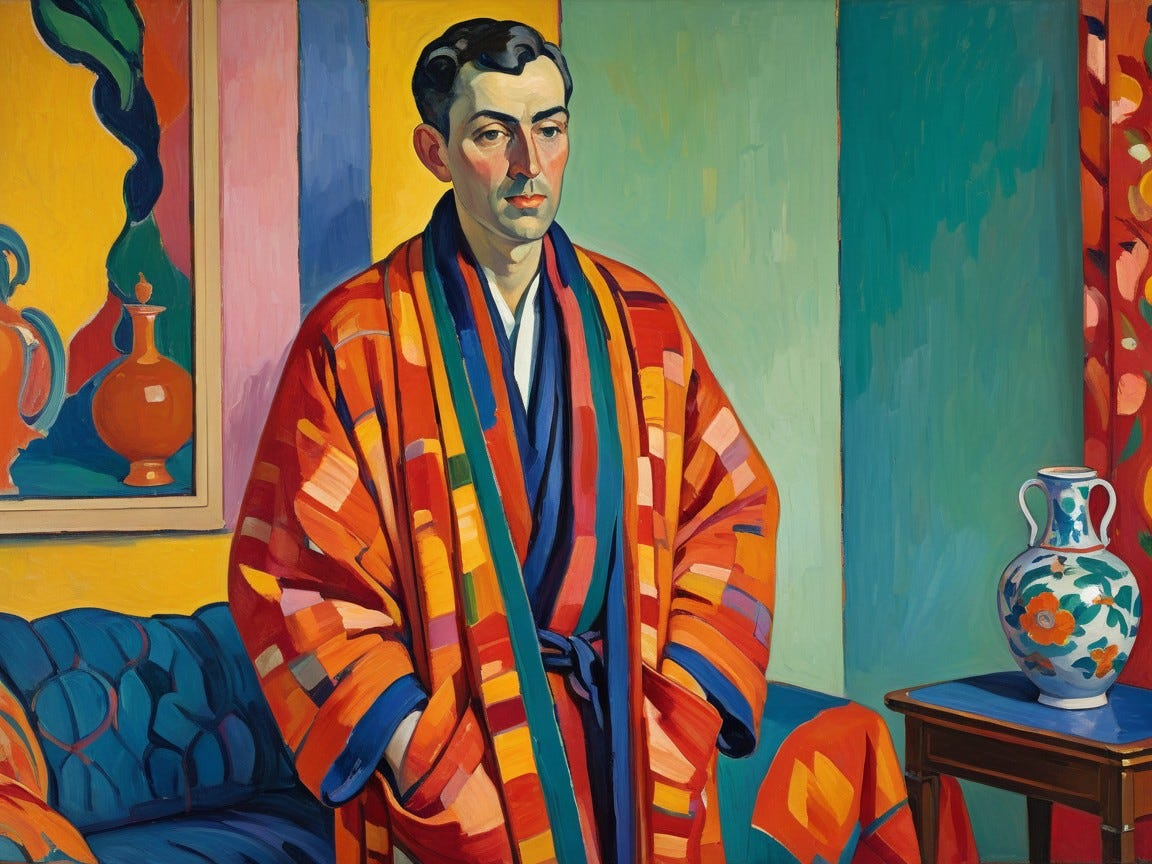
What is her style?
Think Fauvist color energy with a tougher, more intimate edge.
- Color is not there to behave. It is there to perform.
- Skin tones can lean green, violet, ochre, or whatever the mood demands.
- Outlines and forms exist, but they are not precious.
- The brushwork reads like decisions made quickly, but not carelessly.
- The result feels modern, confident, and slightly dangerous in the best way.
If some Fauves feel like they are celebrating sunlight, Charmy often feels like she is celebrating autonomy.
Who taught her?
She studied painting under Jacques Martin in Lyon. After that, the real education happened the way it always does for serious artists: by working, showing, watching other painters up close, and refusing to be intimidated by the room.
Does she use any special technique?
Her “special technique” is physical paint used like a statement.
Charmy is a great example of how technique is not only about method, but also about posture. She leans into thick brushwork and bold color choices that prioritize impact and presence over perfect finish. You can tell she trusted paint to carry emotion without needing to over-explain it.
Here is the tiny, highly scientific formula for what her approach feels like:
# Not real art science, but emotionally accurate.
subject = "ordinary scene"
paint = "thick"
color = "brave"
permission = None

painting = mix(subject, paint, color, permission)
display(painting, volume="loud")
And now back to our regularly scheduled chaos.
Who has she worked with?
Charmy exhibited in Paris and moved in the same modern circles as major Fauvist figures. She was connected to the early-avant-garde ecosystem where friendships, rivalries, and gallery relationships mattered almost as much as talent.
The important part is not the name-dropping. The important part is that she was in the room, painting at full intensity, and her work could stand there without shrinking.
Was she wealthy?
Not in the fantasy way where a patron hands you a castle and a lifetime supply of ultramarine.
Charmy supported herself through her work and found market success with subjects that collectors often embraced, like still lifes and florals, while still pushing into bolder territory. In other words, she did the hardest thing: she made a real career and kept her edge.
When was she most popular?
Her strongest visibility and relevance landed in the early 1900s through the interwar period, when modern painting was being argued about loudly in public, preferably in Paris, preferably while someone smoked and said something dramatic like, “Painting is dead.”
Charmy responded the way a painter should respond: by painting more.
Tell me more, please
Here is what makes Charmy especially fun to look at today.
1. She breaks the “decorative trap” without pretending it never existed
Yes, she painted flowers and still lifes. No, she did not paint them like a polite hobby. Even when the subject seems harmless, the painting itself has muscle.
2. She paints women as present, not posed
A lot of early modern work treats women like props for mood. Charmy often paints women like they have their own internal weather system. You are not just looking at a figure. You are encountering a person.
3. Her work is modern without trying to look modern
Some artists chase “the new” like it is a trend. Charmy looks new because she is direct.
Anything else left to tell?
Yes: Charmy is one of those artists who makes you rethink the history you were handed.
If you grew up with the greatest-hits version of modern art, you probably got the sense that a handful of famous men invented everything and everyone else was a footnote. Charmy is one of the painters who quietly sets that story on fire.
Politely. With a very bright color palette. And a brush loaded with paint.
Any other interesting tidbits?
If you ever want to spot Charmy energy without memorizing dates:
- Look for paint that feels physically confident.
- Look for color that is chosen for emotional force, not realism.
- Look for a subject that could have been “safe” but somehow becomes intense.
That is often her lane: familiar scenes made fearless.
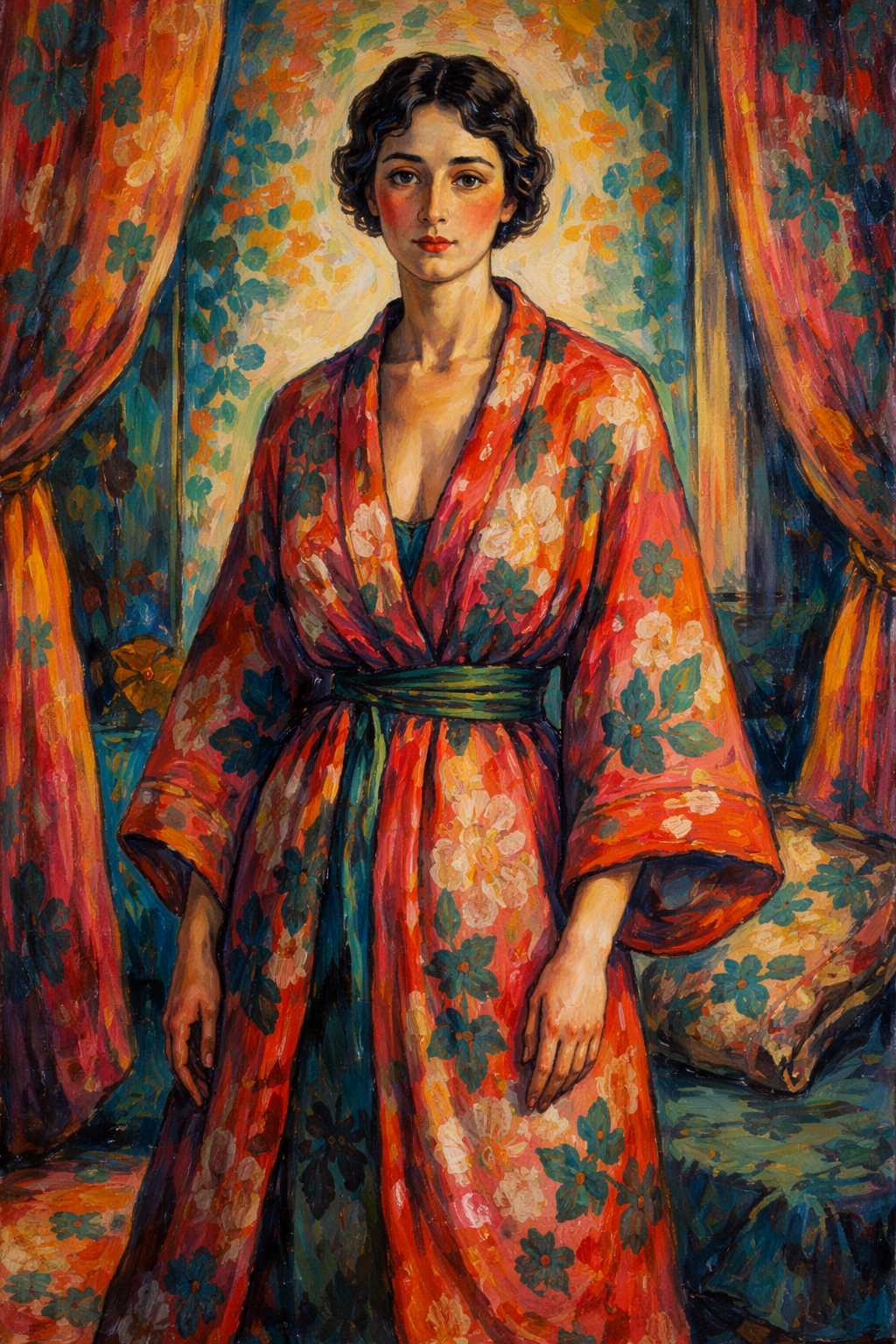
Art Prompt (Fauvist Portrait):
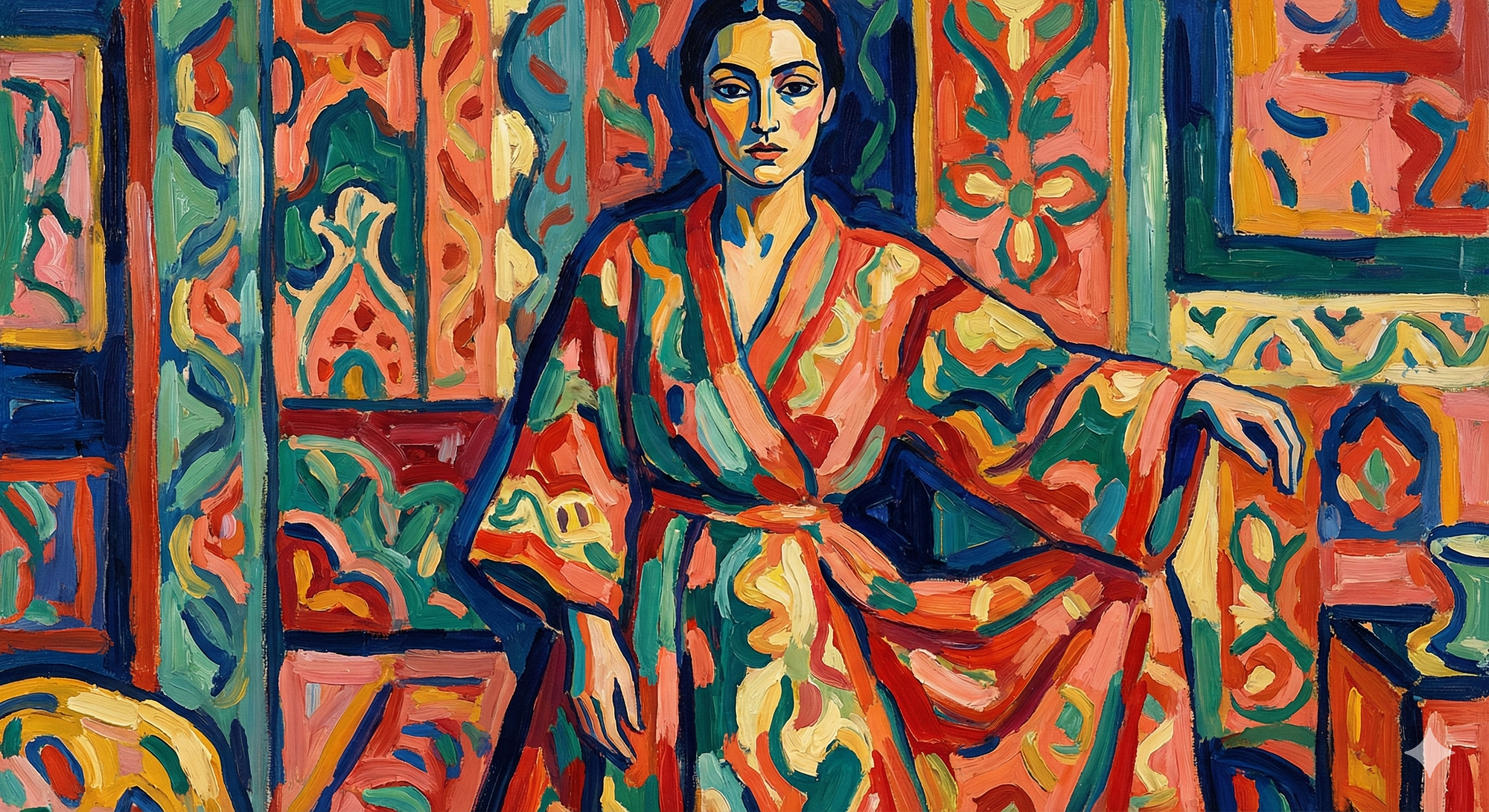
A vivid early-modern portrait in a bold Fauvist style. A solitary figure stands centered in a softly patterned interior, wearing a flowing, richly colored robe with decorative motifs. The face is simplified yet expressive, with confident contour lines and a steady, direct gaze. Use thick, painterly brushstrokes and visible texture, with saturated color contrasts: warm vermilion and coral against deep teal and emerald, accented by buttery yellows and inky ultramarine shadows. The background should feel decorative but not fussy, with flattened space and rhythmic shapes that echo the robe’s patterns. Lighting is stylized rather than realistic, creating a luminous, slightly theatrical mood. The overall feeling is fearless, modern, and intimate, like a private moment that somehow has stage presence. High resolution, museum-quality, oil-on-canvas look, no photorealism.
Video Prompt:
Animate a bold Fauvist portrait scene in a short, mesmerizing loop. The camera begins close on thick, textured brushstrokes, then slowly pulls back to reveal the figure standing centered in a patterned interior. Subtle motion ripples through the robe’s decorative motifs like living paint, while color pulses gently between warm vermilion and deep teal. The figure’s gaze stays steady as tiny highlights shimmer across the canvas texture, as if light is moving over wet oil paint. Add a slow parallax drift in the background shapes to emphasize flattened space and rhythmic design. Finish with a smooth return to the opening close-up, creating a seamless loop that feels painterly, bold, and hypnotic.
Song recommendations for the video:
- Saeglopur — Sigur Ros
- Under the Pressure — The War on Drugs
If you are enjoying this Artist Series ride, follow me and stick around. More episodes are coming, and they will absolutely enable your habit of saying, “Wait, how have I never heard of this artist?”
And drop a comment: what do you love more, wild color or wild brushwork? Or are you the rare third type who wants both and also wants it loud?
More art: https://lumaiere.com
More videos: https://www.tiktok.com/@davelumai?lang=en
More works you can purchase: https://www.redbubble.com/
More writing: https://medium.com/@DaveLumAI