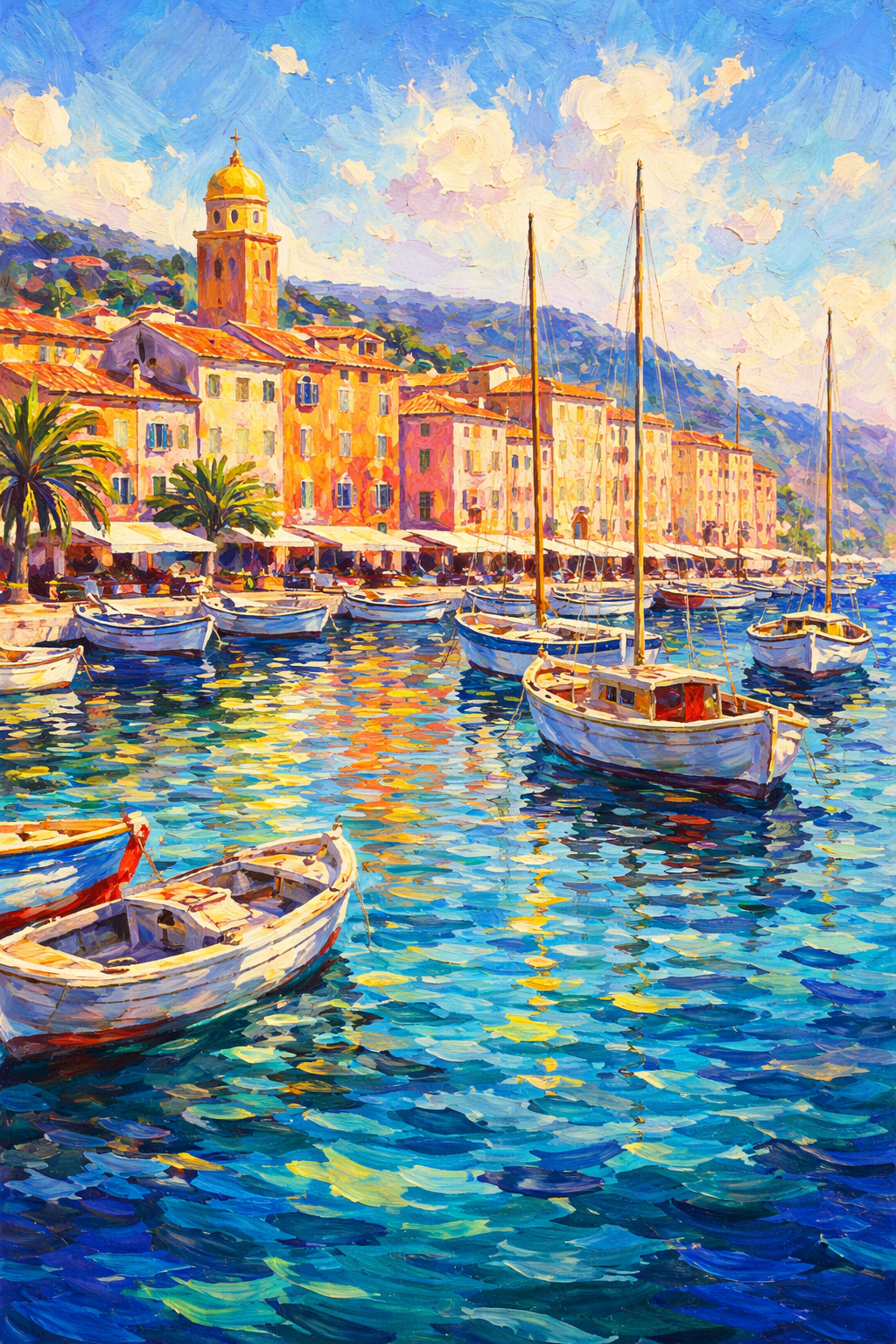
If Fauvism had a group chat, Charles Camoin would be the one sending pictures of sunlit harbors and saying, “No filter.” And then everyone else would reply, “That’s not a filter, that’s YOU using orange like it owes you money.”
Camoin sits in a funny sweet spot in art history: he’s part of the original Fauve chaos crew, but he’s not always the loudest one in the room. Think “bold color,” yes — but delivered with a certain I know exactly what I’m doing calm. Like a chef who flambes something tableside and doesn’t even look up.
Who is this artist?
Charles Camoin (1879–1965) was a French painter born in Marseille, which is basically cheating if your lifelong goal is “paint beautiful light.” He’s strongly associated with the Fauves (the “wild beasts” of color), and he kept a long artistic friendship with Henri Matisse and that whole orbit of early-1900s French painting troublemakers. For a quick, straight-to-the-point institutional breadcrumb: Centre Pompidou’s artist entry.
What is he known for?
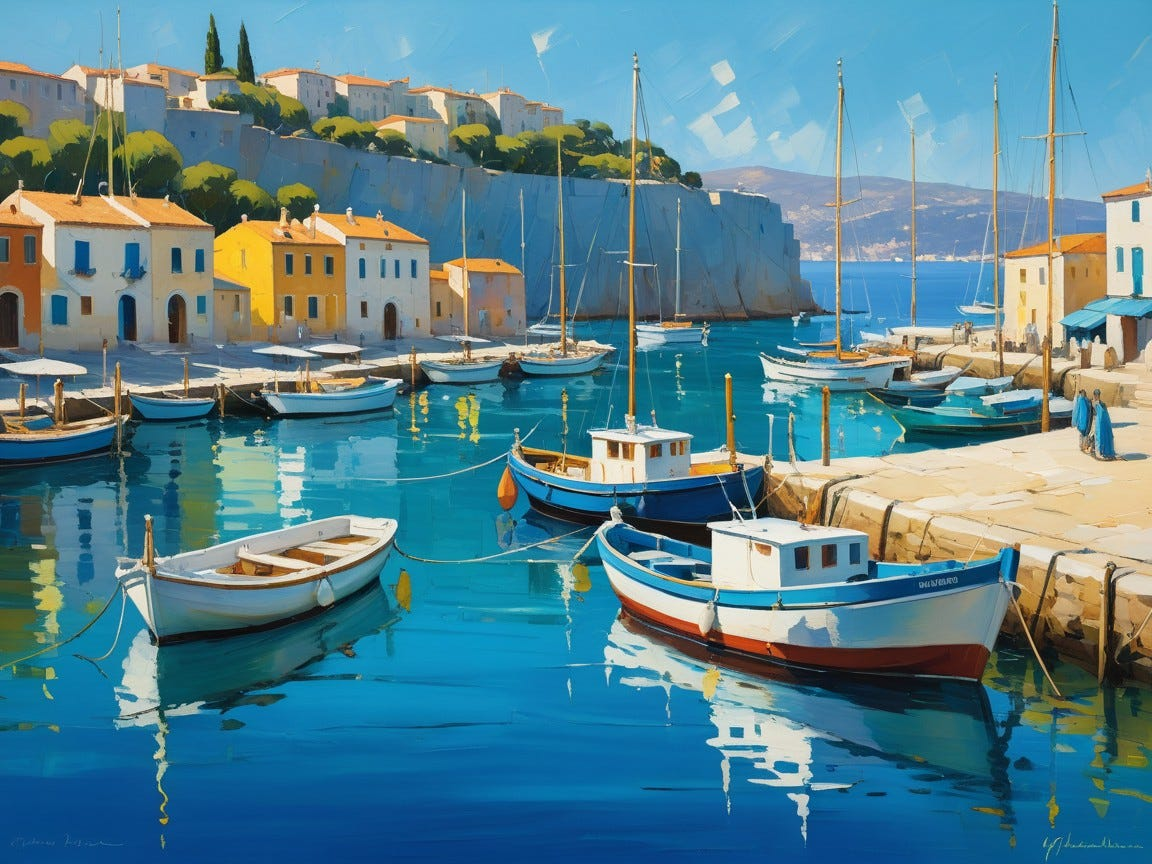
Camoin is known for luminous landscapes, Mediterranean scenes (hello, Saint-Tropez), expressive color, and brushwork that feels like it’s moving even when the painting is just… sitting there. He’s not trying to photograph reality. He’s trying to paint the feeling of standing in warm air while the sea casually sparkles in the background like it pays rent.
Also, he was one of the artists shown in that legendary 1905 Salon d’Automne moment when a critic basically looked at their work and went: “These people are feral,” accidentally naming the movement. Here’s the accessible reference trail for that event: Salon d’Automne (1905 Fauvism section).
What is his style?
Camoin is Fauvism-adjacent in the most real way: he was there at the start. Fauvism, as a movement, is basically “color first, realism later, and please stop asking me why the tree is purple.” The cleanest museum explainer of the movement is: The Met’s Fauvism essay.
But Camoin often feels a touch more lyrical than some of the other Fauves. There’s intensity, yes — but not always the “I just launched a paint bomb at the canvas” vibe. More like: “I turned the saturation up because the sun told me to.”
Who taught him?
He studied in Paris in Gustave Moreau’s studio, which is a pretty strong start if you’d like to become the kind of artist people argue about in cafés for the next 120 years. Moreau’s studio mattered because it wasn’t just instruction — it was a hangout for future heavy hitters. The Thyssen Museum’s Camoin bio lays that out nicely and connects the dots to the Fauve nucleus.
Does he use any special technique?
He didn’t invent a single named technique like “Camoin-ism™,” but his “special move” is how he handles color and light together:
- High-chroma color that stays airy instead of heavy
- Brushwork that suggests motion without turning everything into visual noise
- A knack for making ordinary scenes feel like they’re quietly flexing
If you want the mildly nerdy version, here’s a tiny “Fauve palette logic” snippet you can run just to feel something:
palette = ["cobalt blue", "viridian", "cadmium red", "lemon yellow", "titanium white"]
scene = "harbor under noon sun"
print("Paint", scene, "with:", ", ".join(palette))
print("Then ignore reality politely.")
Who has he worked with?
“Worked with” in early modern art often means: painted alongside, traveled with, influenced, argued with, and probably shared enough meals to form lifelong artistic alliances.
Camoin’s circle included Matisse, Marquet, Manguin, and other painters who formed that early Fauve constellation. The Archives Camoin biography page is a solid reference for those relationships and his place in the group.
Was he wealthy?
Not “private island” wealthy. More like: he earned respect, collected serious supporters over time, and his work eventually became widely collected. The important part is that he kept painting across decades — which is often the most honest indicator of success: you don’t keep doing the thing unless the thing is feeding you in at least one way (financially, spiritually, or via sheer stubbornness).
When was he most popular?
He peaks in historical spotlight around the Fauvism ignition era (mid-1900s), but his appeal lasts because his subject matter never goes out of style: light, color, places you want to be, and paintings that feel like a deep breath.
Also: he had a notable connection with Paul Cézanne during his military service era — yes, really — and that’s the kind of art-history subplot that sounds fake until you see it documented. The Archives Camoin chronology (1901 entry) covers that moment cleanly.
Tell me more, please
Here’s the part I love: Camoin doesn’t need shock value. He doesn’t need visual gimmicks. He just takes the world — especially the southern French world — and turns the volume up on what’s already there.
You know how some places have “good light” and you instantly look 12% more interesting just standing in it? Camoin paints like that.
Anything else left to tell?
Yes: Camoin is a great reminder that being part of a famous movement doesn’t mean you have to become a caricature of it. He’s Fauve enough to matter, personal enough to be recognizable, and consistent enough that you can follow his work across decades without feeling like you’re watching five different people share one name.
Any other interesting tidbits?
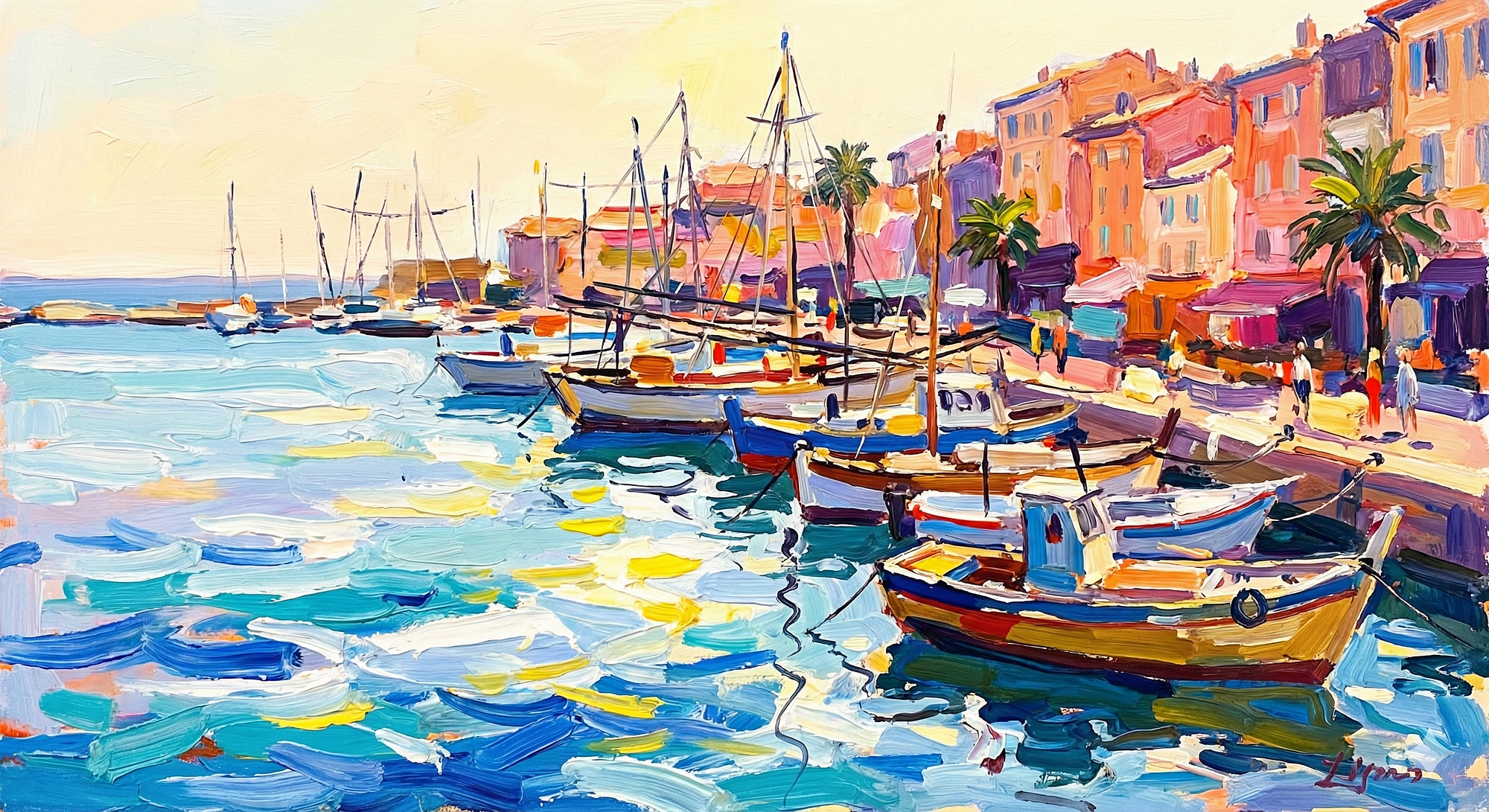
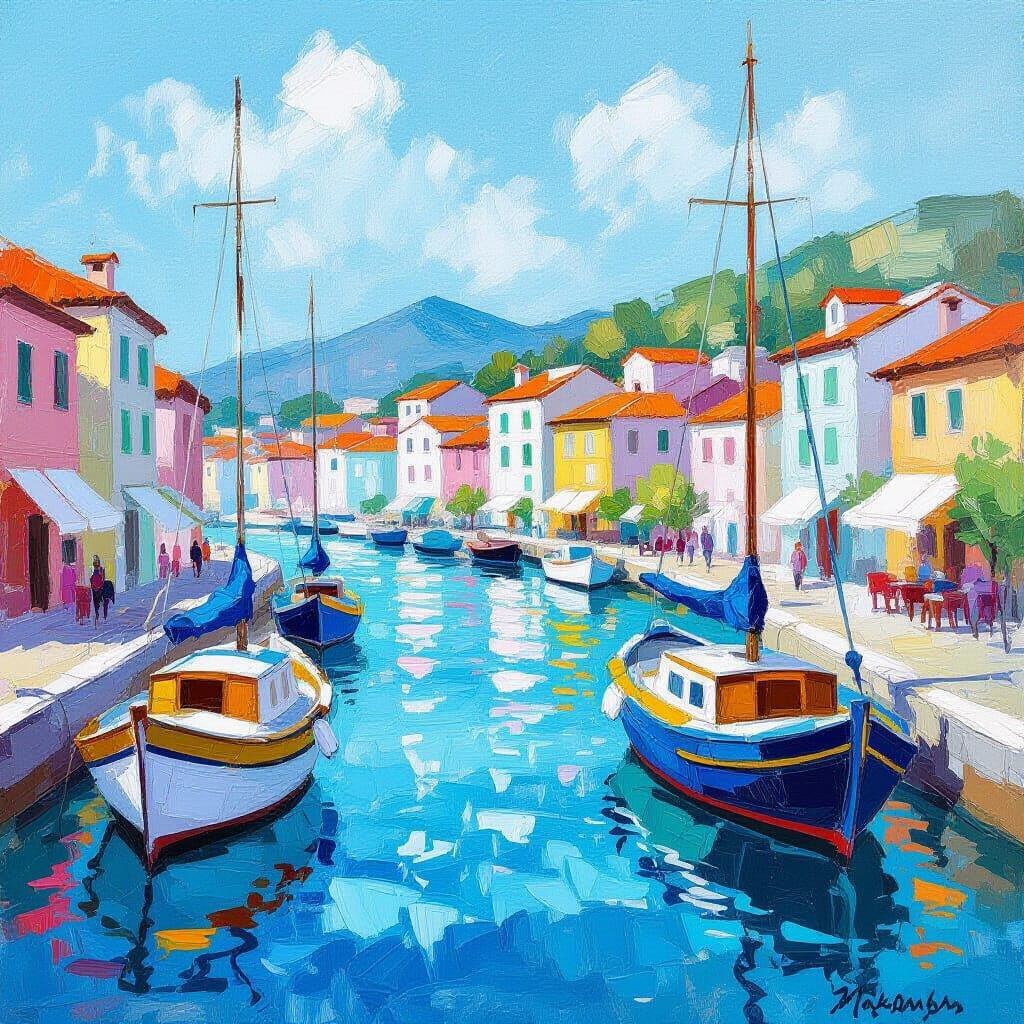
Saint-Tropez wasn’t always a celebrity carnival. It was also an artist magnet — and Camoin returned to it repeatedly. If you want one concrete example of how late he kept working that subject, here’s an auction listing for a Saint-Tropez harbor painting dated 1946: Christie’s — Le port de Saint-Tropez (Camoin). (Not a “buy this” thing — just a handy dated reference.)
Anything else left to tell?
Only this: if you ever feel like your creative identity is “too many influences at once,” Camoin is your permission slip. He absorbed the moment, stayed close to giants, and still painted like himself.
If you enjoyed this episode, follow for the next one — and drop a comment: Do you like Fauvism when it’s full volume, or do you prefer the slightly calmer “sunlit and confident” version Camoin delivers?
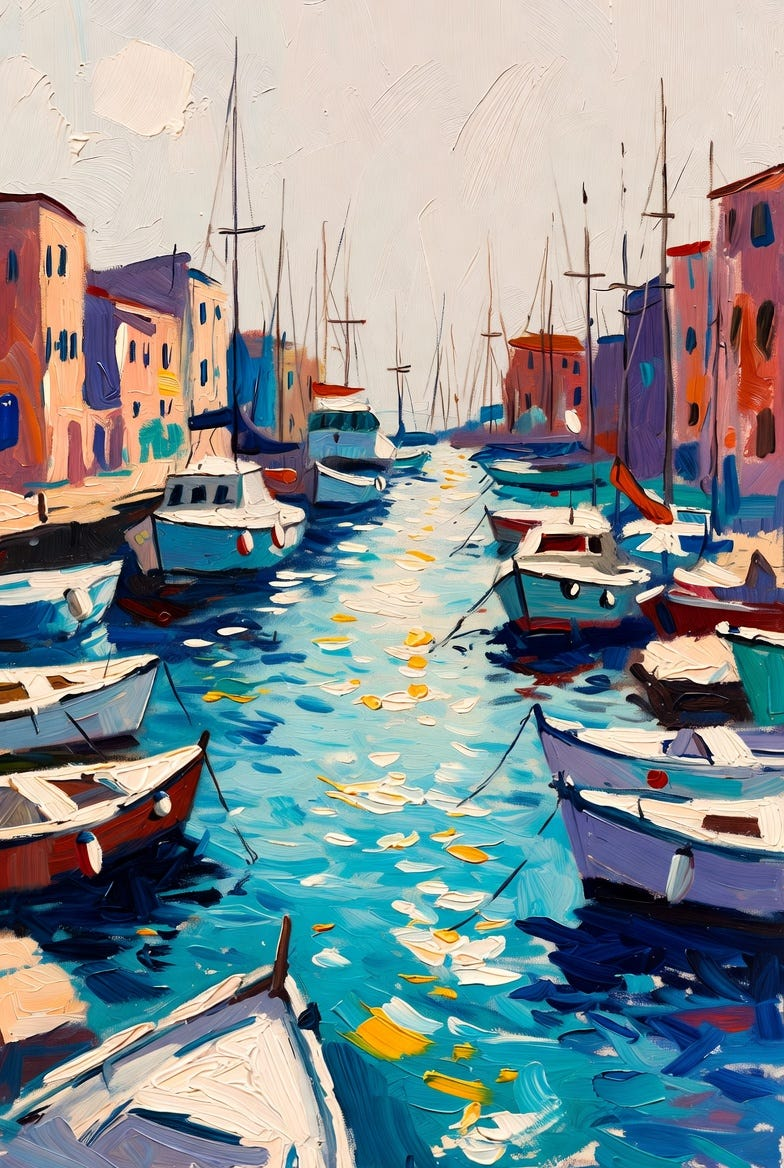
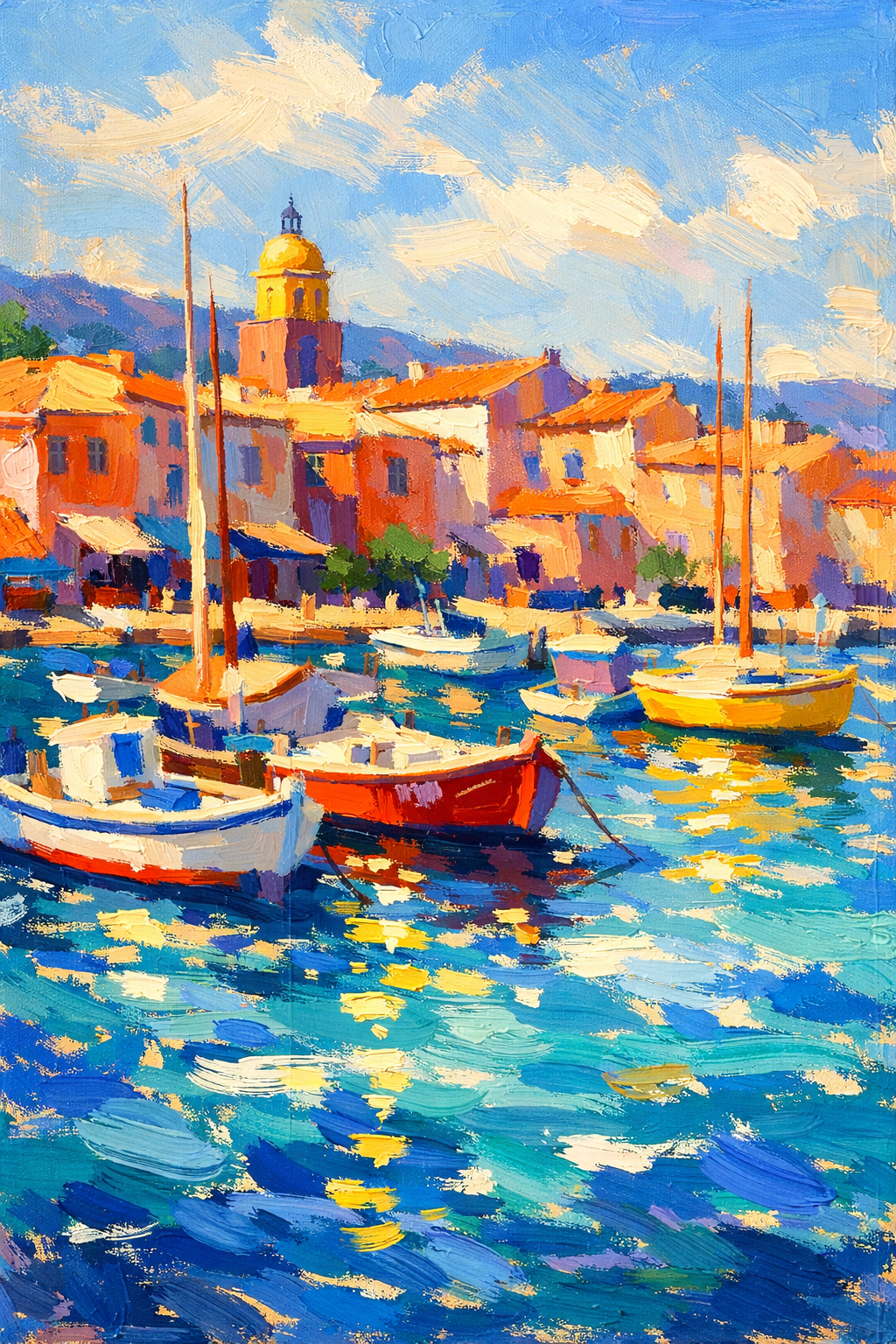
Art Prompt (Fauvist): A radiant Mediterranean harbor scene in bright midday light, painted with fearless, high-saturation color and confident, visible brushstrokes. The water shimmers in thick strokes of turquoise, cobalt, and milky white, broken by quick flashes of lemon-yellow reflections. Moored boats sit in simplified shapes, their hulls outlined with loose, expressive marks, while masts form a lively rhythm against a pale, sun-washed sky. Buildings along the shore glow in warm blocks of coral, apricot, and rose, with shadows rendered in unexpected cool violets and deep blues. The overall mood is airy, joyful, and heat-hazed, with forms intentionally simplified to prioritize light, color energy, and atmosphere. No photorealism, no gradients, painterly texture, bold color harmony, museum-quality composition, uplifting coastal calm.
Video Prompt: Cinematic animated painting come-to-life of a vibrant Mediterranean harbor under intense midday sun. The camera begins with a slow glide across shimmering turquoise water where thick painterly brushstrokes subtly flow and rearrange like living paint. Boats bob gently, their simplified shapes rocking in a rhythmic loop, while bright reflections sparkle and flicker in short bursts. The camera tilts up to reveal warm coral-and-apricot shoreline buildings that pulse softly with heat haze, and long masts that sway slightly like metronomes. Occasional gusts ripple the water and make loose paint textures swirl, as if the canvas itself is breathing. Add a few drifting seagulls as minimal silhouettes and a soft, playful push-in toward the harbor, ending on a satisfying shimmer of light that feels like a visual “chorus.” High-energy but soothing, painterly texture preserved, bold color motion, smooth transitions, loop-friendly ending.
Suggested songs:
- Hoppipolla — Sigur Ros
- Sea of Love — Cat Power