Albert Marquet is what happens when a bunch of early-1900s painters are throwing a color party, someone yells “MORE ORANGE,” and one guy quietly opens a window, looks at the river, and says, “What if we all just… relaxed.”
He’s usually filed under Fauvism, because he absolutely was there when the Fauves were letting color off the leash. But Marquet didn’t so much unleash color as he politely walked it around the block and made sure it drank water.
If you want the official, museum-approved résumé version of who he was, here are a few solid starting points you can fall into like a comfy chair:
- https://www.tate.org.uk/art/artists/albert-marquet-2332
- https://www.britannica.com/biography/Albert-Marquet
- https://www.centrepompidou.fr/en/ressources/personne/cLrjGxe
Who is this artist?
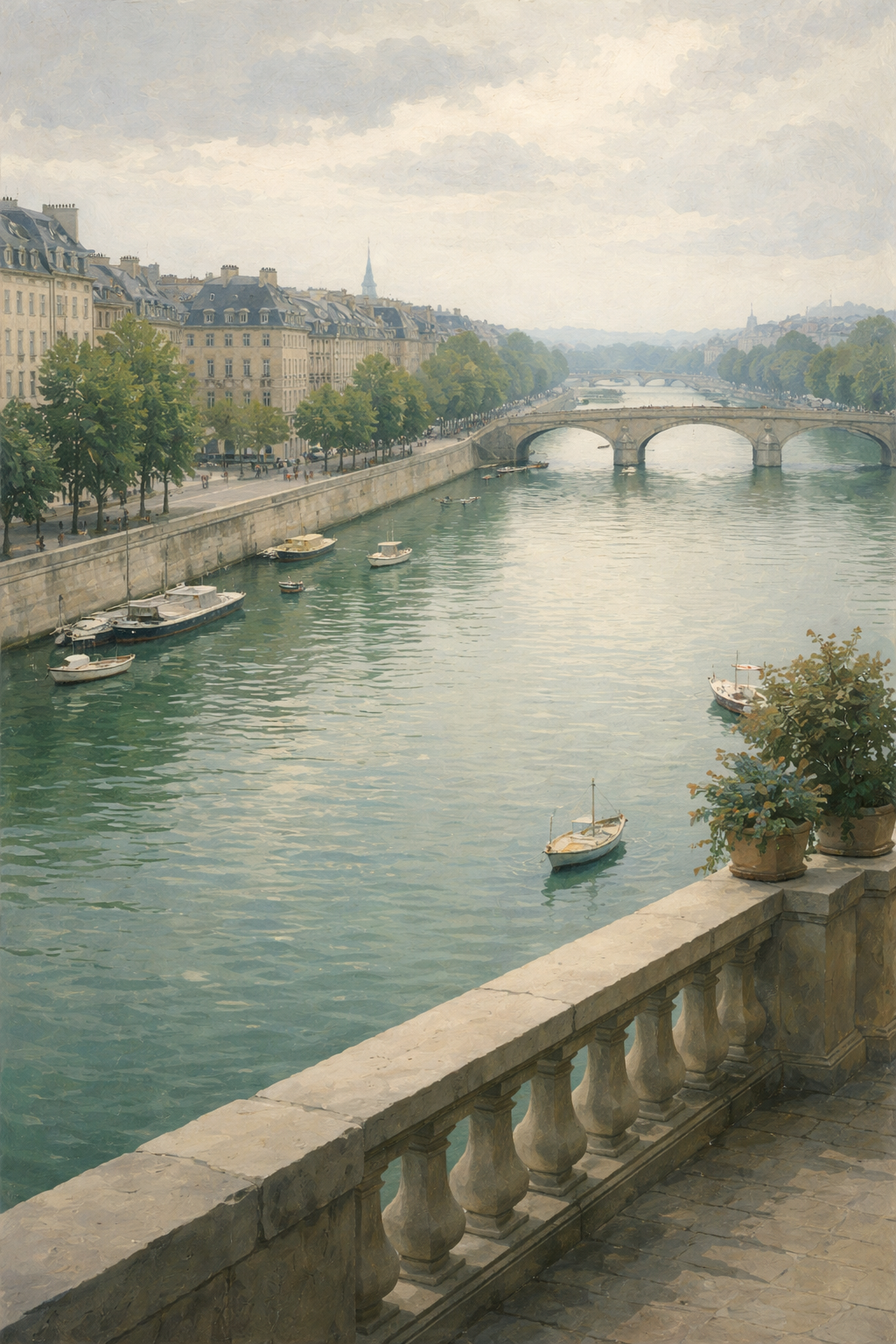
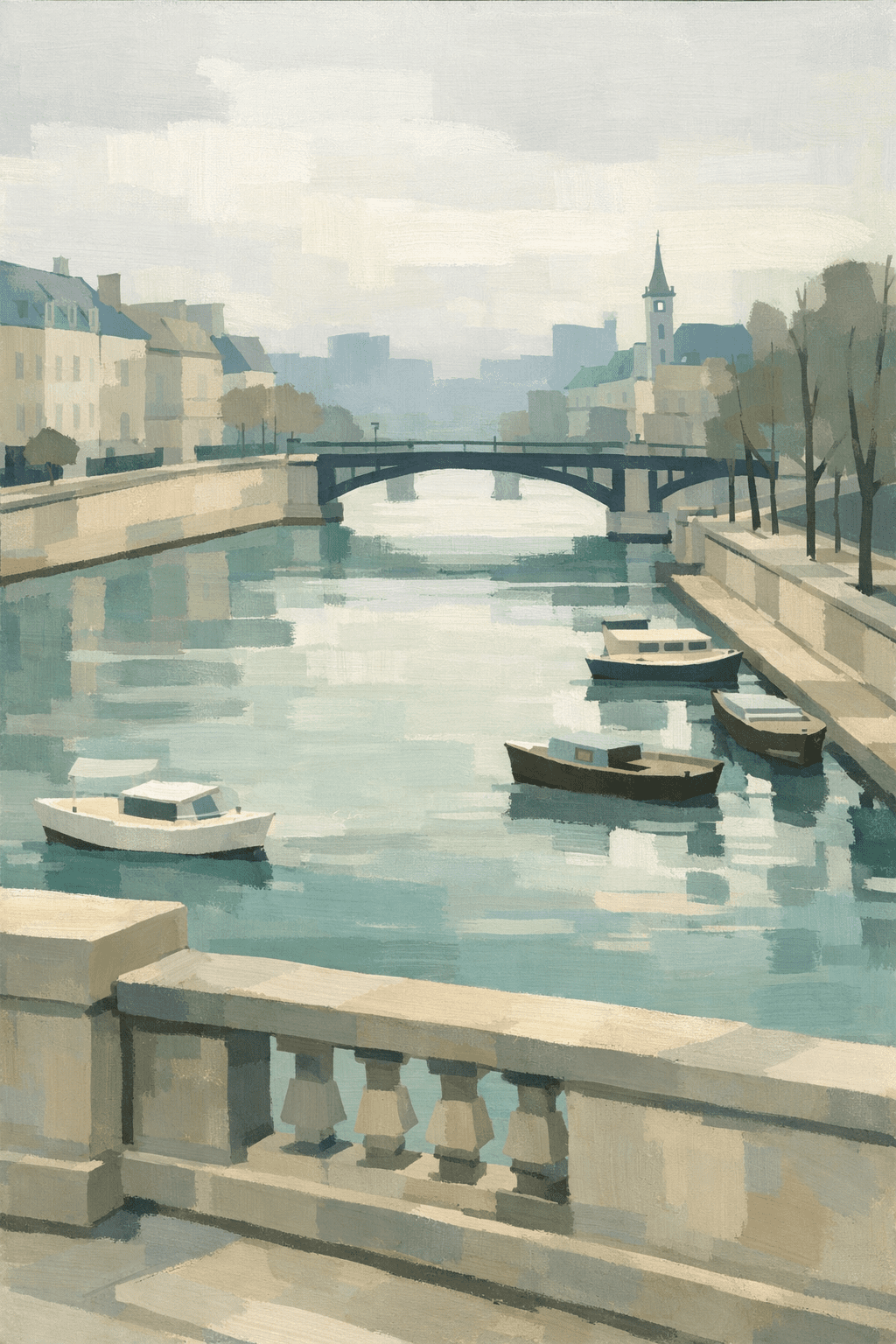
Albert Marquet (1875–1947) was a French painter who loved cities, ports, rivers, bays, and any location where water could quietly reflect the sky like it was showing off.
His superpower was making places feel lived-in without turning them into chaos. His scenes often feel like you arrived ten minutes early, the world hasn’t started performing yet, and somehow that’s the best part.
What is he known for?
He’s known for landscapes and cityscapes with water, atmosphere, and an “I’m not yelling, I’m just confident” approach to composition.
Marquet could paint a harbor and make it feel like:
- the air has weight,
- the light has manners,
- and the water is doing that thing where it pretends to be still while quietly moving your whole emotional state two notches toward peace.
He also had a long friendship with Henri Matisse, which is like being friends with the human embodiment of “turn the saturation up to 11” while you yourself are the embodiment of “let’s keep it tasteful.”
What is his style?
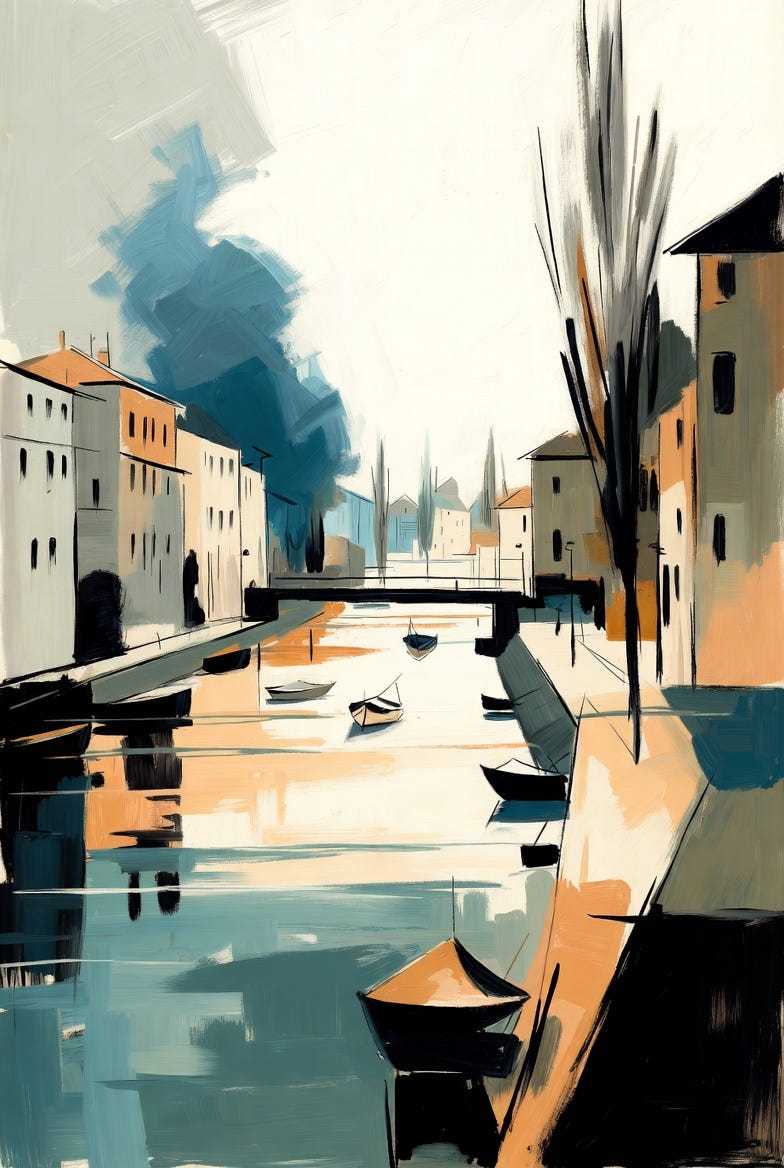
Early on, you can spot the Fauvist DNA: bold simplification, strong color decisions, and forms that don’t beg for realism’s permission.
But Marquet’s mature look tends to be:
- simplified shapes
- carefully controlled color
- strong dark accents (often outlines or structural strokes)
- lots of atmospheric distance
- water that acts like a mirror with a personality
It’s not “loud.” It’s “certain.”
Who taught him?
He studied under Gustave Moreau, a teacher famous for letting students develop their own paths rather than cloning the same academic style over and over until everyone looked like they came from the same art factory.
Moreau basically ran a creative greenhouse: “Here are skills, here are masterpieces, now go become yourself.” Marquet took that and became the patron saint of “subtle can be powerful, actually.”
Does he use any special technique?
Not “special technique” like secret sauce or mystical paint potion.
More like: extreme compositional restraint.
Marquet’s technique is the art equivalent of:
- choosing the right three words instead of shouting thirty,
- leaving space where the eye can breathe,
- using dark strokes like scaffolding so the whole scene stands up straight.
And his color choices often feel like he’s mixing paint with weather.
Who has he worked with?
Marquet moved in the same circles as the Fauves and exhibited in the Paris scene where everybody knew everybody, argued about everything, and probably survived on coffee and stubbornness.
He wasn’t a “brand collaboration” guy. He was a “paint quietly, exhibit seriously, keep going” guy.
Was he wealthy?
Let’s call it: not a cartoonish rags-to-riches story, and not a golden yacht situation either.
He had recognition, exhibited widely, and his work ended up in major collections. But Marquet’s vibe is not “look at my success.” It’s “look at this light on the water.”
When was he most popular?
His visibility rose around the Fauvist years in the early 1900s, but his reputation has stayed steady because his work has something rare: it doesn’t age like a trend.
Fads wrinkle. Marquet just keeps looking like the world is still beautiful, even on an ordinary Tuesday.
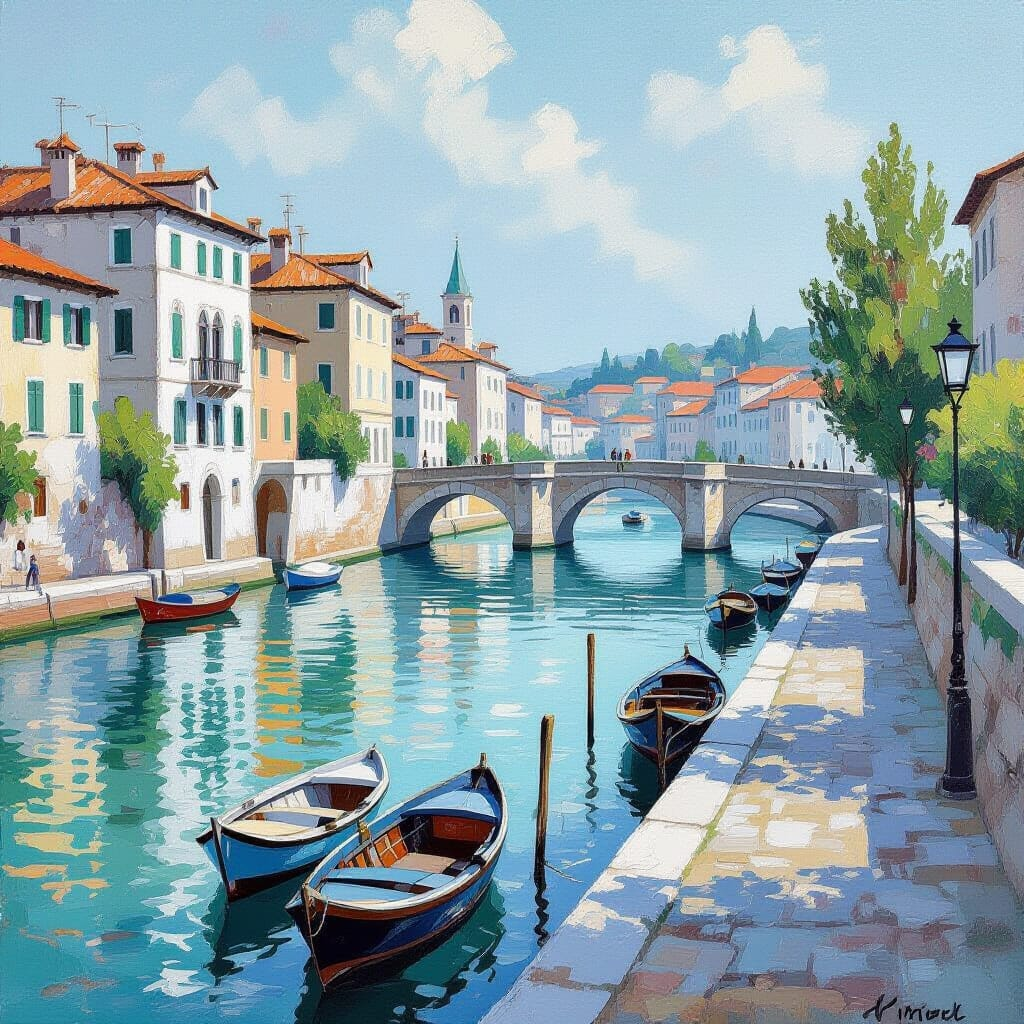
Tell me more, please
Here’s the part that makes Marquet sneakily important: he proves that modern art didn’t only move forward by breaking things.
Sometimes it moved forward by refusing to overcomplicate.
While other painters were redefining reality with wild color or fractured forms, Marquet refined something else:
- how to structure a scene,
- how to simplify without flattening,
- how to make atmosphere feel like a tangible object.
He’s a reminder that “quiet” is not the same as “boring.” Quiet is often where the good stuff hides.
Anything else left to tell?
Yes: Marquet is a great artist to revisit when your brain feels like twelve tabs are playing audio.
His paintings feel like:
- one tab,
- paused,
- sunlight coming through the window,
- and the world not demanding your attention so aggressively.
Any other interesting tidbits?
Marquet loved painting from elevated viewpoints and windows, which is honestly relatable: sometimes the best way to handle the world is to observe it from a safe distance with a beverage nearby.
Also, his work can trick you. You think it’s simple, then you look longer and realize it’s precisely balanced — like a tightrope walker who looks casual because they’re good at their job.
Anything else left to tell?
One last thing: if you’re building your own creative style, Marquet is a great reminder that you don’t have to be the loudest person in the room to be memorable.
Now tell me in the comments: do you prefer your art bold and loud, or quiet and devastatingly competent? And if you want more episodes like this, give me a follow — algorithms love attention almost as much as artists love sunlight.
More writing here: https://medium.com/@DaveLumAI
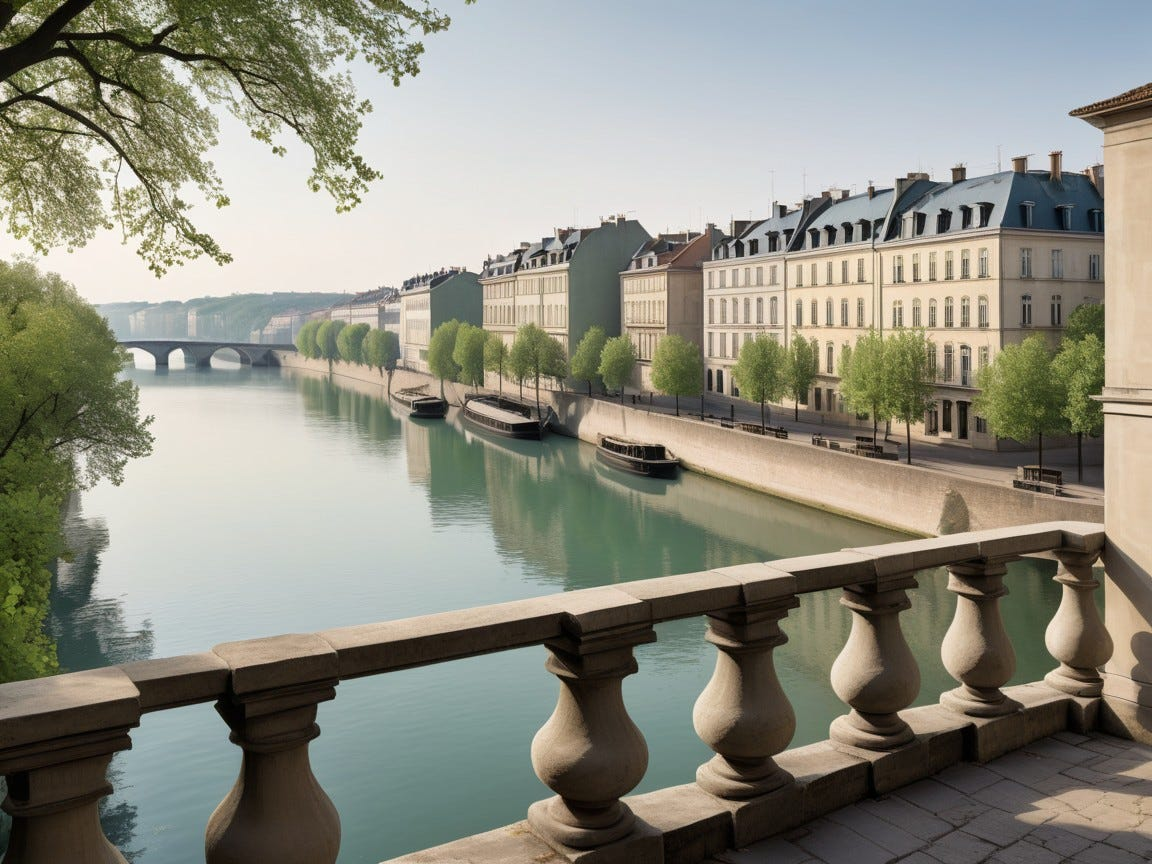
Art Prompt (Atmospheric)
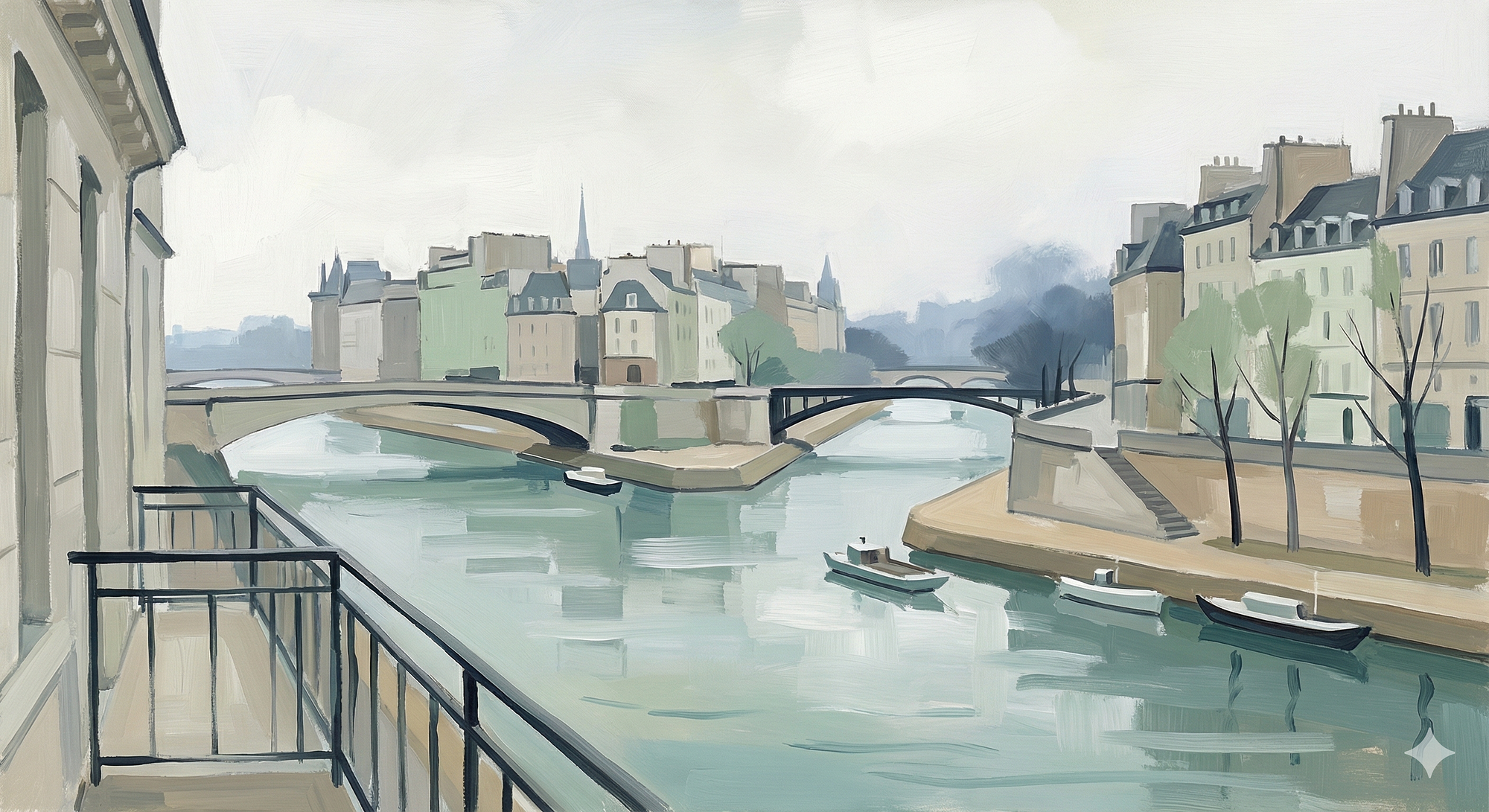
A serene European riverfront scene viewed from a slightly elevated balcony, composed with simplified architectural blocks and broad, confident brushwork. The palette is restrained and luminous: pale stone grays, soft celadon greens, muted teal water, warm sand tones, and smoky blue haze in the distance. Dark, elegant linear accents define bridges, building edges, and slender tree trunks, creating a crisp structure beneath the calm color fields. Several small boats drift near the embankment, their forms reduced to clean shapes with subtle highlights. The sky is overcast but bright, diffusing the light so everything feels airy and hushed, with reflections on the water rendered in gentle horizontal strokes. The mood is quiet, observational, and effortlessly sophisticated, like a city holding its breath for a moment of peace.
Video Prompt
A cinematic, painterly riverfront animation with a calm, modern feel. Start with a slow push-in from an elevated balcony viewpoint toward a softly rippling river, where muted teal reflections shimmer in horizontal brushstroke-like motion. Subtle parallax separates the simplified buildings, bridge, and trees, with crisp dark linework staying stable while the atmosphere shifts gently. Add drifting boats that glide almost silently, leaving delicate wake lines that dissolve into the water’s texture. The overcast sky brightens and dims slightly as if clouds are passing, changing the light on stone embankments and rooftops. Include occasional small birds crossing the hazy distance. Keep movement smooth, elegant, and minimal, with a quiet sense of flow and compositional balance, like a painting calmly coming to life.
Suggested songs:
- Spiegel im Spiegel — Arvo Pärt
- Nuvole Bianche — Ludovico Einaudi