Maurice de Vlaminck sounds like a man who should either be dueling at sunrise or dramatically removing gloves before declaring, “Sir, your brushwork offends me.”
And honestly? He kind of was.
Vlaminck was one of the headline troublemakers of Fauvism, the early-1900s moment when a group of painters looked at reality, shrugged, and said, “What if the sky was neon and the trees were basically on fire?” The public reacted the way the public always reacts to new art: confusion, outrage, and the deep spiritual need to write a strongly worded review.
Who is this artist?
Maurice de Vlaminck (1876–1958) was a French painter who helped light the match under Fauvism right around the time art decided it didn’t want to behave anymore.
He grew up in a musical household, worked odd jobs, played violin, did a bit of everything, and then started painting like a man trying to win an argument with the laws of nature.
What is he known for?
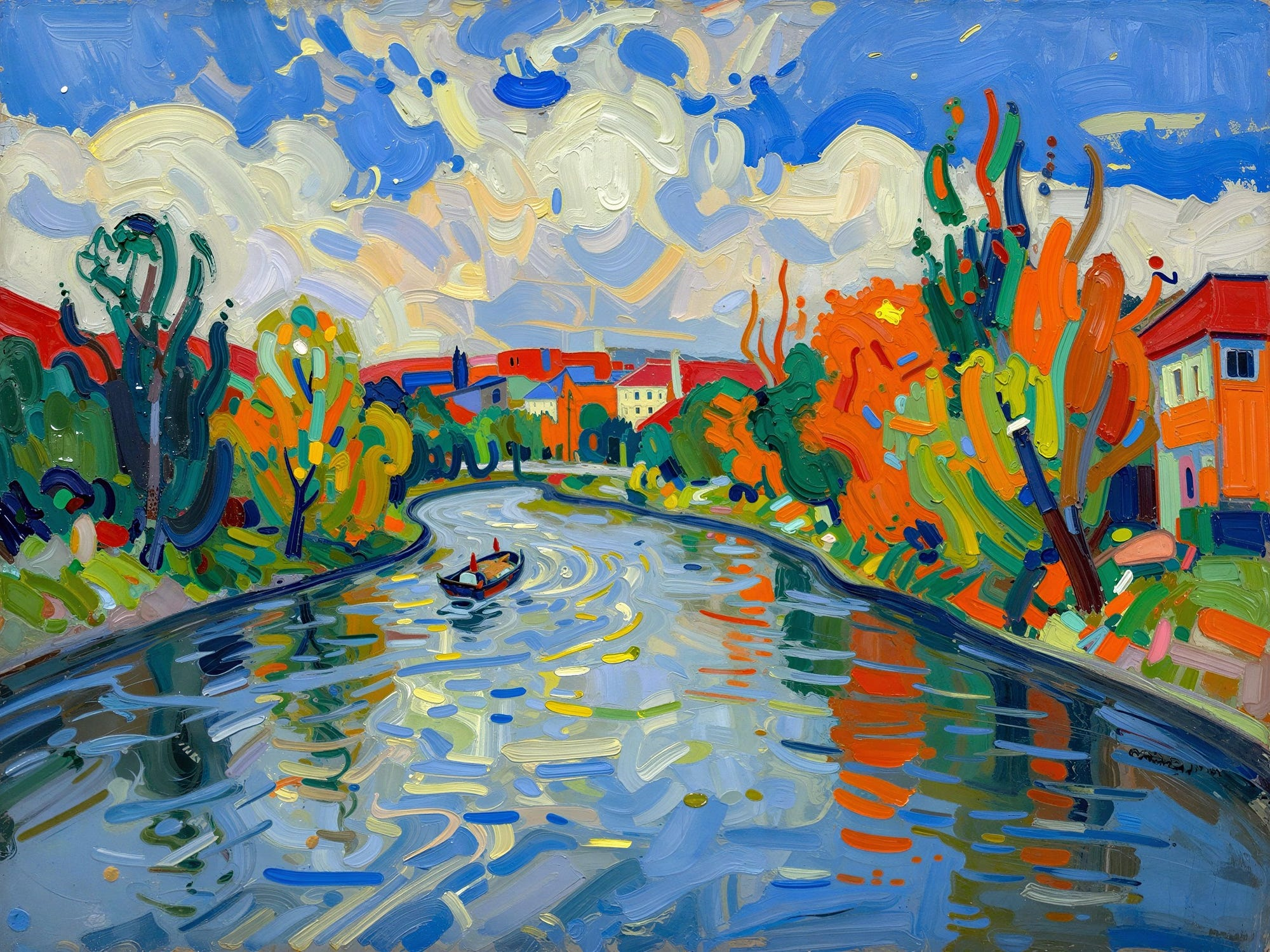
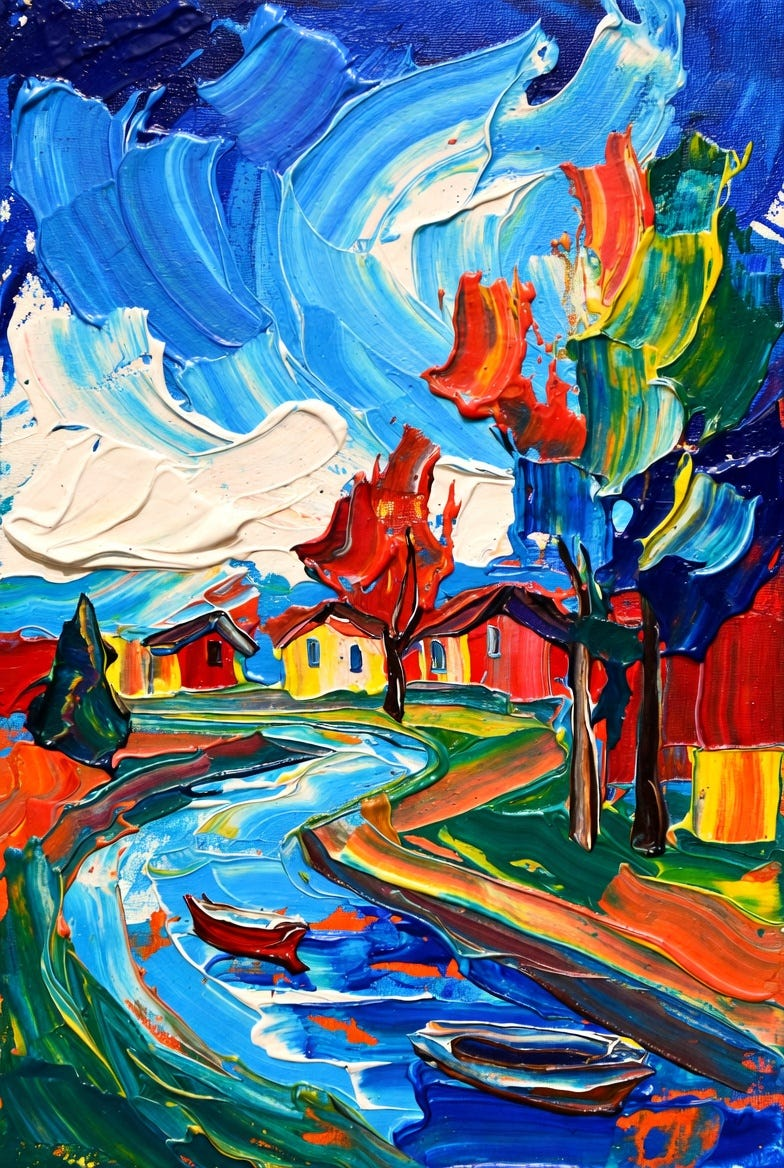
He is known for bold Fauvist landscapes, especially around the Seine near Chatou, where he painted villages, roads, trees, and boats like they were all experiencing intense emotions at the same time.
His signature move: aggressive color, heavy brushwork, and zero interest in being subtle.
If you want a neat summary: he helped make color feel like a personality, not a decorative choice.
What is his style?
Vlaminck’s Fauvist era is basically:
- Primary colors turned up too high
- Thick, punchy brushstrokes
- Simple forms with maximum attitude
- A vibe that says, “I am not painting what I see. I’m painting what I feel about what I see.”
His landscapes don’t politely sit there. They lean forward.
Who taught him?
This is the fun part: Vlaminck was largely self-taught, and he liked it that way. He took some lessons here and there, but he wasn’t the “academy-trained, carefully shaded, please clap” type.
He treated formal art education the way a cat treats a bath: with suspicion, resistance, and a lot of dramatic energy.
Does he use any special technique?
Yes: paint like you mean it.
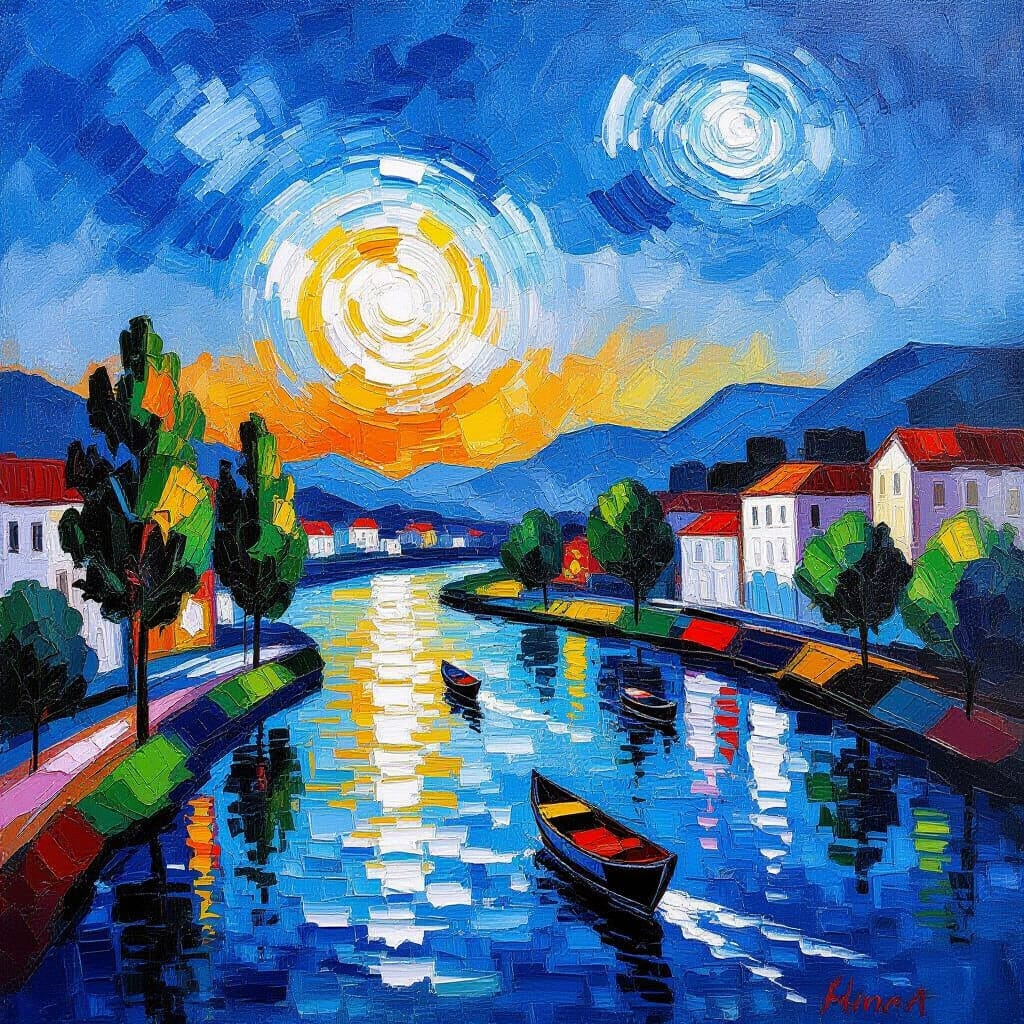
Vlaminck became famous for using pure, intense colors and applying paint in thick daubs and energetic strokes, sometimes with color straight from the tube. The result is texture you can practically trip over.
Also, he was heavily influenced by seeing Van Gogh’s work. After that, the brushwork got bolder and the color got louder, like he’d discovered a new volume knob and snapped it off in the “ON” position.
Who has he worked with?
His key partnership was with André Derain, who he met in a chaotic bit of real life (because of course he did). They even shared a studio near Chatou and helped shape what would become Fauvism.
He also exhibited alongside Henri Matisse and the other Fauves, meaning he was part of the original squad that made critics sweat.
Was he wealthy?
Early on: not really. He hustled. Music gigs, odd work, survival mode.
Then things changed when art dealers started buying his work in bulk, and he was able to focus on painting full time. So he didn’t start out rolling in gold, but he also didn’t end as a tragic “discovered after death” story.
More “worked his way into stability,” less “died clutching a paintbrush in a cold attic.”
When was he most popular?
Peak Vlaminck heat was the Fauvism years, especially 1904 to 1908, with the big public flashpoint being the 1905 Salon d’Automne, when Fauvism got its “wild beasts” nickname and everyone collectively panicked.
After that, he evolved. Like many artists, he didn’t stay in one style forever. But when people say “Vlaminck,” they usually mean the period when he was basically weaponizing color.
Tell me more, please
Here’s what makes him extra interesting: Vlaminck had this anti-intellectual streak. He wasn’t trying to build a complicated theory of art. He wasn’t writing manifestos to prove he was the smartest guy in the room.
He was more like: “I have paint. I have feelings. We ride at dawn.”
And yet, despite that anti-theory vibe, he did write. He produced novels, memoirs, and commentary over his lifetime, which is hilarious in the best way. The man who didn’t want art to be too “cerebral” still had plenty to say, he just wanted the canvas to throw the first punch.
Anything else left to tell?
Two things:
- He helped define an entire era by proving that color alone can carry emotion like a full soundtrack.
- His best work doesn’t feel like “a pretty scene.” It feels like a place you could step into and immediately hear the air buzzing.
That’s the Vlaminck magic: he paints landscapes like they have nerves.
Any other interesting tidbits?
- He wasn’t just a painter. He was a musician and an all-around restless creative, which explains why his paintings have the calm energy of a storm that’s trying to be polite.
- The Fauves weren’t “wild” because they couldn’t paint. They were “wild” because they refused to paint the way everyone expected. Vlaminck was one of the loudest examples of that.
If you’ve been enjoying this artist series, follow along and drop a comment: Do you love the Fauvist chaos, or do you prefer your landscapes to behave? And if you had to repaint the world with one ridiculous color choice, what would you pick?
References:
- https://www.britannica.com/biography/Maurice-de-Vlaminck
- https://www.metmuseum.org/art/collection/search/490034
- https://prolog.museum-barberini.de/en/17755/maurice-de-vlaminck
- https://en.wikipedia.org/wiki/Maurice_de_Vlaminck
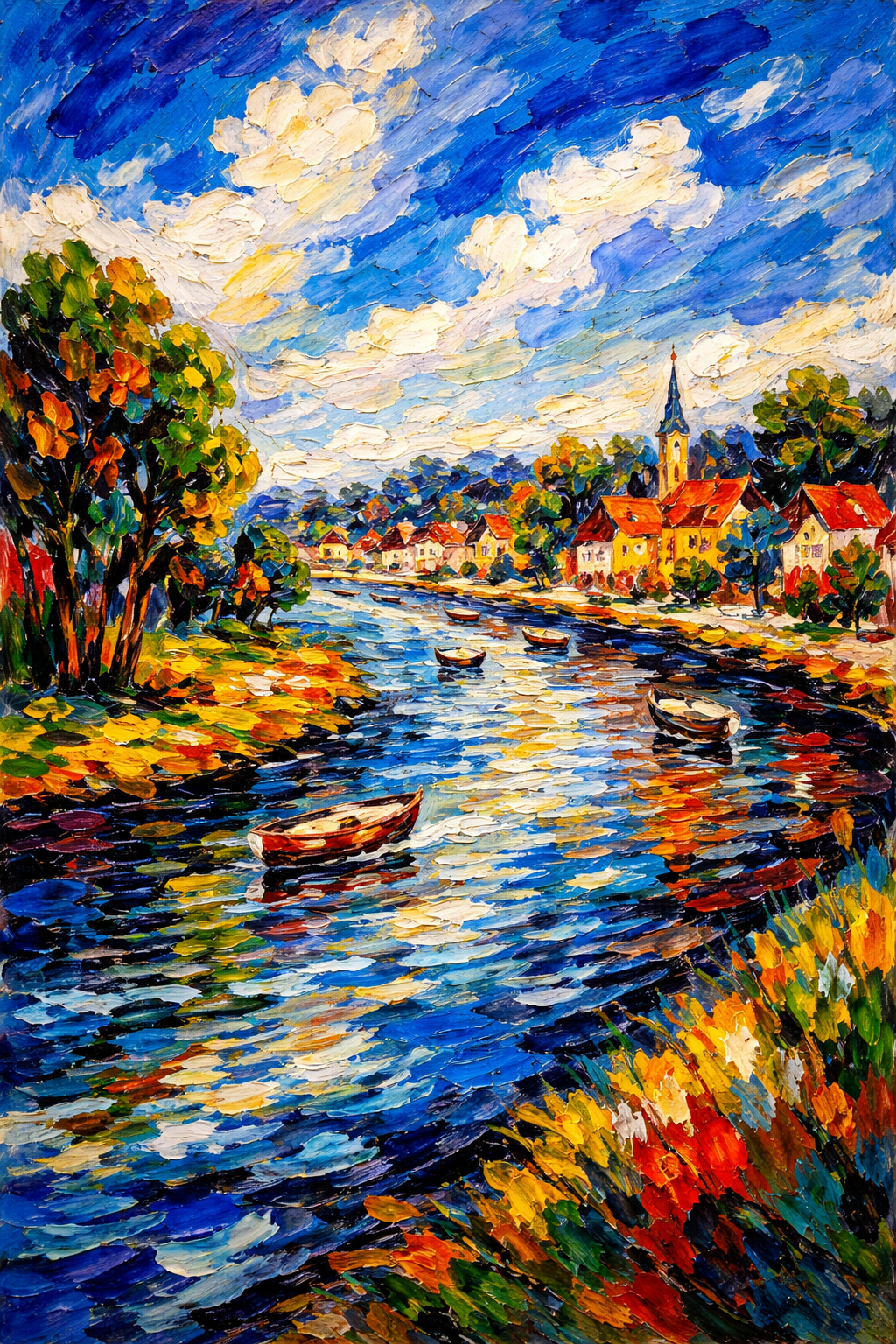
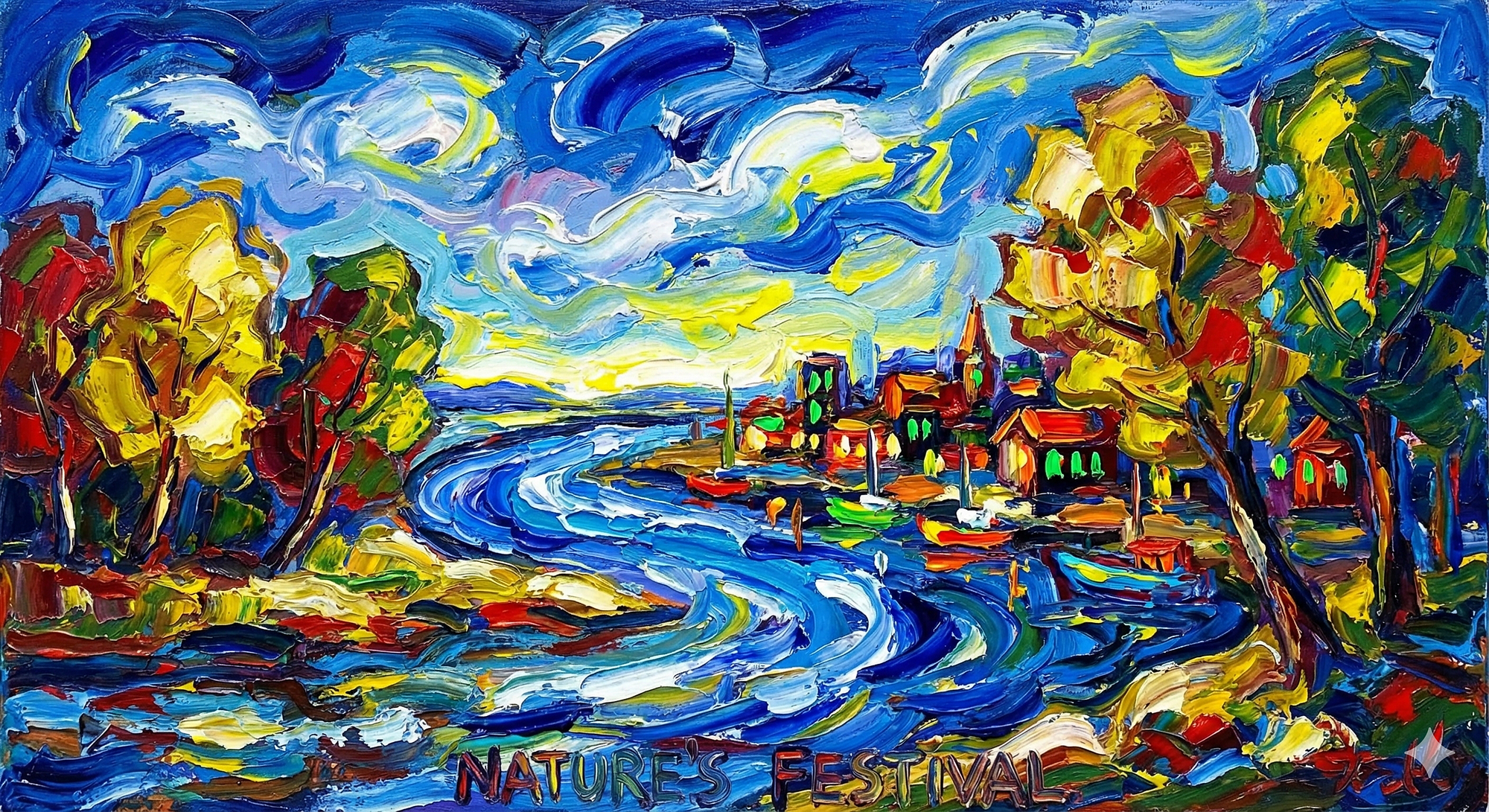
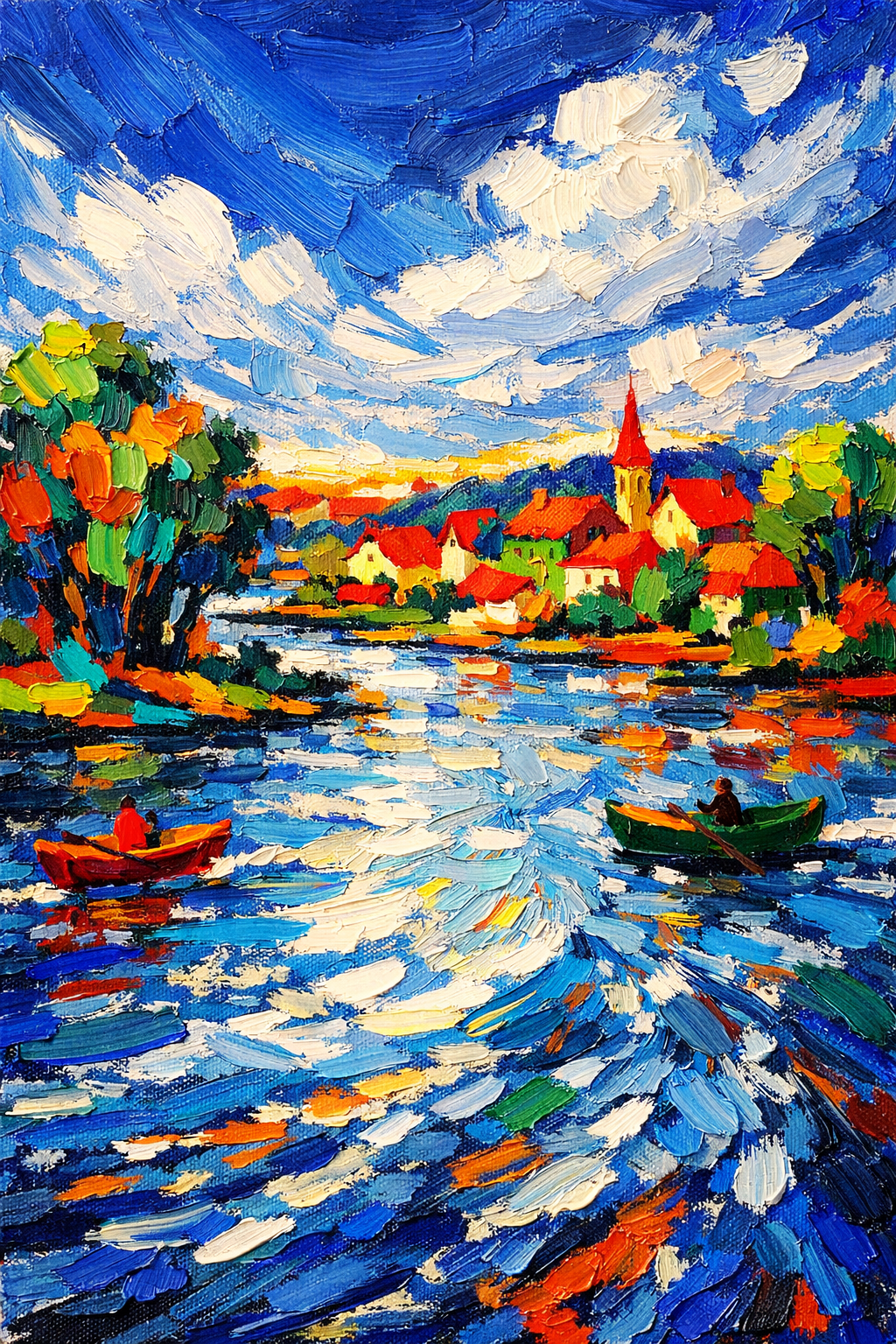
Art Prompt (Fauvist Landscape): A bold, high-energy landscape painted with thick, confident impasto and swirling, muscular brushstrokes. A river curves through the scene under a sky of saturated cobalt and milky white, while small boats and distant rooftops flicker with daring reds, hot oranges, and sharp emerald greens. Trees along the banks are built from chunky strokes and luminous color blocks rather than delicate leaves, creating a rhythmic, almost musical texture. The composition feels spontaneous but balanced: a strong foreground of textured water, a midground of clustered buildings and trunks, and a horizon that hums with electric light. The mood is exuberant and slightly rebellious, like nature decided to throw a festival and refused to ask permission.
Video Prompt: Animate the painted landscape as a vivid, kinetic sequence: the camera glides low over thickly textured water where impasto strokes subtly shift and shimmer, as if the paint is alive. Boats drift forward with gentle bobbing motion while reflections ripple in bold, simplified color bands. Trees along the riverbank sway in chunky, brushstroke-like segments, and the sky’s saturated blues slowly pulse with soft, swirling movement. Add quick, satisfying micro-zooms into the paint texture to show ridges and daubs, then pull back into smooth cinematic pans across rooftops and glowing river bends. Keep the motion catchy and rhythmic, with looping moments where the water shimmer and sky swirl sync perfectly.
Songs to pair with the video:
- Genesis — Justice
- D.A.N.C.E. — Justice