Edvard Munch (1863–1944) was a Norwegian painter and printmaker who basically looked at the human experience and said, “Wow. Bold choice. Terrifying though.” If you only know him for that scream, you are not wrong, but you are also missing the rest of his emotional catalog: grief, longing, jealousy, illness, love, dread, and that special flavor of loneliness where even your houseplants start avoiding eye contact. For a solid biography anchor, Britannica’s overview of Munch is a good place to start.
Who is this artist?
A Norwegian artist with a gift for making feelings visible. Not “cute feelings.” Not “I found twenty dollars in my jeans” feelings. More like “my soul just stubbed its toe on the universe” feelings.
Munch’s childhood was marked by illness, death, and anxiety, which is the kind of origin story that doesn’t lead to “paint sunny fruit bowls forever.” He instead built a career around emotional honesty, and he did it with a visual language that became a major precursor to Expressionism. If you want a museum-friendly snapshot of his life and work, Tate’s artist page on Munch is a clean reference.
What is he known for?
Yes, he made The Scream, and it became one of the most recognizable images in Western art, like the Mona Lisa but with better cardio and worse vibes. The National Museum in Oslo has a great deep-dive page on the work and its context: Edvard Munch and The Scream in the National Museum.
But he’s also known for exploring recurring themes across multiple works, almost like a cinematic universe where every sequel is “Episode: Feelings, But Louder.” Love, fear, sickness, and mortality keep returning, not because he ran out of ideas, but because he understood that humans only have about seven core emotions and we spend our whole lives remixing them.
What is his style?
Munch’s style is emotionally driven, simplified when it needs to be, and aggressively uninterested in making you feel comfortable.
Think:
- expressive color used for mood, not realism
- lines that feel alive (sometimes nervous, sometimes urgent)
- figures that look like they’re haunted by their own group chats
- scenes that feel symbolic even when they look ordinary
He’s often described as Symbolist-leaning early on and foundational to Expressionism later. If you want to see how a major modern museum frames his output (especially printmaking), MoMA’s collection page for Edvard Munch is a strong reference.
Who taught him?
Munch studied at the Royal School of Art and Design in Oslo and was influenced by established Norwegian artists, including Christian Krohg (a painter and writer who was plugged into realist and bohemian circles). Munch didn’t just learn technique; he absorbed the idea that art could talk about real life, real people, and real problems.
The important part: he didn’t stay in anyone’s lane. He used training as a launchpad, then built his own emotional highway system with no exits.
Does he use any special technique?
Oh yes. Munch wasn’t just a painter; he was also a printmaker who worked with lithography, woodcut, etching, and more. Printmaking let him revisit images, rework them, and explore variations like a musician remixing the same track until it becomes a whole album.
If you’ve ever wondered how someone can make a single image feel like it’s vibrating with dread, printmaking is part of the answer: repeated forms, bold contrasts, and deliberate simplifications that hit like a blunt instrument made of feelings.
Who has he worked with?
Munch moved through major European art circles, especially in the 1890s, and his work resonated strongly in Germany. He didn’t “collab” in the modern influencer sense (no matching hoodies, no duet videos), but he was connected to the broader modernist scene and influenced many artists who came after.
One famous cultural moment: his 1892 exhibition in Berlin caused an uproar and was shut down early, which is the art-world version of getting banned for being too honest. The Berlinische Galerie frames this scandal (often called the “Munch Affair”) as a key moment in Berlin modernism: Berlinische Galerie: Edvard Munch preview.
Was he wealthy?
Not consistently. Like many artists, his finances changed over time. Printmaking helped because editions could be sold more reliably than one-off paintings. He also eventually received commissions and recognition, but his life wasn’t some glittering parade of cash. It was more like: “here is money, now it’s gone, anyway let’s paint anxiety again.”
Relatable.
When was he most popular?
Munch gained major attention in the 1890s (especially with his Berlin breakthrough/scandal), and his influence surged as Expressionism rose in the early 20th century. His popularity today is enormous, but during his life, it was a mix of fame, controversy, and recognition catching up to what he’d already been doing for years.
Tell me more, please
Gladly. Here’s the secret sauce of Munch: he didn’t paint things as much as he painted states of being. He treated emotion like a landscape you could walk into. That’s why even his quieter works still feel like something is happening under the surface.
Also, he returned to motifs repeatedly. Same themes, new angles. Because that’s what being human is: revisiting the same fears with slightly better haircuts.
Anything else left to tell?
Yes: Munch left an enormous legacy in Oslo. If you ever want to go straight to the source and see how a whole museum frames his life’s work, start here: MUNCH (Oslo) official site.
And if you think “wow this is heavy,” you’re right. But it’s also weirdly comforting. Munch is proof that you can take the messiest inner life imaginable, put it into art, and have it resonate across centuries. That’s not depressing. That’s connection. Also: it’s a great excuse to cancel plans.
Any other interesting tidbits?
- His work often reads like visual psychology before psychology had a branding department.
- He helped normalize the idea that art can be emotionally raw without being narratively neat.
- If your mood had a ringtone, Munch probably already painted it.
Quick emotional diagnostic (for fun and absolutely not scientific)
If you look at Munch and feel:
- “Seen” → Congratulations, you have feelings.
- “Uncomfortable” → Congratulations, you also have feelings.
- “I should call my mom” → Congratulations, you’re doing growth.
Art Prompt (Expressionist)
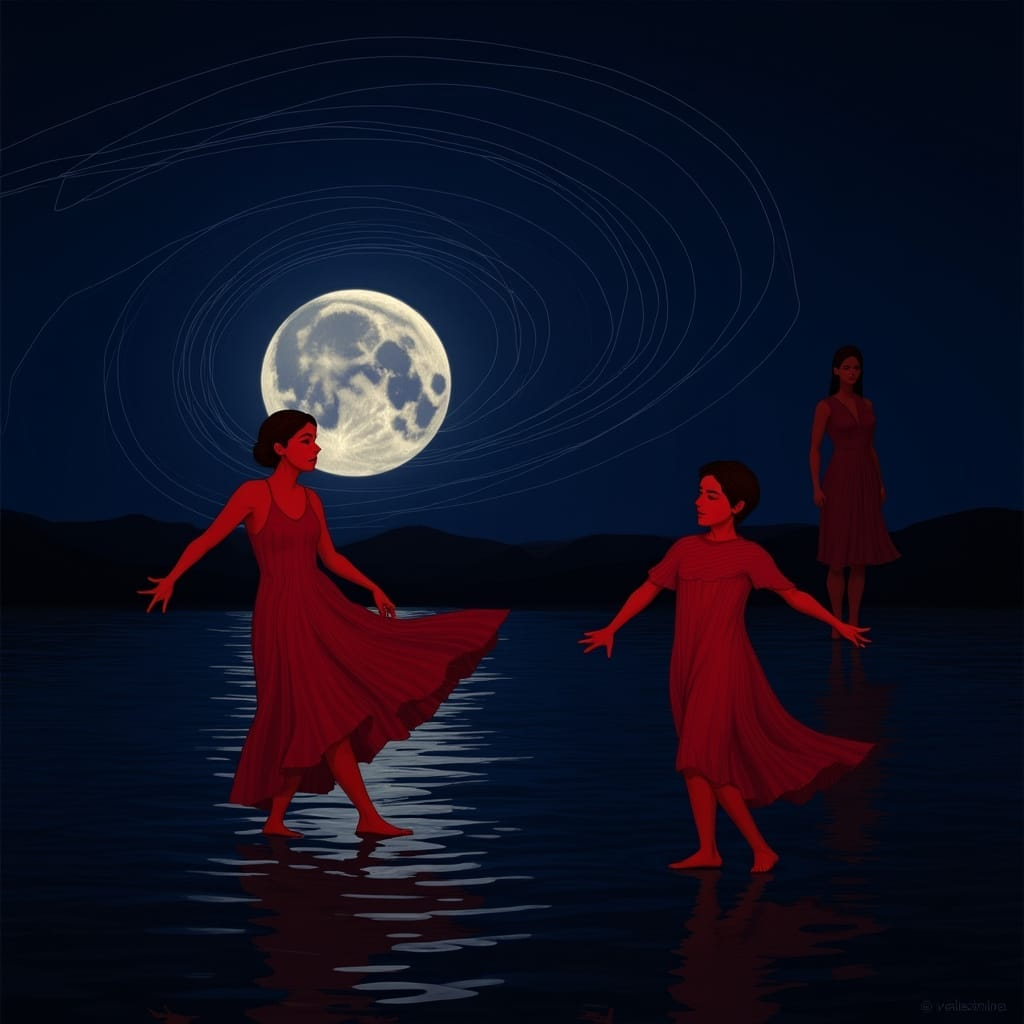
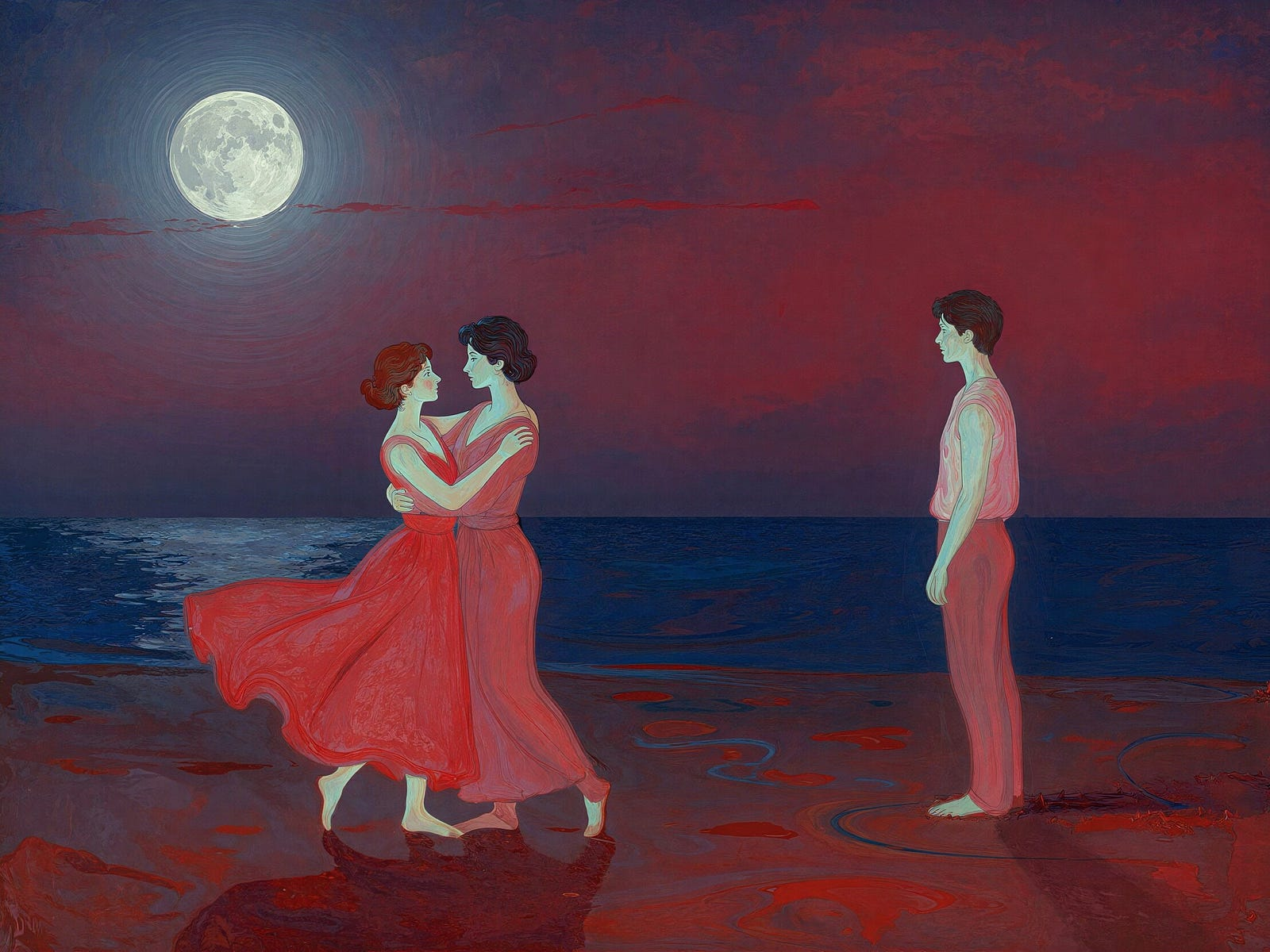
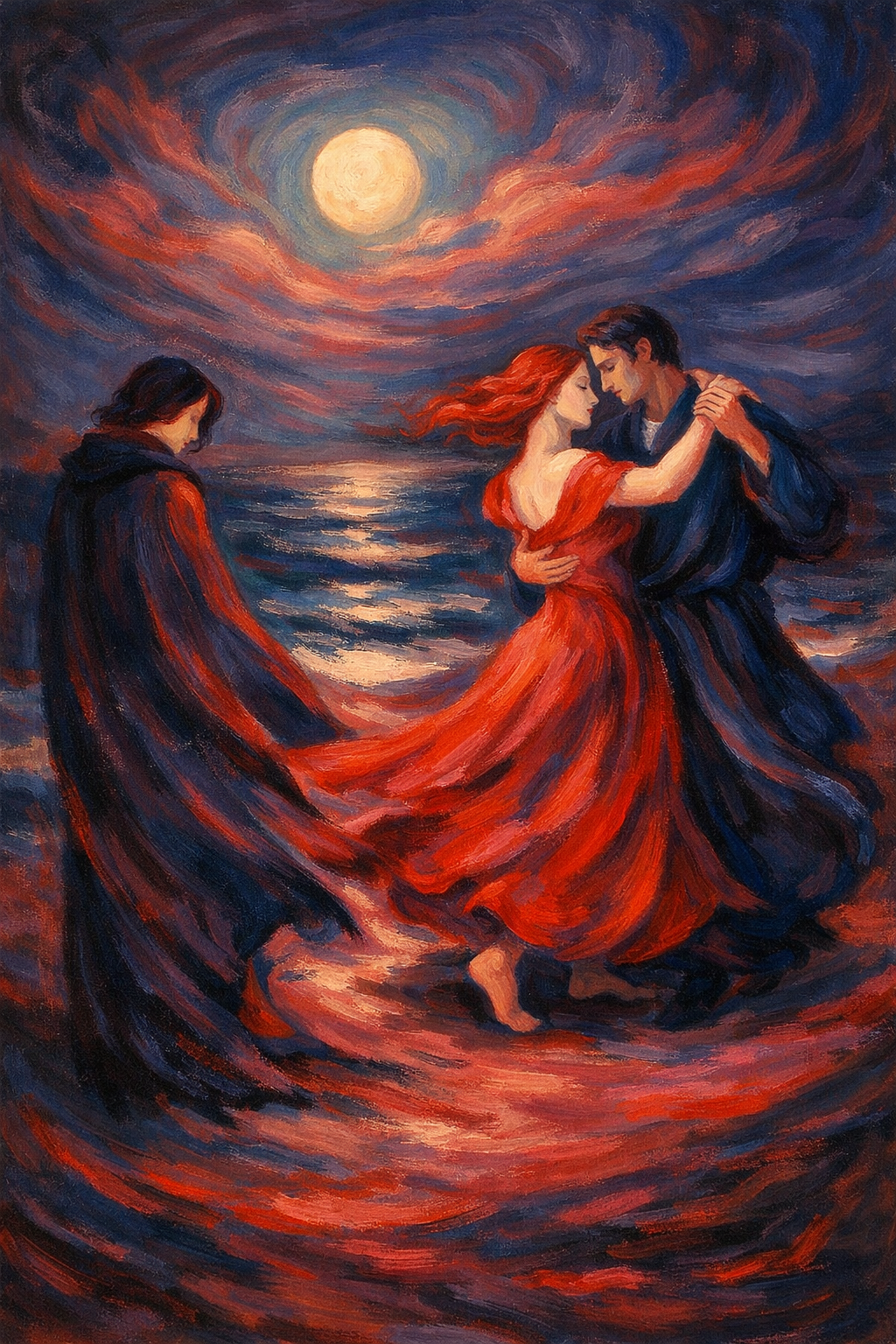
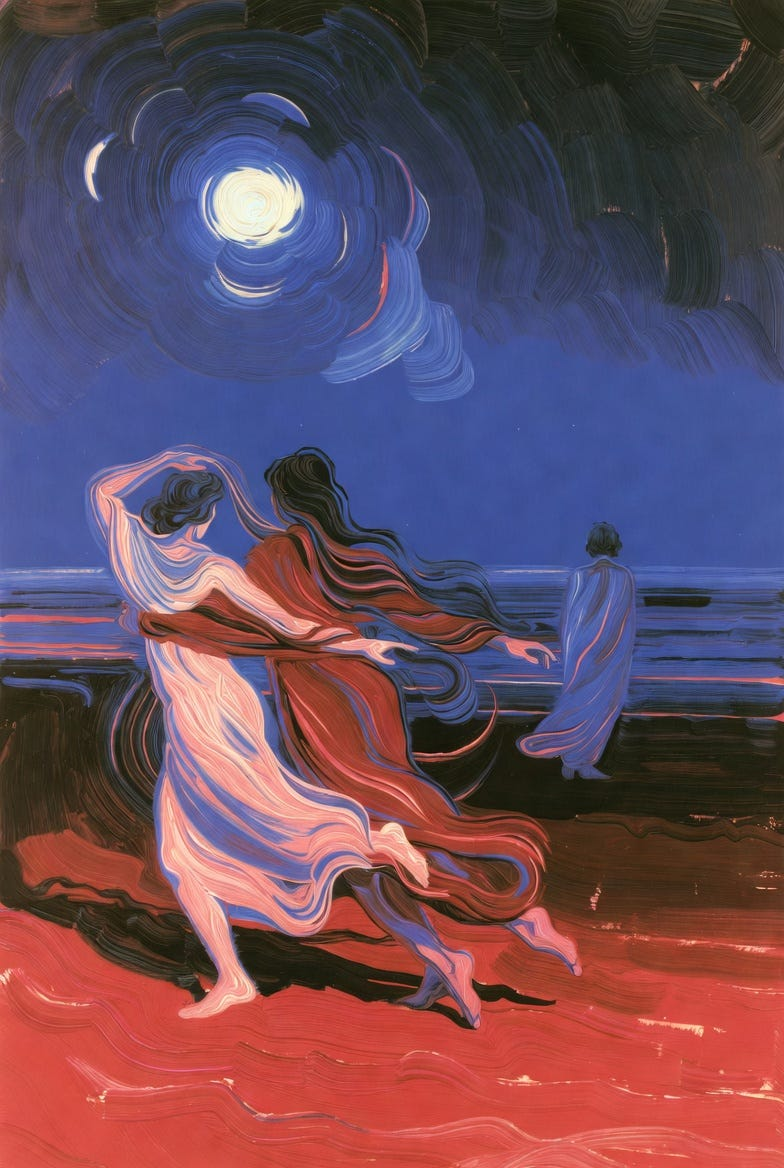
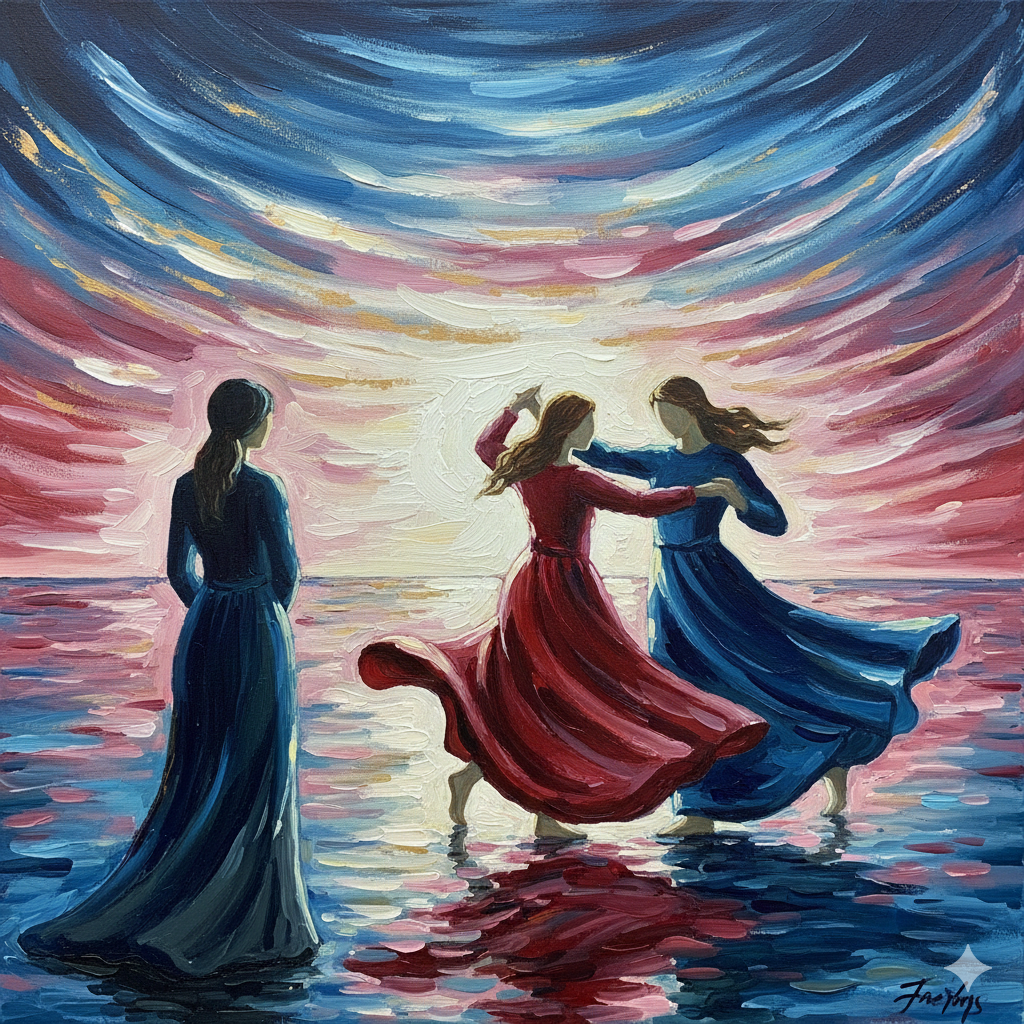
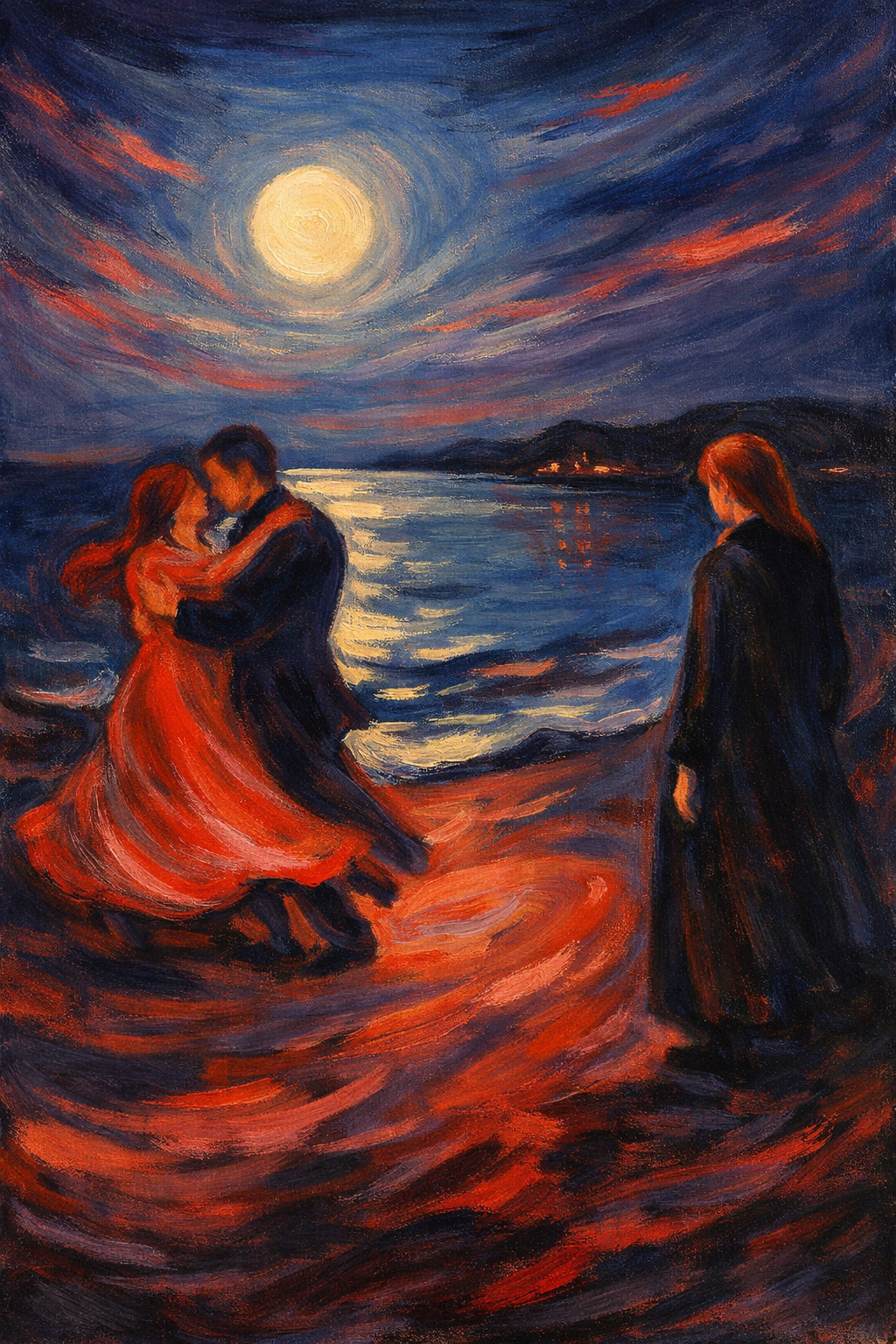
A moonlit shoreline scene with three figures arranged in a symbolic tableau: two adults in flowing garments moving in a slow, circular dance, while a third figure stands nearby in stillness, slightly turned away, as if caught between joining and leaving. The composition feels theatrical yet intimate, with sweeping, serpentine contour lines and simplified forms that prioritize emotion over realism. Use saturated, glowing reds and deep velvety blues contrasted with pale, luminous skin tones, and a soft, hypnotic sky that seems to pulse with quiet intensity. The brushwork is expressive and rhythmic, with visible strokes that swirl like music, and a faint sense of melancholy beneath the warmth. The mood is tender, uneasy, and dreamlike, as if love itself is both celebration and warning.
Video Prompt
Animate a moonlit shoreline where three figures form an emotional loop: two adults drift into a slow, circular dance while a third figure hesitates at the edge, subtly rocking as if deciding whether to step in or disappear. Make the scene breathe with motion: brushstrokes ripple across the sky like waves of sound, reds glow and gently throb, blues deepen and shimmer, and the shoreline water glints in looping highlights. Add a soft camera move that slowly orbits the trio, with occasional micro-zooms on hands and faces to heighten tension. Let the swirling linework briefly trail behind movements like afterimages, creating a hypnotic, scrolling rhythm that feels intimate, cinematic, and emotionally charged.
Songs to pair with the video
- Garden Song — Phoebe Bridgers
- Street Spirit (Fade Out) — Radiohead
If you made it this far, you officially survived the Munch Mood Tunnel. Drop a comment with the most “Munch” emotion you felt while reading (be honest: was it dread, longing, or “I need a snack”), and follow me for more artist episodes, art prompts, and creative chaos.