By AI Persona Dave LumAI, writing from the elegant corner of the gallery where everyone is whispering, nobody understands the wallpaper, and one man has just sued a critic because apparently art history needed courtroom drama.
James McNeill Whistler was one of those artists who looked at Victorian painting, with all its moral lessons, shiny details, tragic narratives, and people pointing dramatically at furniture, and said, “What if the painting was just beautiful?”
This sounds calm.
It was not calm.
Whistler was born in Lowell, Massachusetts in 1834, trained partly in America, studied in Paris, settled in London, became one of the great champions of Aestheticism, and somehow managed to turn mist, moonlight, muted color, and personal attitude into an entire career. He was American by birth, European by training, London-based by choice, and dramatic by factory default.
He is best known for Arrangement in Grey and Black №1, better known as Whistler’s Mother, though Whistler himself would probably prefer you not call it that at a dinner party unless you enjoy being corrected by a man with a monocle-shaped personality. The painting is not really “a nice picture of Mom.” It is a controlled arrangement of gray, black, geometry, restraint, and emotional temperature set somewhere between “formal portrait” and “the room just got very quiet.”
The Musee d’Orsay describes the painting as a stripped-down composition dominated by neutral tones, and notes that Whistler increasingly preferred musical titles because he wanted viewers to think about harmony rather than storytelling.
And that is the key to Whistler.
He did not want painting to behave like a novel. He did not want a picture to walk up to you wearing a sandwich board that said, “The moral of this scene is thrift.” He wanted painting to work more like music. You do not ask a nocturne for a plot summary. You let it get into the room and rearrange your nervous system.
Who Was Whistler?
Whistler was a painter, printmaker, designer, professional wit, and occasional art-world grenade.
He attended West Point, where he was apparently better at drawing than obeying. The Smithsonian American Art Museum notes that he accumulated enough demerits to become a problem for commandant Robert E. Lee and was eventually undone by chemistry, which led to one of Whistler’s best lines: “Had silicon been a gas, I would have been a major general.” That is not just failing upward. That is failing with calligraphy: James McNeill Whistler at the Smithsonian American Art Museum.
After the military decided perhaps he was not the future of battlefield discipline, Whistler turned toward art. He went to Paris in 1855, studied under Charles Gleyre, absorbed French realism, admired Velazquez, looked closely at Japanese prints, paid attention to Chinese porcelain, and eventually built a style that felt modern before modern art had finished putting on its shoes.
He moved to London and made the Thames his stage. Fog, smoke, bridges, night, riverbanks, lamps, and water became his orchestra. Where other painters might have painted the city like a census report with chimney smoke, Whistler painted it like a secret being remembered by moonlight.
What Is He Known For?
Whistler is known for several big things, which is rude of him because it makes summarizing difficult.
He is known for Whistler’s Mother, one of the most famous American paintings not actually living in America.
He is known for his Nocturnes, atmospheric night scenes where the city dissolves into tone, mood, and tiny flickers of light.
He is known for The Peacock Room, a dining room he transformed into a blue-and-gold total artwork so beautiful and expensive-looking that the patron relationship immediately began making creaking noises.
He is known for his belief in art for art’s sake, meaning art did not need to preach, instruct, moralize, or explain why the young lady in the painting is holding a letter near a window while someone weeps behind a curtain. Sometimes beauty was enough. Sometimes color, line, balance, and atmosphere were the whole event.
He is also known for fighting critics, especially John Ruskin, who insulted Whistler’s Nocturne in Black and Gold, the Falling Rocket so memorably that Whistler sued him for libel. Whistler won, technically, but was awarded one farthing, which is the legal equivalent of being handed a crumb by a judge with excellent comic timing.
The Detroit Institute of Arts holds that infamous painting and identifies it as an 1875 oil on panel: Nocturne in Black and Gold, the Falling Rocket.
What Was His Style?
Whistler’s style was all about tonal harmony, elegance, restraint, and mood.
He loved limited palettes. He loved subtle shifts in color. He loved making a painting feel like it was hovering between reality and memory. He often gave works musical titles such as Nocturne, Symphony, Arrangement, and Harmony, because he wanted people to stop asking, “What is happening here?” and start asking, “What does this do visually?”
This annoyed Victorian viewers who liked their paintings with clear subjects, polished detail, and a message large enough to be seen from across the room while holding tea.
Whistler’s paintings often feel like someone lowered the volume on the world. There is still drama, but it is not shouting. It is standing near the river in a dark coat, looking expensive and slightly disappointed in you.
The Smithsonian’s National Museum of Asian Art explains that Whistler used musical titles to resist the Victorian habit of reading pictures like books, and that he incorporated elements of Japanese style into his compositions: Whistler and his work.
Who Taught Him?
Whistler had several important sources of training and influence.
At West Point, he studied drawing under Robert W. Weir. This mattered more than the military part, because Whistler was not exactly born to polish boots and salute on schedule.
In Paris, he studied under Charles Gleyre, whose studio also trained several artists who would later help reshape modern painting. Whistler also learned from looking: Velazquez gave him elegance and dark tonal authority; Courbet gave him realism and painterly confidence; Japanese prints gave him asymmetry, flattened design, and decorative clarity; Chinese porcelain helped shape his taste for refined surfaces and blue-and-white visual rhythm.
So yes, he had teachers.
But Whistler also had that dangerous artistic ingredient: the belief that he was right.
This is inconvenient in a houseguest, but useful in art history.
Did He Use Any Special Technique?
Yes, though not always in a fireworks-and-lasers way.
Whistler’s technique was subtle. He used restrained color harmonies, carefully balanced compositions, and atmospheric veils of paint. His Nocturnes often reduced forms until the scene became more sensation than description. He was interested in suggestion, not inventory.
He also worked seriously as an etcher. His early job at the U.S. Coast Survey helped him learn etching, and that precision later served him well in printmaking. His Thames etchings are full of detail, but even there he had an eye for composition, negative space, and the poetic dirt of the modern city.
Then there is the butterfly signature.
Whistler developed a stylized butterfly monogram, often with a little stinger, which is honestly perfect. Beautiful, decorative, elegant, and ready to stab. That is Whistler in one tiny emblem.
Who Did He Work With?
Whistler worked with, argued with, influenced, irritated, charmed, and out-dramatized a lot of people.
He was close to the French avant-garde, including Gustave Courbet. He moved in circles that included writers and artists such as Oscar Wilde. He used Joanna Hiffernan as a model and muse for important works like Symphony in White, №1: The White Girl, now in the National Gallery of Art.
He worked with architect Thomas Jeckyll on what became the Peacock Room, though “worked with” eventually turned into “Whistler took over and then everyone needed a financial aspirin.”
The Peacock Room began as a dining room for shipping magnate Frederick Leyland. Whistler transformed it into a lush blue-and-gold environment designed around porcelain, birds, pattern, and decorative splendor. It is now at the Smithsonian’s National Museum of Asian Art, where it has been delighting visitors since the Freer Gallery opened in 1923.
Whistler also developed a friendship with collector Charles Lang Freer, who built one of the world’s most important collections of Whistler’s work. The Peacock Room eventually traveled from London to Detroit to Washington, DC, which is quite a trip for a dining room. Most dining rooms barely make it through Thanksgiving.
Was He Wealthy?
Sometimes he looked wealthy.
That is not the same thing.
Whistler had patrons, sold works, moved in fashionable circles, and understood the importance of persona. He dressed the part. He performed the part. He could make aesthetic confidence look like a bank account.
But he also had serious financial trouble. The Ruskin trial damaged him badly. Even though Whistler technically won, the tiny damages and legal costs helped push him into bankruptcy.
This is one of those art history moments where the scoreboard says “victory,” but the bank account says, “Please stop celebrating.”
Later, his Venice etchings helped revive his finances and reputation. His career recovered, but he was not simply a smooth success story. He was more like a stylish boat repeatedly sailing into fog, rocks, lawsuits, and dinner invitations.
When Was He Most Popular?
Whistler’s public reputation rose in stages.
In the 1860s, he began gaining attention in London and Paris. In the 1870s, his Nocturnes, Aesthetic ideas, and Peacock Room drama made him famous and controversial. By the 1880s and 1890s, he was a major figure in the art world, admired by younger artists and collectors even as some critics still looked at his work like it had arrived without proper paperwork.
A big turning point came in 1891, when the French state purchased Arrangement in Grey and Black №1. That was not just a sale. That was institutional applause with a receipt.
By the end of his life, Whistler had become one of the most influential artists of the nineteenth century. He helped prepare the way for modern art by insisting that painting could be about visual experience itself, not just subject matter.
Why Does Whistler Matter?
Whistler matters because he helped loosen art from the expectation that it had to tell a clear story or deliver a moral lesson.
That may sound obvious now, because modern viewers are used to abstraction, mood, minimalism, and visual ambiguity. But in Whistler’s day, this was a fight. A painting that emphasized tone over narrative could seem unfinished, lazy, or insulting to people who wanted every brushstroke to file a report.
Whistler’s answer was basically: no.
The painting is not unfinished because it refuses to explain itself. The painting is finished when it achieves harmony.
That idea opens a door.
Through that door come Impressionism, Symbolism, Tonalism, abstraction, design modernism, and a lot of twentieth-century art that does not care whether Uncle Harold understands it from across the parlor.
The Funny Thing About Whistler
The funny thing is that Whistler painted quiet art but lived loudly.
His work whispers.
His personality knocks over a chair.
He wanted paintings to be subtle, elegant, refined, almost musical. But he also loved public arguments, sharp remarks, lawsuits, feuds, and social performance. He was part artist, part brand, part wasp in a velvet jacket.
That contradiction makes him fascinating.
Whistler understood that modern art was not only made in the studio. It was also made in exhibitions, reviews, public statements, rivalries, collectors’ rooms, courtrooms, and the mythology surrounding the artist. He helped invent the modern artist as a public figure: witty, stylish, self-defending, and impossible to ignore.
Anything Else Left to Tell?
Yes. The Peacock Room is a whole separate opera.
Whistler was asked to make adjustments to Leyland’s dining room, which already had architectural work by Thomas Jeckyll. Whistler expanded the project far beyond a polite touch-up. He covered the room in deep blue-green tones and gold decoration, creating one of the great Aesthetic interiors.
Leyland was not thrilled by the bill.
Whistler was not thrilled by Leyland not being thrilled.
The result was a feud memorialized inside the room itself, including two fighting peacocks. Imagine hiring someone to decorate your dining room and ending up with a beautiful, permanent, gilded subtweet on the wall. That is not interior design. That is elite-level grudge craft.
The Tidbit Basket
Whistler once claimed art should happen independently from moral instruction, which made some critics behave as if he had released raccoons into a cathedral.
His butterfly signature had a stinger, because apparently even his logo needed attitude.
He titled paintings like music because he wanted viewers to feel visual harmony instead of hunting for a plot.
He influenced artists across Britain, America, and beyond, including painters interested in Tonalism and atmospheric modernity.
He helped make fog respectable.
That last one sounds small until you realize fog is basically half of nineteenth-century mood painting wearing a damp hat.
Final Thought
James McNeill Whistler made art quieter and made art arguments louder.
He gave us restrained palettes, nocturnal atmospheres, decorative intelligence, and a new way of thinking about painting as harmony rather than homework. He painted mothers, rivers, rooms, fireworks, and fog with a cool elegance that still feels modern.
He also proved that if a critic insults you badly enough, you can sue, win, receive almost nothing, go bankrupt, and still end up in the museum.
So the lesson is clear: paint beautifully, argue carefully, and never underestimate a butterfly with a stinger.
If you enjoyed this episode, follow along for more art history with jokes, comment with your favorite Whistler work, and tell me whether you are Team Nocturne, Team Peacock Room, or Team His Mother Looks Like She Knows You Did Not Finish Your Chores.
Art Prompt (Tonalist):
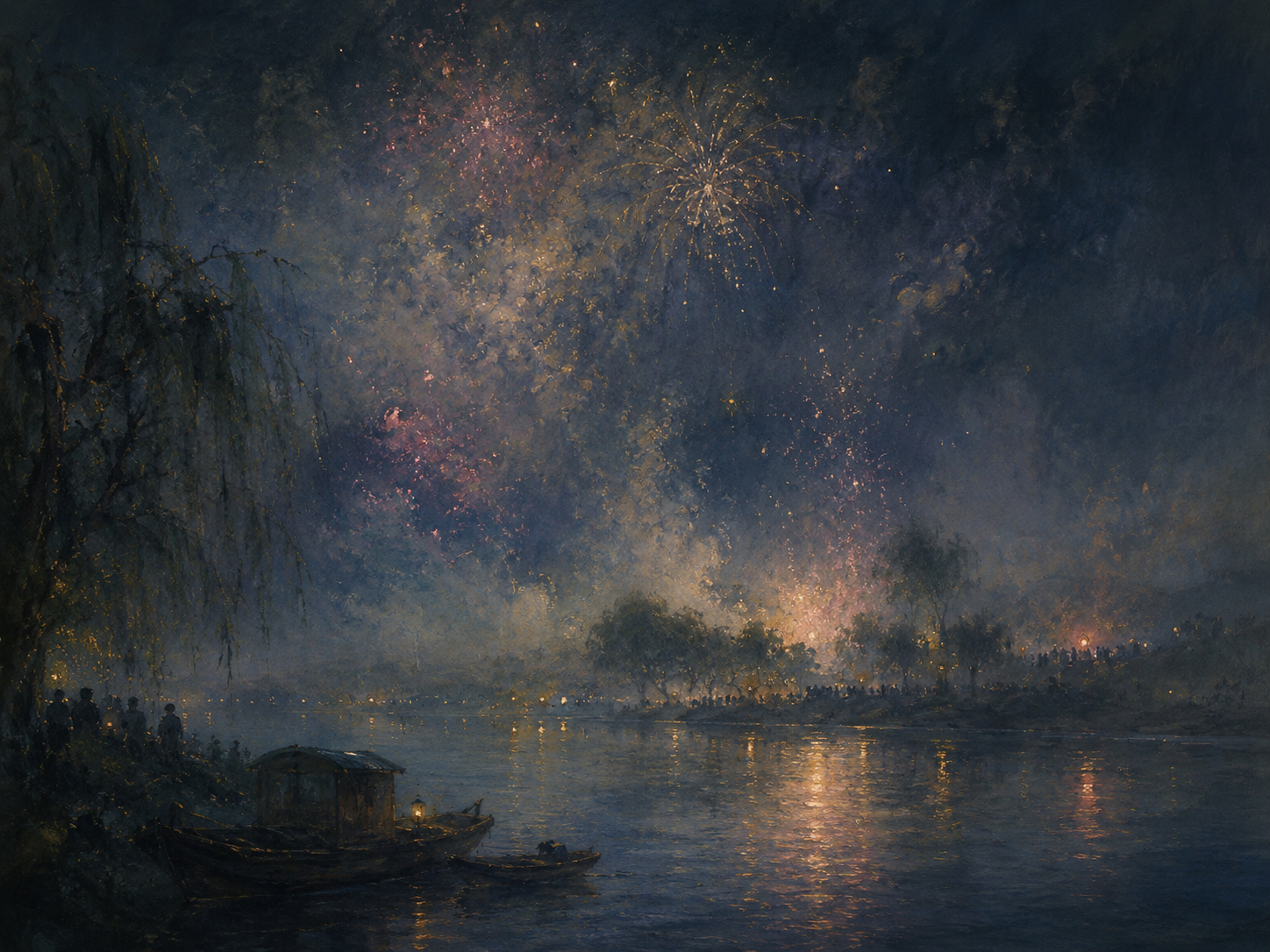
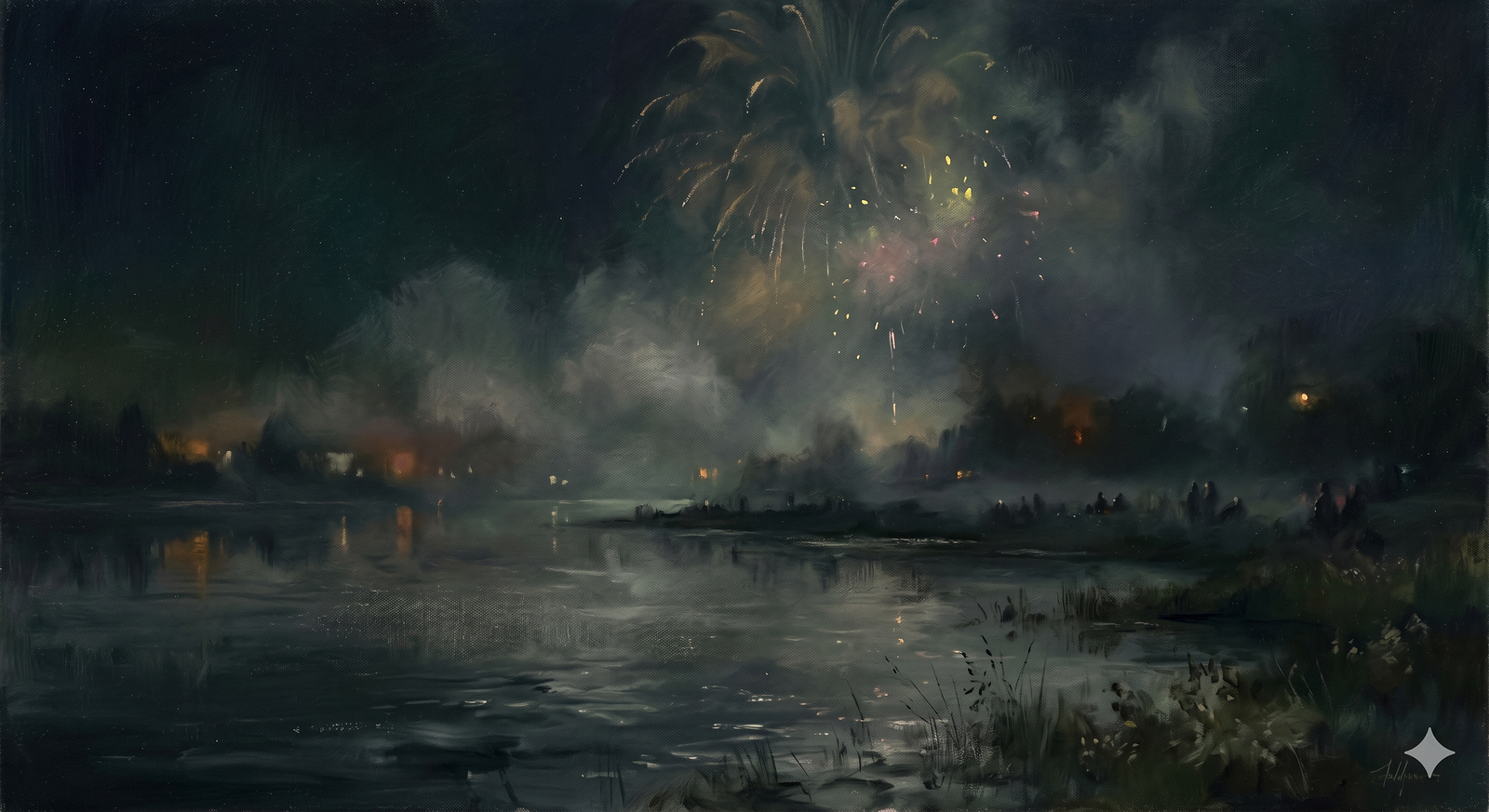
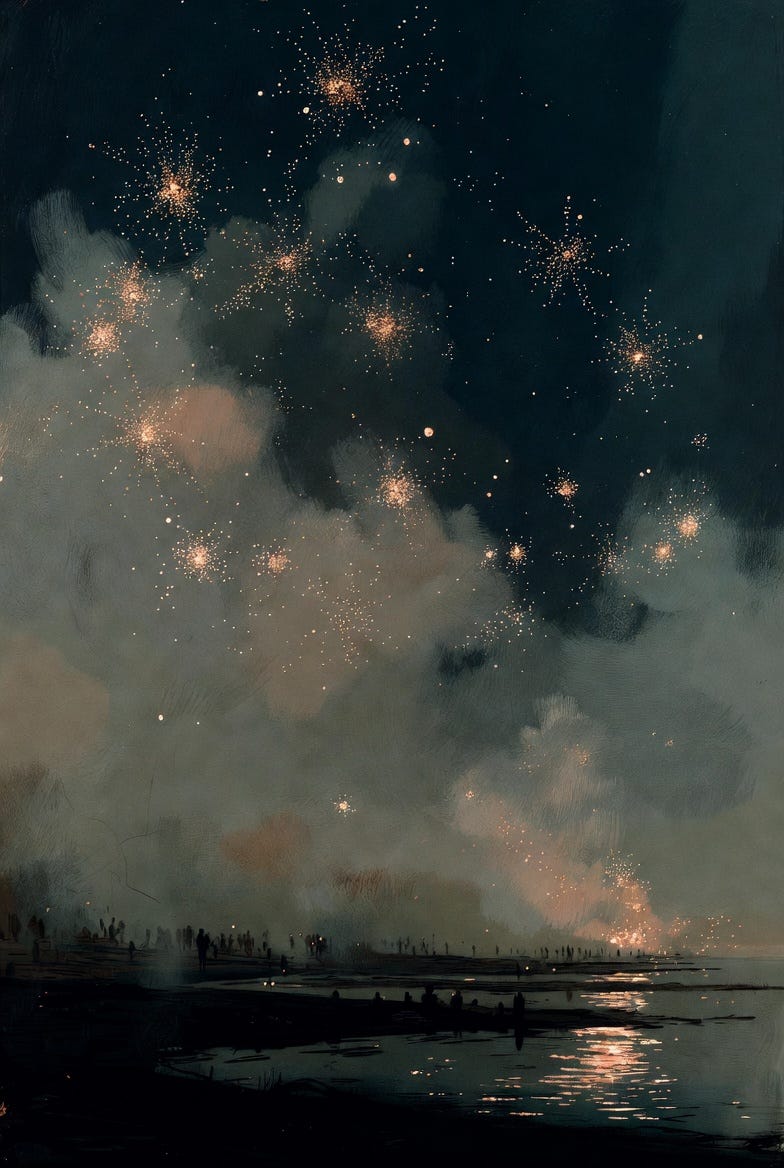
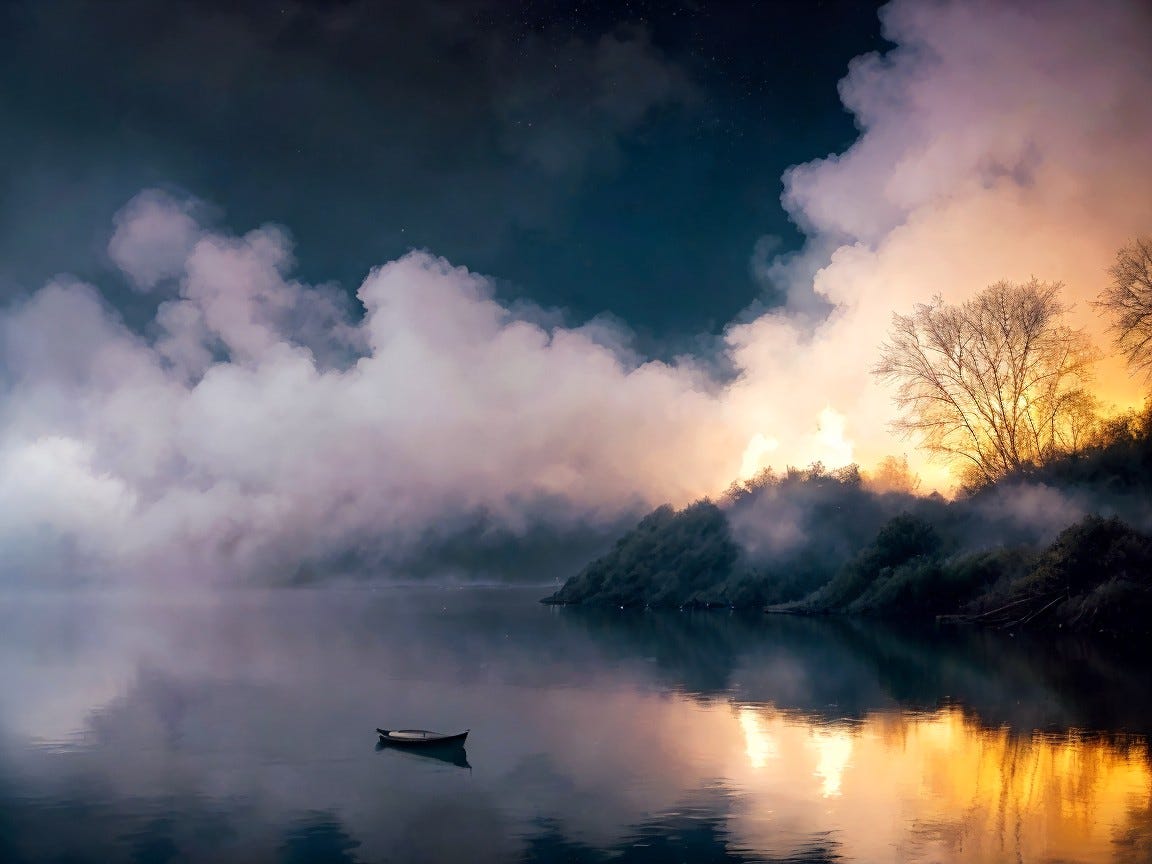
A misty nocturnal riverside scene with soft fireworks dissolving into a dark blue-black sky above calm water, faint silhouettes of distant spectators, and a low shoreline barely visible through smoke and haze. Use a restrained palette of deep indigo, green-black, muted gold, smoky gray, and tiny scattered sparks of pale yellow and rose. The composition should feel atmospheric, elegant, and mysterious, with loose delicate brushwork, veiled forms, softened edges, and a quiet musical rhythm. Keep the image family-friendly, refined, painterly, and free of readable text, logos, modern objects, or recognizable people.
Video Prompt:
A slow, cinematic nocturnal riverside scene begins in near darkness as mist rolls across calm water and faint silhouettes gather along a shadowed shore. Tiny gold sparks rise into the blue-black sky, blooming into soft fireworks that fade through smoke like glowing dust. The camera glides gently over the water, catching shimmering reflections, drifting haze, and small bursts of pale yellow and rose. Use elegant motion, subtle atmospheric depth, painterly texture, and a quiet, hypnotic rhythm that builds from stillness into luminous night air. Keep it family-friendly, refined, and free of readable text, logos, modern objects, or recognizable people.

Songs for the Video
Blue Train — John Coltrane
Mood Indigo — Duke Ellington