As this series continues from the introduction to the Modern Religion Series, the goal remains the same: to approach each religion with curiosity, clarity, and respect. Scientology is a modern religion that emerged in the twentieth century and has drawn attention around the world for its teachings about the spirit, the mind, personal growth, and spiritual freedom. Whatever one’s familiarity with it may be, it deserves to be described carefully and respectfully on its own terms.
Scientology was founded by L. Ron Hubbard. Its roots are usually traced to the early 1950s, following the publication of Dianetics: The Modern Science of Mental Health in 1950 and the development of Scientology as a distinct religious system shortly afterward. The first Church of Scientology was established in 1954. In that sense, Scientology is one of the more modern entries in the long history of world religions, arising not in the ancient world but in an era of mass media, global institutions, and rapidly changing ideas about the human condition.
What is Scientology? At the heart of Scientology is the teaching that the human being is an immortal spiritual being called a thetan. The religion teaches that the thetan is fundamentally distinct from the body and mind and has lived through many lifetimes. Scientology presents life as spiritual in nature and holds that human beings can achieve greater awareness, ability, and freedom through religious practice. The official Church of Scientology describes its mission in terms of helping individuals achieve a higher state of spiritual awareness and a better understanding of themselves, others, and life itself. The official reference for its beliefs and practices is the Church’s own site: Scientology.org.
Among its best-known teachings are the Eight Dynamics, which describe eight urges or aspects of existence: the self, family, groups, humankind, all life forms, the physical universe, the spiritual universe, and infinity or God. This framework is important because it answers many of the broader questions people naturally ask about religion. Scientology does not present the individual as spiritually isolated. Instead, it places human life within wider layers of responsibility and meaning, extending outward from the individual to family, society, life as a whole, and the divine.
Its religious practices center largely on auditing and study. Auditing is described by Scientology as a form of spiritual counseling intended to help a person identify and overcome spiritual barriers. Study is also central, since Scientology places strong emphasis on learning, understanding, and the disciplined application of its teachings. These practices are meant to help practitioners move toward higher levels of awareness and spiritual freedom.
When people ask whether Scientology is growing or shrinking, two different questions are usually hiding inside one sentence. The first is whether the number of active practitioners is rising or falling. The second is whether the religion is growing or shrinking in public visibility and cultural awareness. Those are not identical questions. Public awareness of Scientology has remained high for decades, and here some quick facts on its ongoing expansion.
As for its tenets, Scientology teaches that the human being is fundamentally spiritual, that life has meaning beyond the material world, that spiritual advancement is possible, and that individuals can improve their condition through religious practice, ethical conduct, and greater spiritual awareness. It also emphasizes communication, responsibility, knowledge, and the possibility of liberation from spiritual burdens. In its own structure and language, it presents religion not merely as belief, but as something to be studied and actively practiced.
Many adherents describe Scientology as beneficial on a personal level because it offers structure, purpose, and a pathway for self-examination. Individuals often report that the religion gives them a framework for understanding their lives, relationships, and spiritual aspirations. Families, in turn, may experience the religion as a shared moral and spiritual system that emphasizes responsibility, communication, and mutual support. Like many religions, its impact on individuals and families is often described by believers in terms of meaning, order, and a sense of spiritual direction.
On a societal level, Scientology points to its various outreach efforts, including literacy programs, anti-drug campaigns, volunteer ministry work, and human rights education. Supporters regard these efforts as examples of the religion’s public benefit. More broadly, Scientology belongs to the wider modern religious landscape in which institutions try to connect spiritual teaching with practical action in society.
If we extend the lens further outward, Scientology’s own doctrinal structure makes room for large questions about humanity, all living things, and the universe itself. The Eight Dynamics suggest that spiritual life should not stop with personal improvement alone. Instead, it should extend toward greater care for family, humanity, life, and the larger order of existence. In that sense, Scientology portrays religion as something expansive in scope. It is concerned not only with the individual soul, but with the individual’s place in wider patterns of life and being.
Spiritually, Scientology portrays human beings as capable of growth, purification, and increasing freedom. It presents the spiritual life as something active and progressive. Rather than focusing only on inherited identity or passive belief, it teaches a path of development through practice and learning. For believers, that can make the religion feel highly participatory and immediate.
When it comes to God, the divine, or the infinite, Scientology uses language that is distinct from many older traditions. It acknowledges God or a Supreme Being, often in connection with the Eighth Dynamic, but it does not always define the divine in the same way that more doctrinally fixed theologies do. This gives Scientology a religious vocabulary that is at once spiritual, metaphysical, and somewhat open-ended. It clearly affirms a divine dimension, while allowing for a particular style of spiritual understanding within its own framework.
It is also fair to say that Scientology has experienced conflict, controversy, and discrimination. As with many newer religions, it has faced skepticism, legal disputes, criticism, and opposition in various countries. At different times and in different places, questions have been raised about recognition, religious liberty, internal practices, and public accountability. Some see this as part of the difficulty that newer religions often face when entering societies already shaped by older and more familiar traditions. However one frames it, Scientology has undeniably had to navigate intense scrutiny and strong public reactions.
In the realm of culture, Scientology has generated a substantial body of literature and media. L. Ron Hubbard’s own writings remain central, especially Dianetics and the broader Scientology corpus. Beyond its internal texts, Scientology has also inspired extensive external writing, documentaries, biographies, memoirs, and public debate. That makes it one of the most documented modern religions in contemporary culture. Whether one approaches it devotionally, academically, historically, or sociologically, there is no shortage of material through which to study it.
A few additional details make Scientology especially interesting in the broader study of religion. It is modern in origin, global in ambition, systematized in structure, and unusually focused on specialized vocabulary, study methods, and graded spiritual progress. It stands apart from many ancient traditions because its rise took place in a world already shaped by publishing, technology, law, international media, and modern institutional life. In that sense, Scientology offers a striking example of what a twentieth-century religion can look like when it develops in a very modern environment.
So what is Scientology, in the simplest fair summary? It is a modern religion founded by L. Ron Hubbard, centered on the idea that the human being is an immortal spiritual being, and organized around practices of spiritual counseling, study, ethical development, and progress toward spiritual freedom. It asks large questions about the self, family, humanity, life, matter, spirit, and the divine. It has attracted committed believers, intense public attention, and a significant place in modern religious discussion.
For anyone trying to understand the religious world as it actually exists, Scientology is part of that story. It is modern, distinctive, influential, debated, and spiritually ambitious. That alone makes it worthy of careful attention.
For official reference and further reading, see Scientology.org. And if you are following this series, feel free to comment with the next religion you most want to explore.
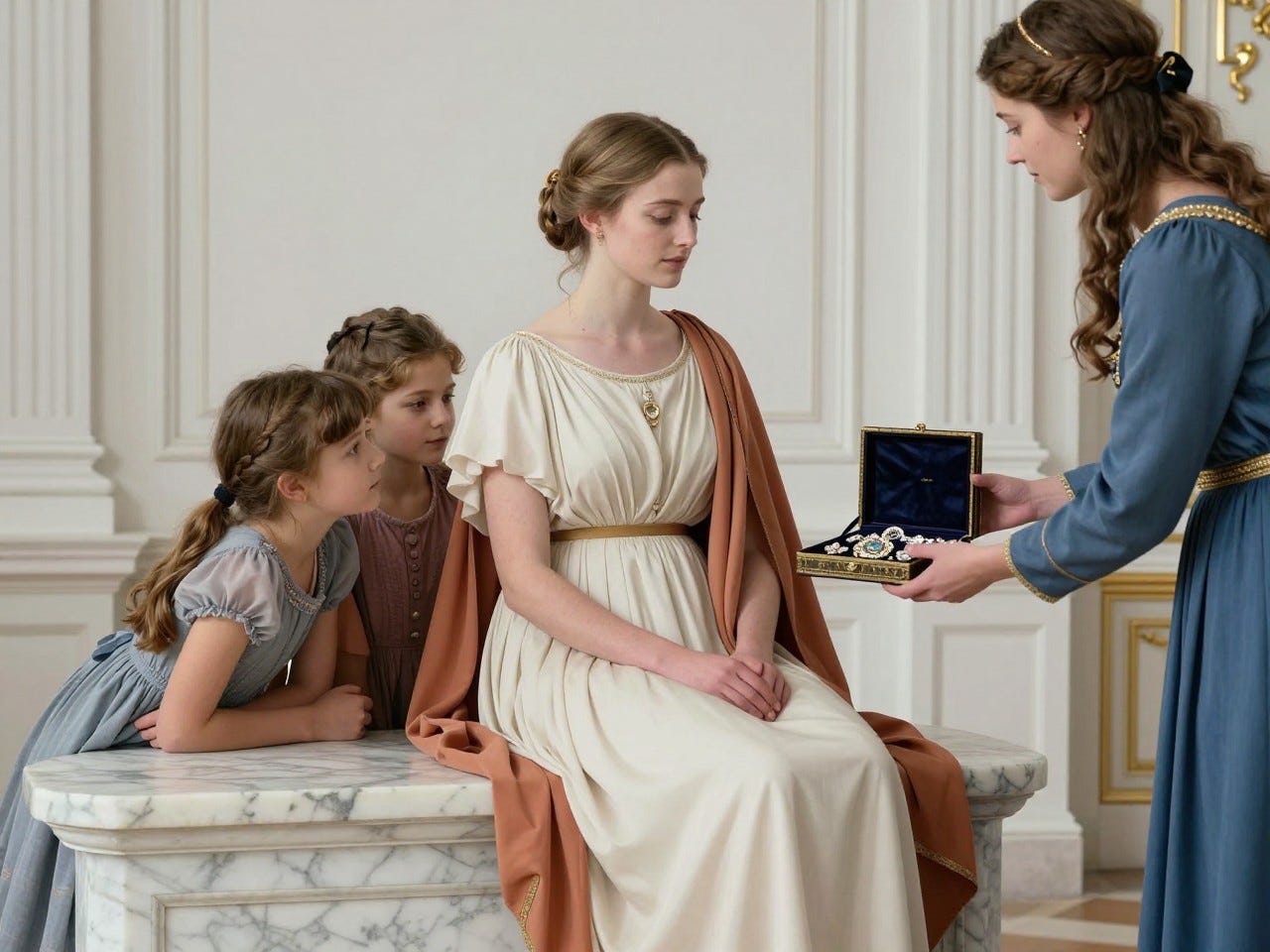
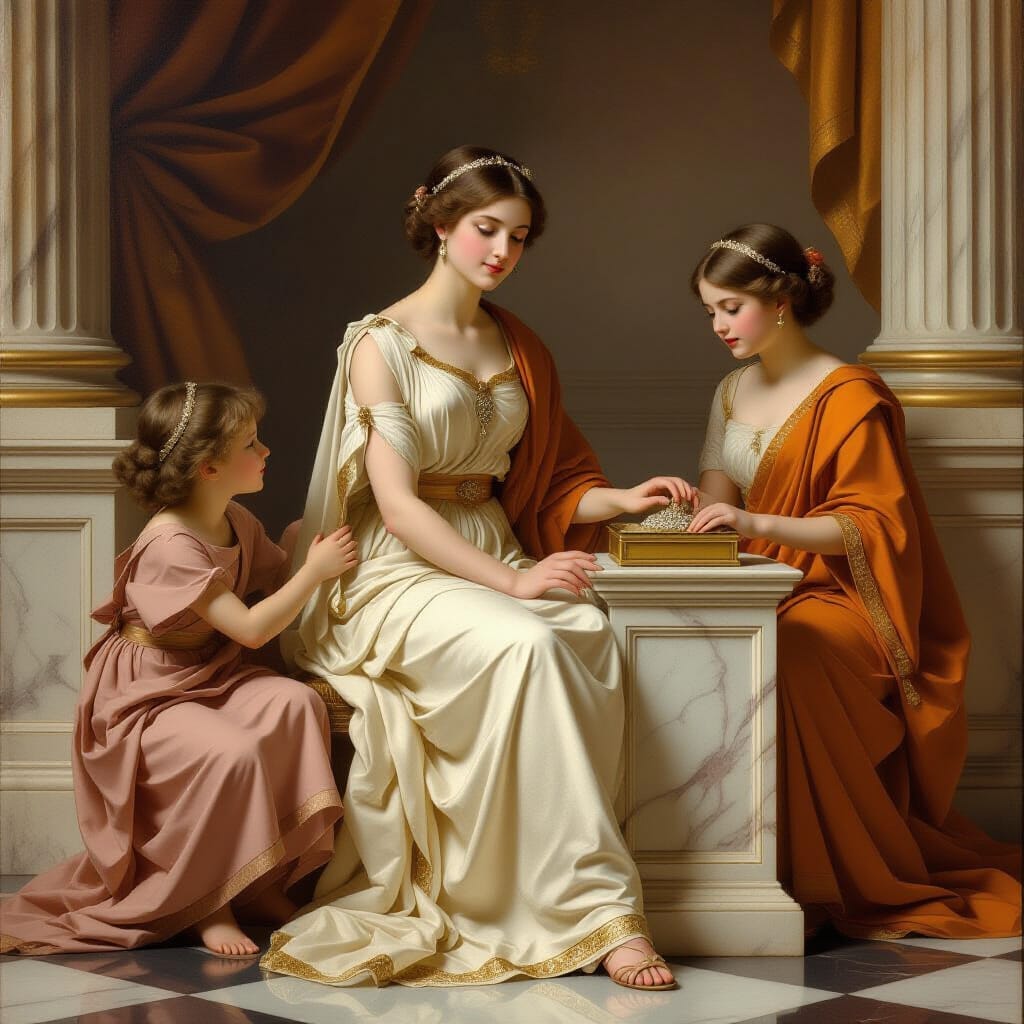
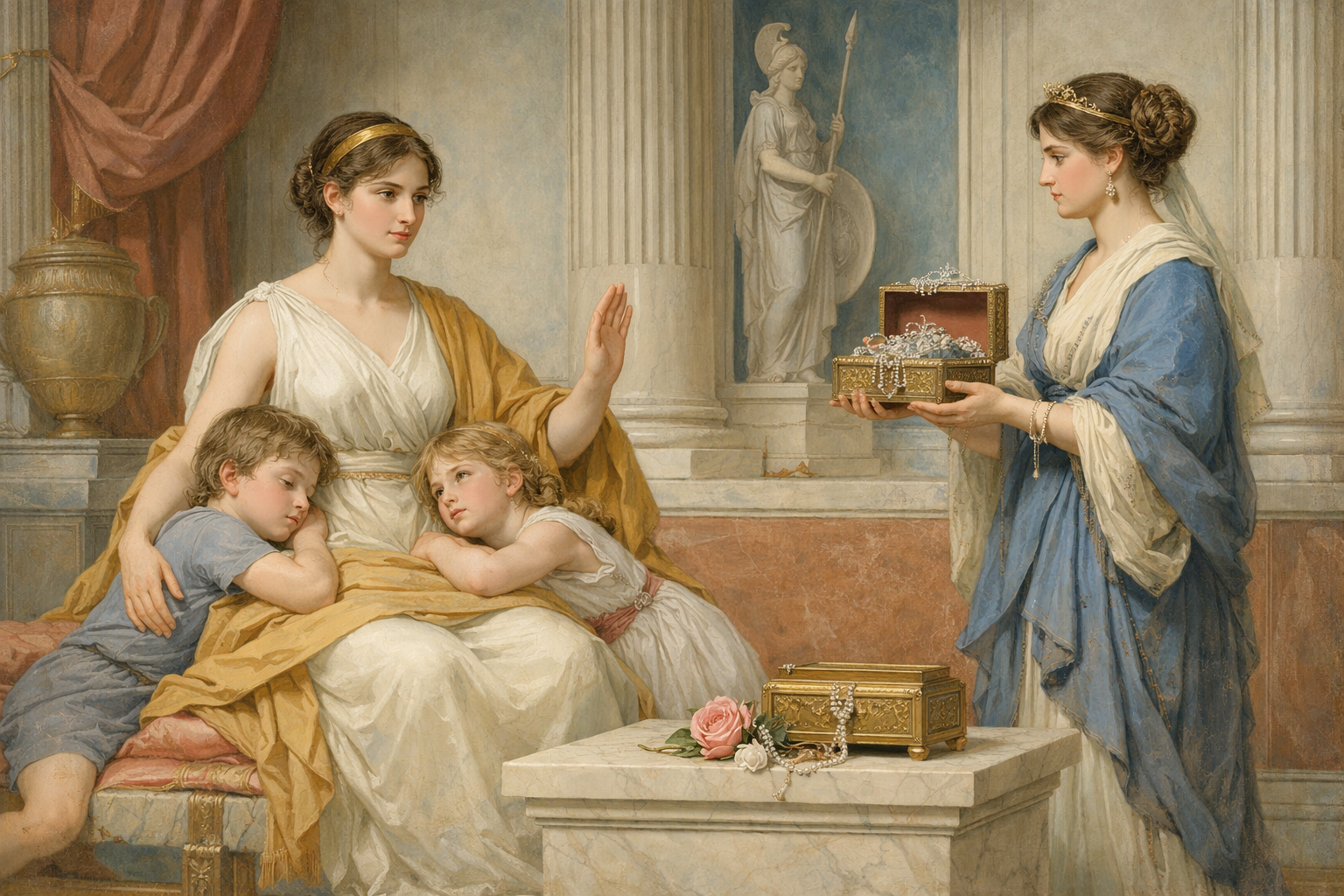
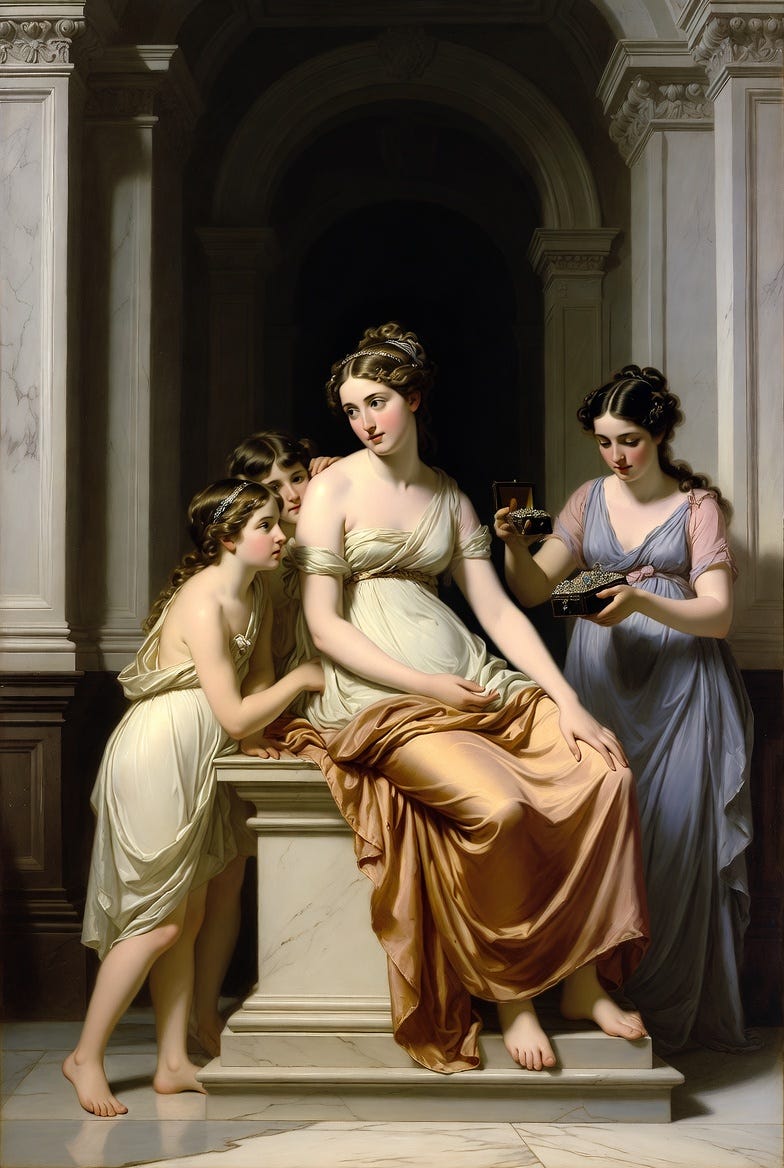
Art Prompt (Neoclassical): A luminous classical interior arranged with ceremonial clarity, centered on a poised young woman in pale ivory and muted saffron drapery seated beside a low marble pedestal, while two children lean near her with quiet affection and a second elegantly dressed visitor presents a casket of glittering jewels that she dismisses with serene confidence. Render the scene with polished neoclassical draftsmanship, finely modeled skin, restrained gestures, cool marble whites, soft terracotta, faded ultramarine, antique gold, and warm rose accents. Let the composition feel balanced, noble, and morally theatrical, with crisp contours, measured light, delicate architectural detail, and an atmosphere of dignity, domestic tenderness, and calm philosophical triumph.
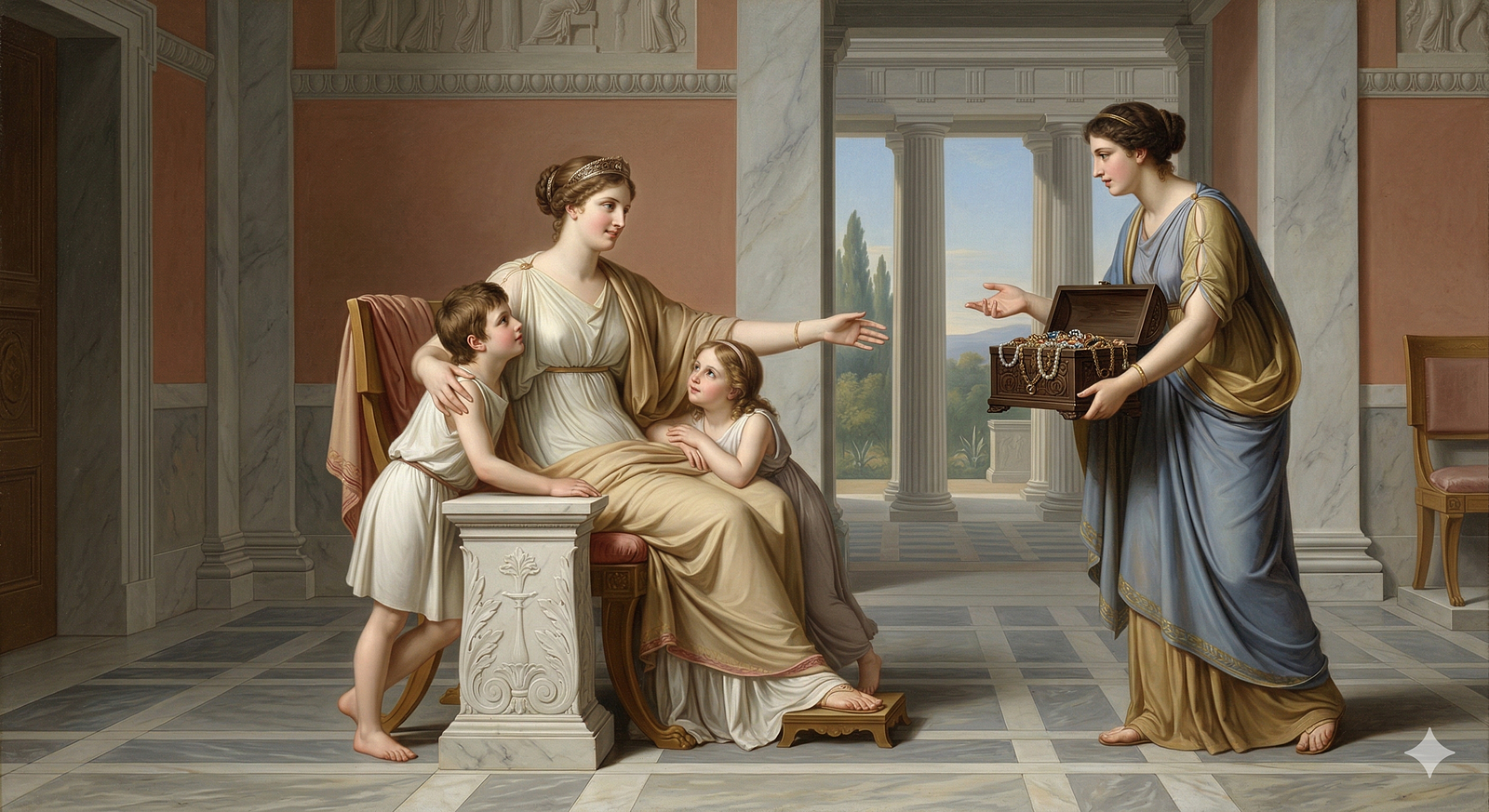
Video Prompt: A stately classical chamber comes alive in elegant motion: candlelight flickers across marble surfaces, gauzy drapery breathes in a soft interior breeze, jeweled objects catch and release brief sparks of light, and the central seated figure turns with serene confidence as two children shift close in a moment of living affection. Use slow cinematic push-ins, graceful lateral glides, subtle fabric movement, drifting dust in sunlit air, and small expressive gestures that make the tableau feel newly alive. Keep the palette refined with ivory, terracotta, soft blue, and antique gold, and maintain an atmosphere of moral poise, tenderness, and quiet triumph with visually memorable motion that feels instantly arresting.
A couple songs to pair with it:
- Monad — Rival Consoles
- A Different Kind of Human — AURORA