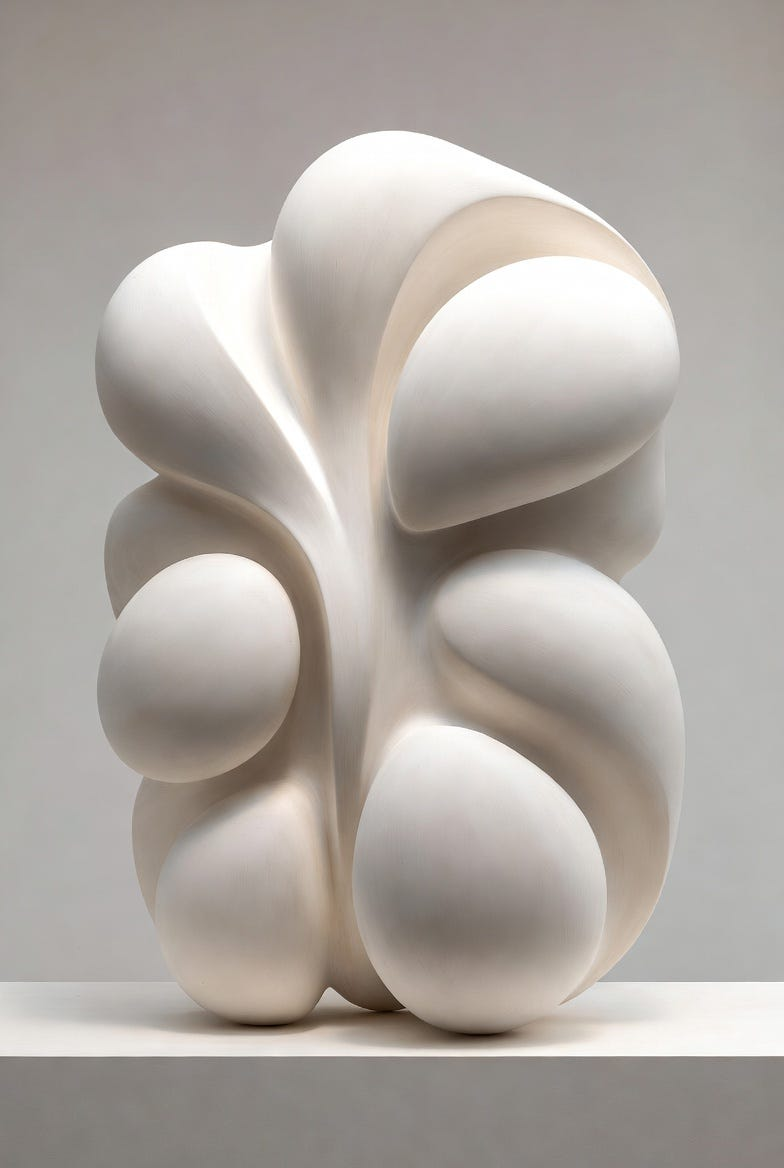
Some artists look at the world and say, “I shall paint this apple exactly as God intended.”
Jean Arp looked at the world and said, “What if the apple relaxed, forgot it was an apple, melted into a cloud, and still somehow became more itself?”
And honestly, fair enough.
Arp is one of those artists who quietly sneaks up on you in art history. He is not usually introduced with the same thunderclap as Picasso or Dalí. He does not burst through the museum wall wearing six neckties and screaming about revolution. He just keeps showing up at the exact places modern art gets weird in a productive way: Dada, Surrealism, abstraction, collage, relief, sculpture, poetry, chance, nature, and forms that look like pebbles got enlightened.
Which means if modern art were a dinner party, Jean Arp would be the guest calmly shaping the mashed potatoes into something profound while everyone else argued about manifestos.
Who is this artist?
Jean Arp, also known as Hans Arp, was a sculptor, painter, collage artist, and poet born in Strasbourg in 1887. He belonged to that rare species of artist who seemed constitutionally incapable of staying inside one lane. He moved through painting, paper, wood relief, sculpture, and writing with the energy of a man who refused to accept that art had to sit still and behave.
A good concise starting point is Britannica’s biography of Jean Arp, and for a stronger sense of how deeply he was woven into the avant-garde social web, The Met’s Modern Art Index entry is excellent.
What is he known for?
Three big things, and all of them are more fun than they sound.
First, he is one of the founding figures of Dada in Zurich during World War I, which means he helped invent one of modern art’s greatest acts of collective side-eye.
Second, he became famous for chance-based collages, especially works like Untitled (Collage with Squares Arranged according to the Laws of Chance), where paper fragments are allowed to fall into place with reduced artistic control. This is the kind of move that sounds lazy until you realize it was actually a philosophical slap at certainty, authority, and tidy artistic ego.
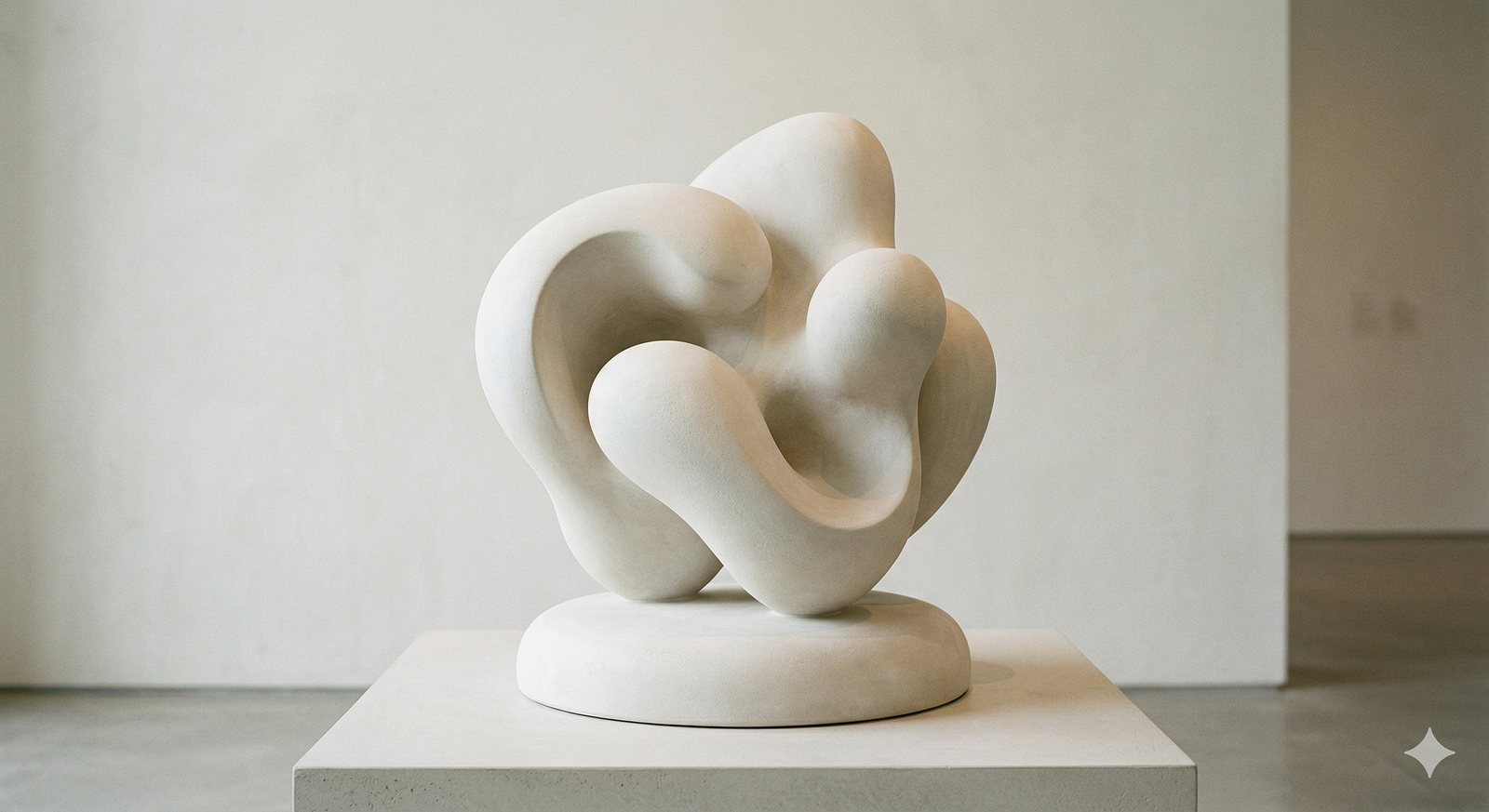
Third, he became one of the great biomorphic sculptors of the 20th century. His rounded abstract forms — smooth, swelling, oddly alive — feel like stones, seeds, clouds, bones, fruit, or some polite alien life-form that does not want to start trouble but could absolutely outlast us all.
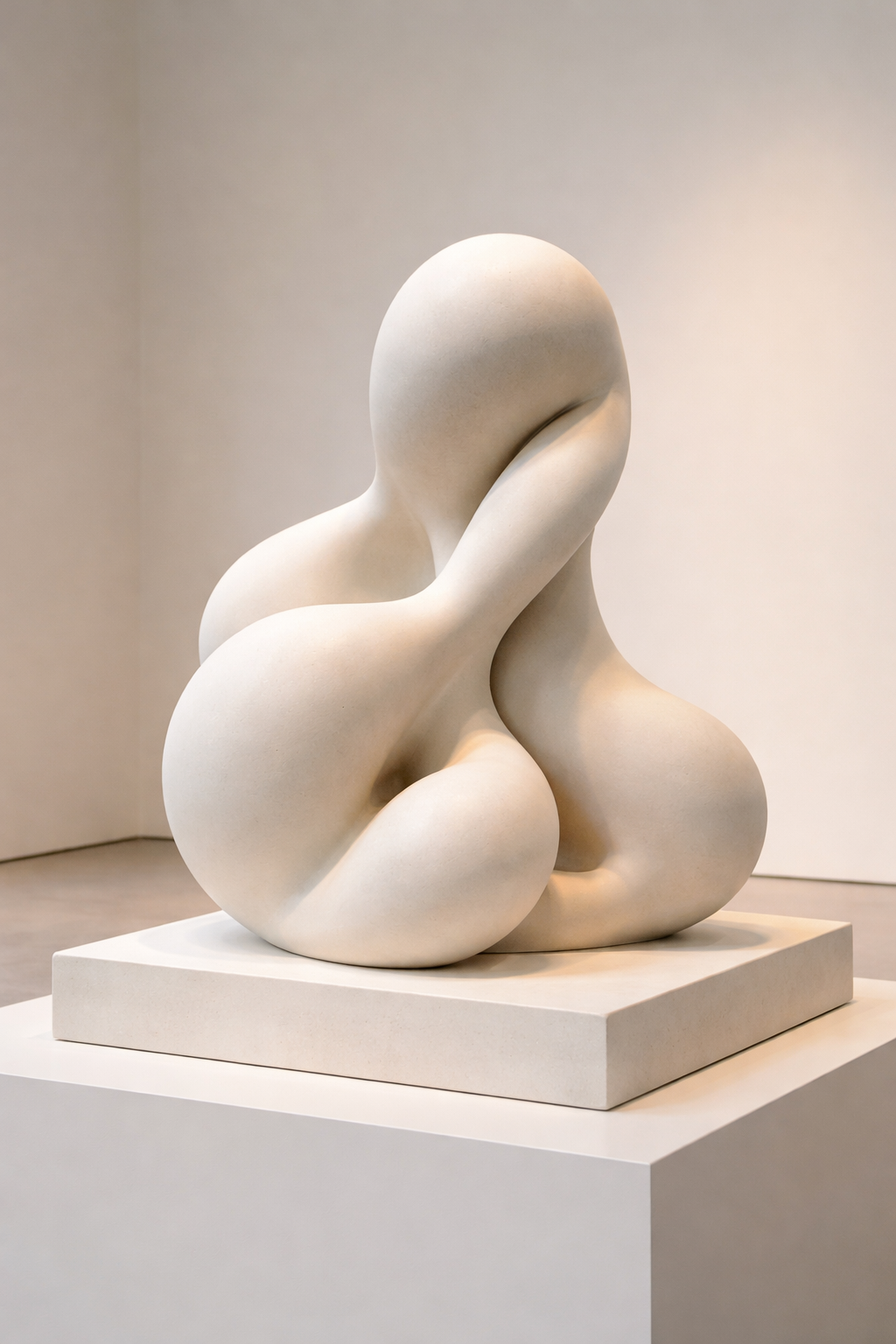
If you want one iconic example of that later language, look at Human Concretion.
What is his style?
Arp’s style is what happens when geometry and nature stop arguing and decide to co-parent.
Early on, he worked with simplified shapes, cut paper, and Dada collage logic. Later, he leaned hard into biomorphic abstraction: soft-edged, organic forms that feel grown rather than designed. His work often looks less “composed” than “formed,” as if it condensed naturally the way a shell forms or a pebble becomes itself by hanging around water for a very long time.
He liked curves more than corners, life more than stiffness, and suggestion more than explanation. His forms do not boss you around. They just sit there with a suspicious amount of serenity and let your brain do cartwheels.
Who taught him?
This is where Arp refuses to give us the satisfying one-name answer.
He studied in Strasbourg, then in Weimar, then at the Academie Julian in Paris. So the honest answer is: he had formal training, but he was not the sort of artist whose whole identity can be folded into “student of X.” He absorbed a lot, moved around a lot, and then became gloriously difficult to pin down.
In other words, his education matters, but his real breakthrough came when he stopped acting like art needed to salute straight lines and started listening to chance, rhythm, and natural form.
Does he use any special technique?
Oh yes, and this is where Arp gets deliciously strange.
His chance collages are the headline act. In MoMA’s own discussion of the work, chance is not just a gimmick — it is part method, part protest, part philosophical prank. The beautiful bit is that it was never pure randomness anyway; it was more like assisted chance, where surrender and judgment awkwardly share an apartment. You can hear that idea directly in MoMA’s audio on the collage.
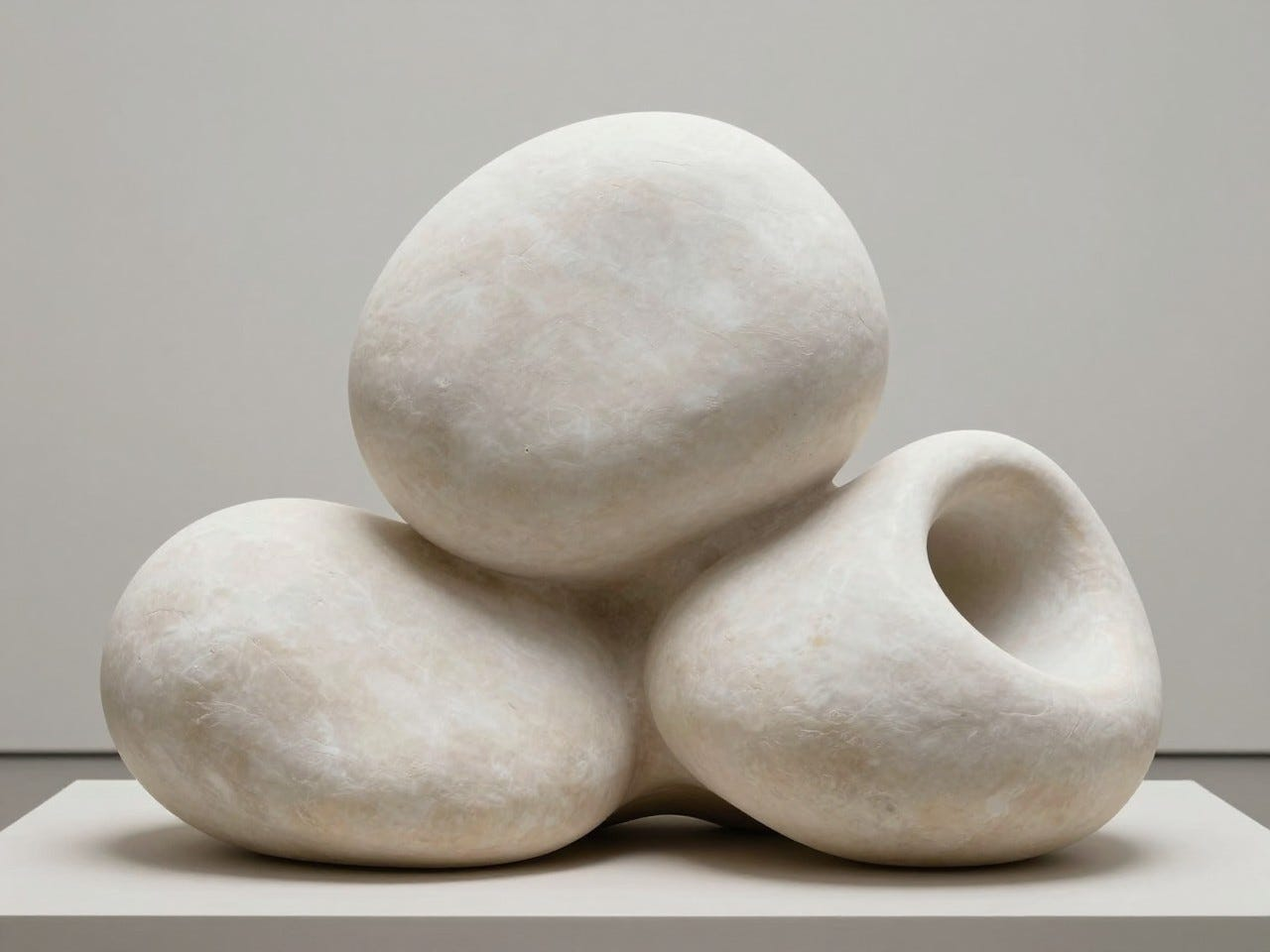
He also worked in painted wooden reliefs, torn papers, and sculpture he called “concretions.” That word matters. Arp used it to describe forms that seem to harden or grow together naturally, not forms bullied into place by academic fussing. SFMOMA’s notes on Concretion humaine sans coupe do a lovely job describing those swelling, polished forms and Arp’s belief that sculpture could create a new unity between the human figure and its environment.
Basically, he used chance when he wanted to quiet the artist’s ego, and he used organic shaping when he wanted form to feel alive.
That is a pretty elegant double act.
Who has he worked with?
Arp did not exactly work alone in a cave, communing with pebbles.
He collaborated deeply with Sophie Taeuber-Arp, who was not just his partner in life but one of the most important artists in her own right. Their partnership was real, productive, and structurally important to the work itself — not one of those art-history situations where the wife gets treated like decorative wallpaper with opinions.
He was also part of the Cabaret Voltaire and Zurich Dada circle alongside figures like Hugo Ball, Tristan Tzara, and Marcel Janco, as outlined in MoMA’s overview of artistic collaboration in Dada.
Later, he and Sophie Taeuber-Arp also worked with Theo van Doesburg on the redesign of the Aubette in Strasbourg, a wildly ambitious modern interior project you can peek at through the official Aubette 1928 page.
So yes, Arp absolutely collaborated. He was not a lonely genius myth. He was part of a network, a movement, and in several cases, a genuinely shared creative life.
Was he wealthy?
Not in the cartoon sense of velvet drapes, monocles, and a yacht named Abstraction.
He does not seem to have lived the classic starving-garret legend either. He had enough support and mobility to study in multiple cities and move through serious avant-garde circles. But his major public recognition and institutional prestige came later. He was not one of those artists who spent his career being showered with golden nonsense from day one.
The more accurate picture is this: he built a major reputation over time, and the grand prizes, retrospectives, and museum-level reverence came after years of experimentation rather than from being born into applause.
When was he most popular?
There are two answers here.
If you mean “when was he most radically in the mix,” then the Dada years and the interwar avant-garde period are huge. That is when he was helping shift the ground under modern art’s feet.
If you mean “when was the establishment fully ready to bow politely,” then the 1950s and early 1960s were his big prestige years. Britannica notes the Grand Prize for Sculpture at the Venice Biennale in 1954, the UNESCO commission in Paris, and major retrospectives at MoMA and in Paris. That is a pretty good sign that the art world eventually caught up to the blob wizard.
Tell me more, please
Gladly, because Arp is one of those artists who gets more interesting the longer you look.
What makes him special is not just that he crossed movements. It is that he brought a distinct sensibility into all of them. Dada could be loud, abrasive, and chaos-drunk. Surrealism could be theatrical and dream-heavy. Abstraction could become chilly and overconfident. Arp somehow moves through all of that while staying poetic, light on his feet, and strangely humane.
Even when he gets abstract, he does not become sterile.
Even when he uses chance, he does not become lazy.
Even when he simplifies a form, he does not flatten it into dead design.
That is the trick. Arp’s work feels relaxed without being slack. It feels playful without becoming cute. It feels abstract without becoming a lecture in a turtleneck.
He made modernism feel less like a machine and more like weather.
Anything else left to tell?
Yes: Arp was also a poet, and that matters more than people sometimes admit.
His titles alone tell you he was not interested in treating art like a cold little engineering project. He liked wit, softness, growth, metamorphosis, and absurdity. He could make a work feel like it had drifted in from a dream, but not the kind of dream where you are chased down a hallway by a giant fork. More like the kind where shapes gently rearrange reality until you stop demanding that everything explain itself.
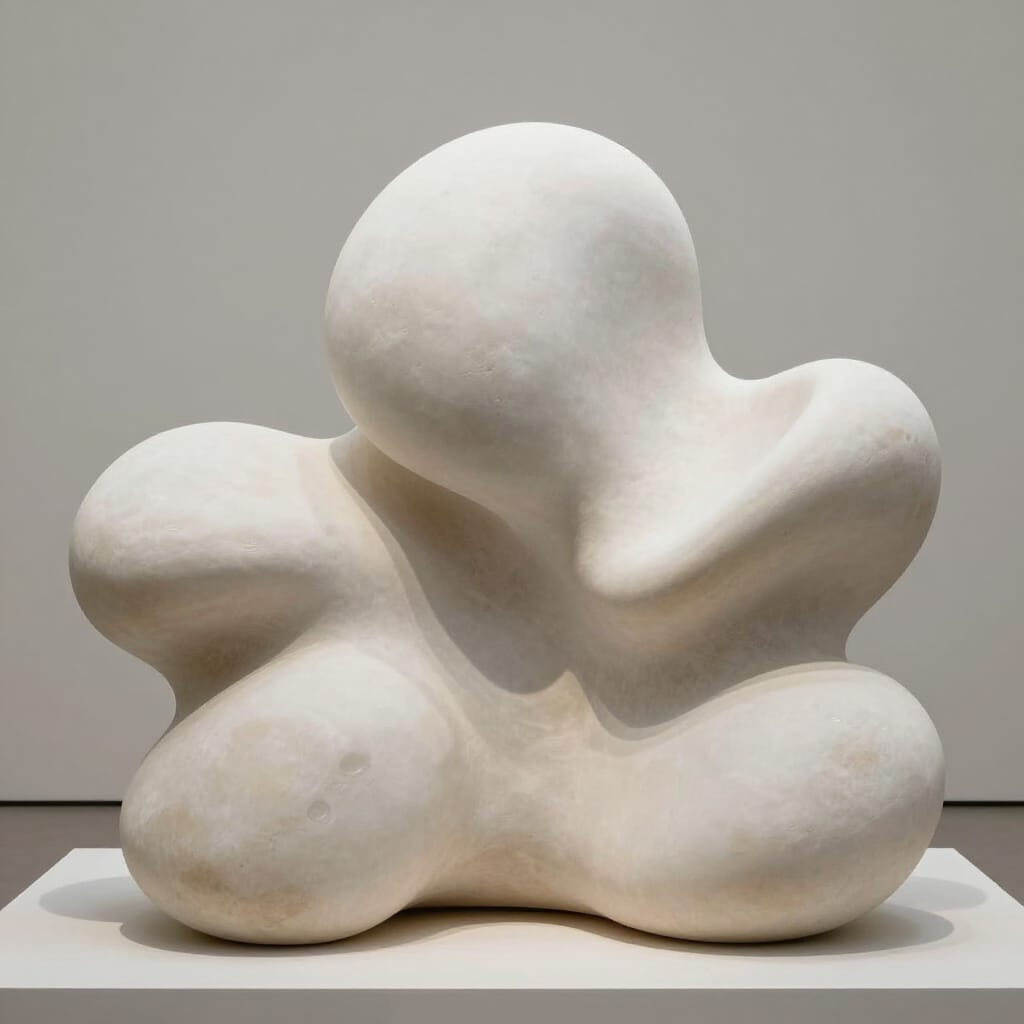
He also helped make abstraction feel closer to nature than to machinery. That is one of his great gifts. A lot of 20th-century abstraction can feel like it was designed by a very intense cabinet. Arp’s abstraction feels as if the world itself exhaled and made a form.
Any other interesting tidbits?
A few, because Jean Arp is generous that way.
He published writing on art and helped spread awareness of modern movements in the German-speaking world, so he was not just making work — he was helping circulate ideas.
He moved between languages and identities, which makes sense for someone born in Strasbourg, that gloriously complicated border-zone where tidy national labels go to have a nervous breakdown.
And perhaps my favorite tidbit: his sculptures often look as if they should be cool to the touch and weirdly comforting, like museum objects designed by rainwater.
That is not an official art-historical term, but it should be.
So what do we do with Jean Arp now?
We enjoy him, first of all.
We notice that he helped modern art loosen its tie.
We appreciate that chance, collaboration, and organic form were not side hobbies for him — they were central commitments.
And we remember that not every revolution needs a flamethrower. Some revolutions arrive as a rounded white shape that looks vaguely like a seed, a torso, a cloud, and a thought all at once.
That is Jean Arp’s lane.
If you enjoyed this episode, follow along for more Artist Series chaos, leave a comment with your favorite Arp work or strangest biomorphic form, and if you want more of my writing in one place, you can find it here: medium.com/@DaveLumAI
Art Prompt (Biomorphic Abstraction): A serene abstract sculpture-like composition made of smooth, swelling white forms that feel halfway between polished river stones, seedpods, and soft anatomical echoes. The central mass should rise from a minimal plinth with rounded protrusions and gentle hollows, all flowing into one another with no hard edges. Use a restrained palette of chalk white, pale limestone, soft ivory, faint gray shadow, and subtle museum-light warmth. The surfaces should appear velvety and slightly matte, with delicate highlights gliding over curved volumes. The composition should feel calm, organic, and quietly uncanny, as if nature invented sculpture without asking permission. Clean background, modern gallery atmosphere, high detail, elegant simplicity, no text, no people.
Video Prompt: Begin with an extreme close-up of smooth white curved forms under soft gallery light, the camera gliding slowly across rounded hollows and swelling edges. Pull back in a gentle arc to reveal an abstract sculpture made of flowing organic volumes, while subtle shadows shift across the surface like drifting clouds. Add slow rotational movement around the piece, with occasional macro pushes into polished contours and shallow depth of field that makes the curves feel monumental. Keep the motion hypnotic and clean, with a quiet rhythm of light, shadow, and form. End on a wider shot where the sculpture feels both natural and mysterious, as if it slowly grew there on its own.
Two songs to pair with it:
- Svefn-g-englar — Sigur Ros
- Breathe This Air — Jon Hopkins feat. Purity Ring
Follow for more art history with fewer dusty elbows, and drop a comment: do Arp’s shapes feel more like nature, dreams, or very enlightened potatoes?