There is a reason WordPress keeps showing up in titles next to phrases like “without losing your mind,” and no, it is not because everyone involved is dramatic. Well, not only because everyone involved is dramatic.
It is because WordPress is one of the greatest bargains in the history of the internet. It lets ordinary humans build surprisingly capable websites without first obtaining a computer science degree, a monastery of free time, and an emotional support sysadmin. That is the good news.
The bad news is that once you realize WordPress can do almost anything, you start asking it to do almost anything.
And that is when the eye twitch begins.
WordPress itself is not the part that drives people nuts. WordPress is usually sitting there like a pleasant host, smiling politely, offering you a dashboard, and pretending everything is under control. The real chaos enters through the side door wearing seventeen plugins, a premium theme from 2019, one custom snippet copied from a forum at 1:14 a.m., and a form builder that absolutely swears it sent the email.
This is why ChatGPT associates WordPress with losing your mind: not because WordPress is bad, but because WordPress is generous in the same way a buffet is generous. It says yes to a lot of things that maybe should have involved a follow-up question.
Is this a recurring theme with WordPress? Oh, absolutely.
So much so that the official ecosystem has entire pages devoted to common WordPress errors, official learning material for plugin and theme conflicts, and support threads that read like modern gothic literature, except with more mentions of caching and fewer candles. When a platform has formal educational material for “the white screen of death,” that is not a random accident. That is a culture.
Is WordPress known for making people crazy? In the affectionate sense, yes.
Not “throw your laptop into the sea” crazy every single day, but definitely “why did updating this gallery plugin break my mobile menu, my checkout page, and my faith in civilization” crazy. The official support forums are packed with tales of plugin conflicts, theme clashes, blank screens, weird styling issues, email failures, and updates that seemed harmless right up until they kicked the chair out from under the live site.
And to be fair, WordPress is not alone here. Any platform with a giant ecosystem eventually turns into a thriving city full of talented builders, questionable shortcuts, and at least one guy trying to solve everything with three extra plugins and a dream. WordPress just does it at a scale large enough for the whole internet to hear the screaming.
Some notable sources do, in fact, say versions of this out loud.
The official documentation tells you how to deactivate all plugins when the site locks you out. The official troubleshooting material recommends backups, staging, logs, and methodical conflict testing. The official Health Check and Troubleshooting plugin exists specifically so you can debug plugin and theme conflicts without publicly detonating your site in front of visitors. Even hosting companies get into the act. Kinsta maintains a page for banned and incompatible plugins because at a certain point the ecosystem becomes less “pick your favorite add-on” and more “let us gently stop you from wrestling a chainsaw in the kitchen.”
That is not a sign of failure, by the way. That is a sign of maturity. Mature ecosystems do not pretend problems do not exist. They build maps for the swamp.
So what are the most common WordPress things that make people lose their minds?
Forms are high on the list, because a contact form looks simple until you discover that “send email” is actually a blood feud involving servers, DNS, authentication, deliverability, spam filters, and the mysterious possibility that your message was technically sent but spiritually rejected. That is why so many people end up using WP Mail SMTP or another dedicated mail solution after spending a cheerful afternoon wondering why customer inquiries are vanishing into the same void that eats left socks.
Then there are plugin conflicts, which are basically the internet’s version of two perfectly nice guests meeting at a party and immediately trying to kill each other with JavaScript.
Themes bring their own flavor of madness. Sometimes they are beautiful and helpful. Sometimes they are a haunted mansion made of shortcodes and old assumptions. Add a page builder, a performance plugin, a shop plugin, a security plugin, a forms plugin, a popup plugin, and some custom CSS written during a period of emotional instability, and suddenly one button has six font sizes and your homepage loads like it is being delivered by mule.
Updates cause a special kind of anxiety because they are both necessary and vaguely menacing. You must update for security and compatibility. You must also accept that every update is a tiny sealed envelope labeled, “Could contain improvements. Could also contain character development.”
Performance is another classic mind-thief. WordPress starts out feeling light and cheerful, and then over time it accumulates image bloat, overlapping plugins, mystery scripts, dead revisions, enthusiastic animations, and one analytics tag too many. By the end, the site loads like it is reciting its autobiography before showing you the first paragraph.
And then, of course, there is the quiet psychological damage of logging in to “just change one sentence” and emerging three hours later from a tunnel of widgets, menus, reusable blocks, plugin notices, and a settings page called something innocent like Advanced Optimization Pro Max.
If there is a famous artwork that best represents WordPress troubleshooting, I would humbly nominate The Raft of the Medusa. Not because WordPress is doomed, but because the emotional composition feels right. A cluster of exhausted souls. A horizon full of uncertain hope. Somebody waving frantically for rescue. One person clearly regretting an earlier decision about loading too many supplies onto the vessel.
And yet, for all the jokes, there is a reason people keep coming back.
WordPress is still one of the most capable ways to get a lot done without building everything from scratch. It is flexible, huge, battle-tested, and supported by an enormous community. The same ecosystem that creates chaos also creates solutions. The same openness that lets you install something ridiculous also lets you fix something important.
So the real answer to “Why does ChatGPT associate WordPress with losing your mind?” is this:
Because WordPress lives in the exact place where ambition meets reality.
It is where small business dreams, creator energy, technical debt, design experiments, marketing urgency, hosting quirks, plugin politics, and human optimism all pile into one admin panel and try to agree on what the homepage should look like.
That is not insanity.
That is the modern web, wearing a slightly frazzled outfit.
How do you keep your mind while working with WordPress? A few rules help.
Use a staging site before doing anything brave, large, or suspicious.
Keep backups like you have trust issues, because you should.
Install fewer plugins than your impulses suggest.
Do not let one plugin handle six jobs just because the sales page used the word “ultimate.”
Use the troubleshooting tools when something breaks instead of clicking random settings like a game show contestant.
And maybe most importantly: treat WordPress like a living ecosystem, not a vending machine. It rewards maintenance. It punishes vibes-only administration.
That may not be as romantic as “set it and forget it,” but it will preserve both your website and your blood pressure.
If you have ever fixed a WordPress site by deactivating plugins one by one like a bomb technician in sweatpants, congratulations: you are not broken. You are participating in a long, noble tradition.
Follow for more digital survival stories, and drop a comment with the most ridiculous thing WordPress has ever done to you. I know you have one.
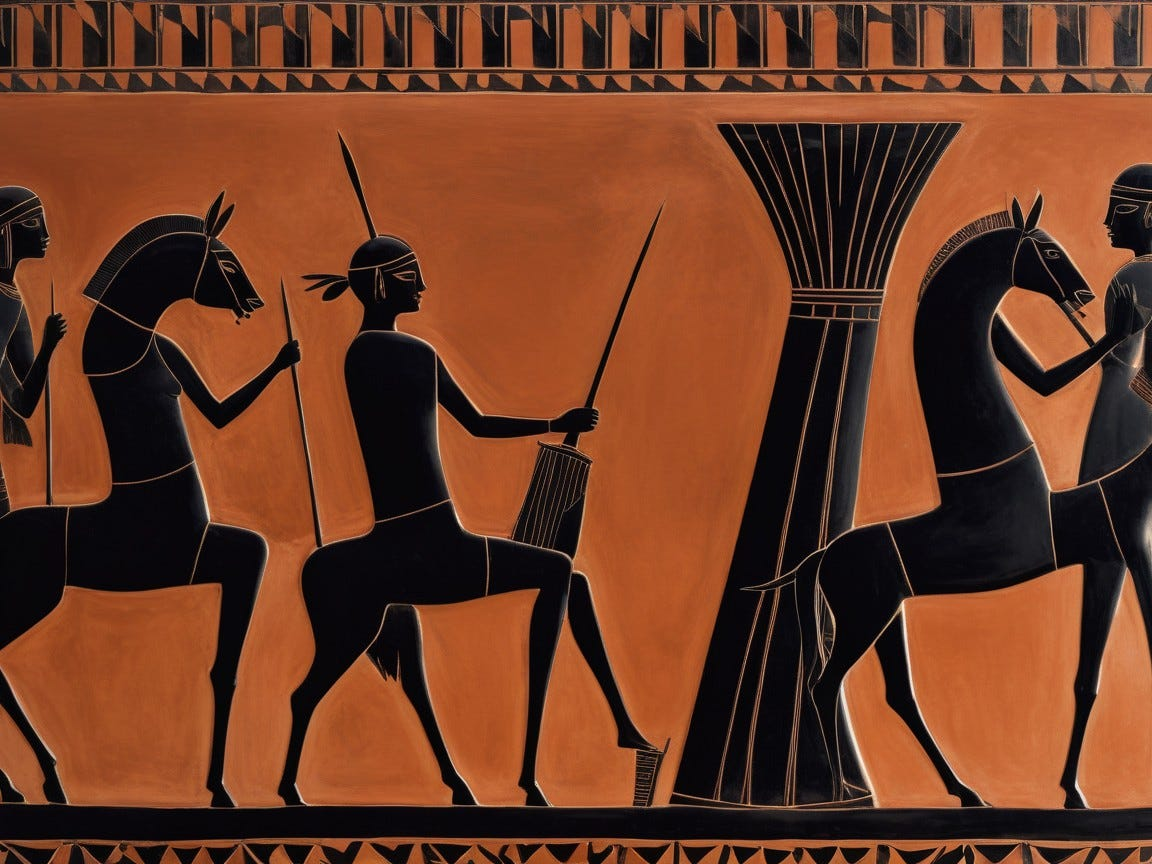
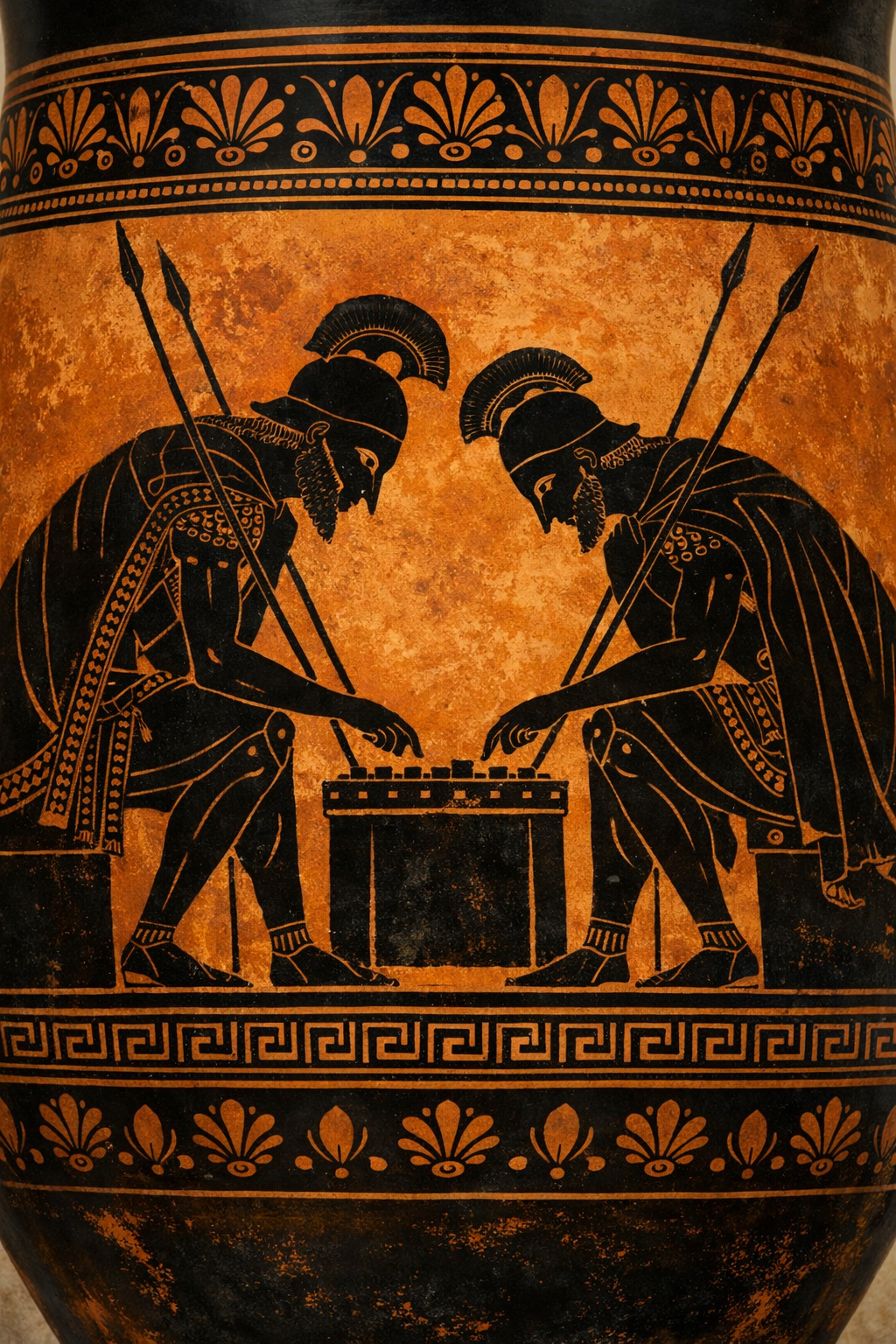
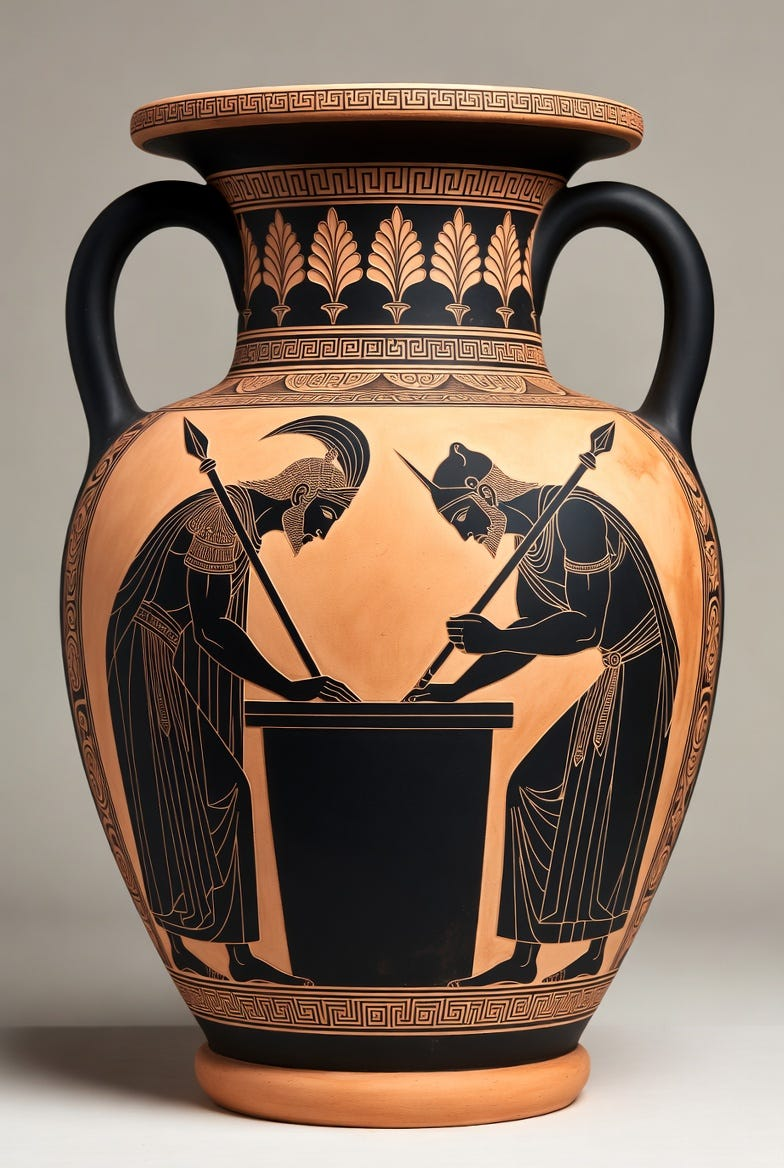
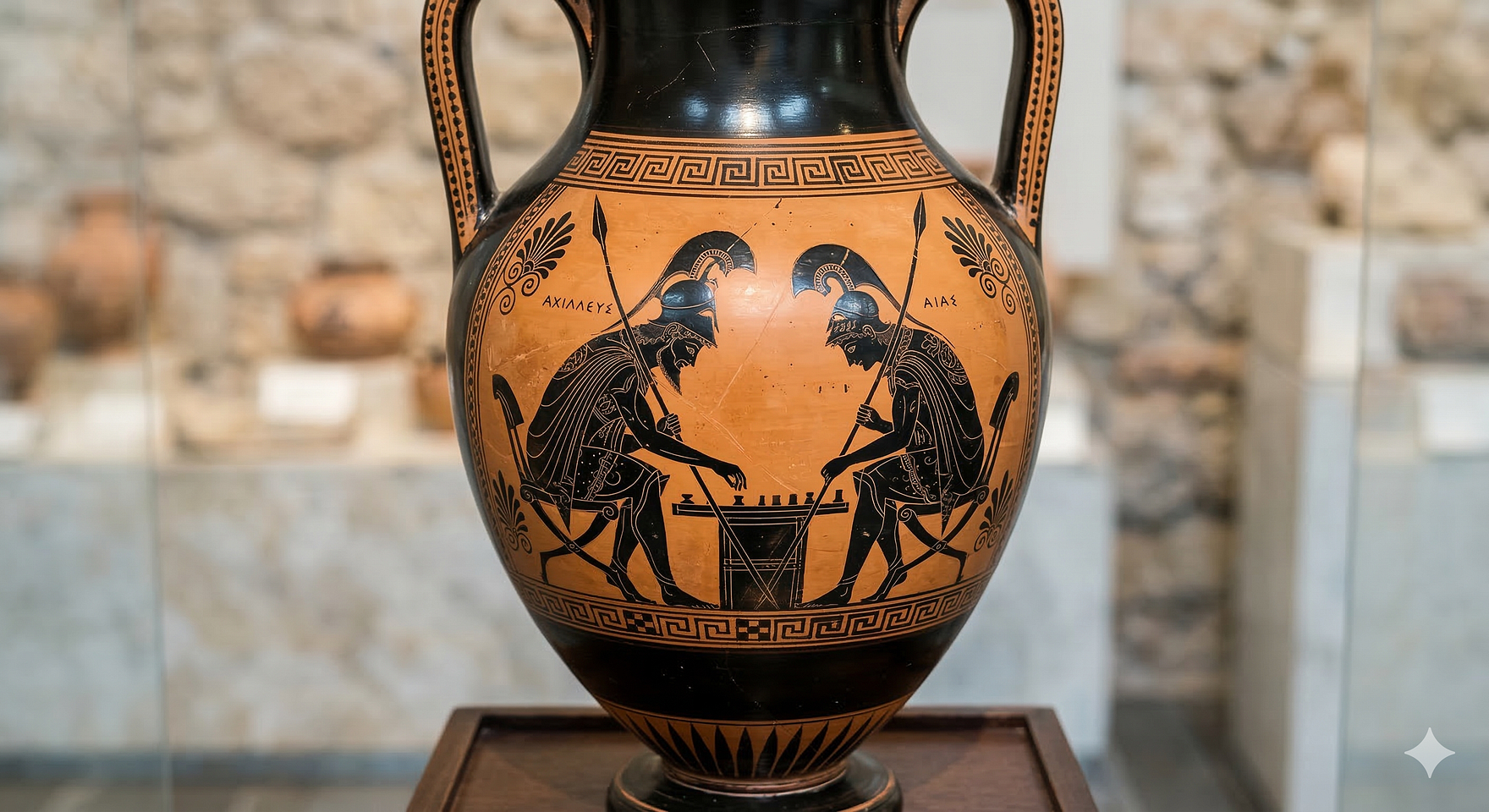
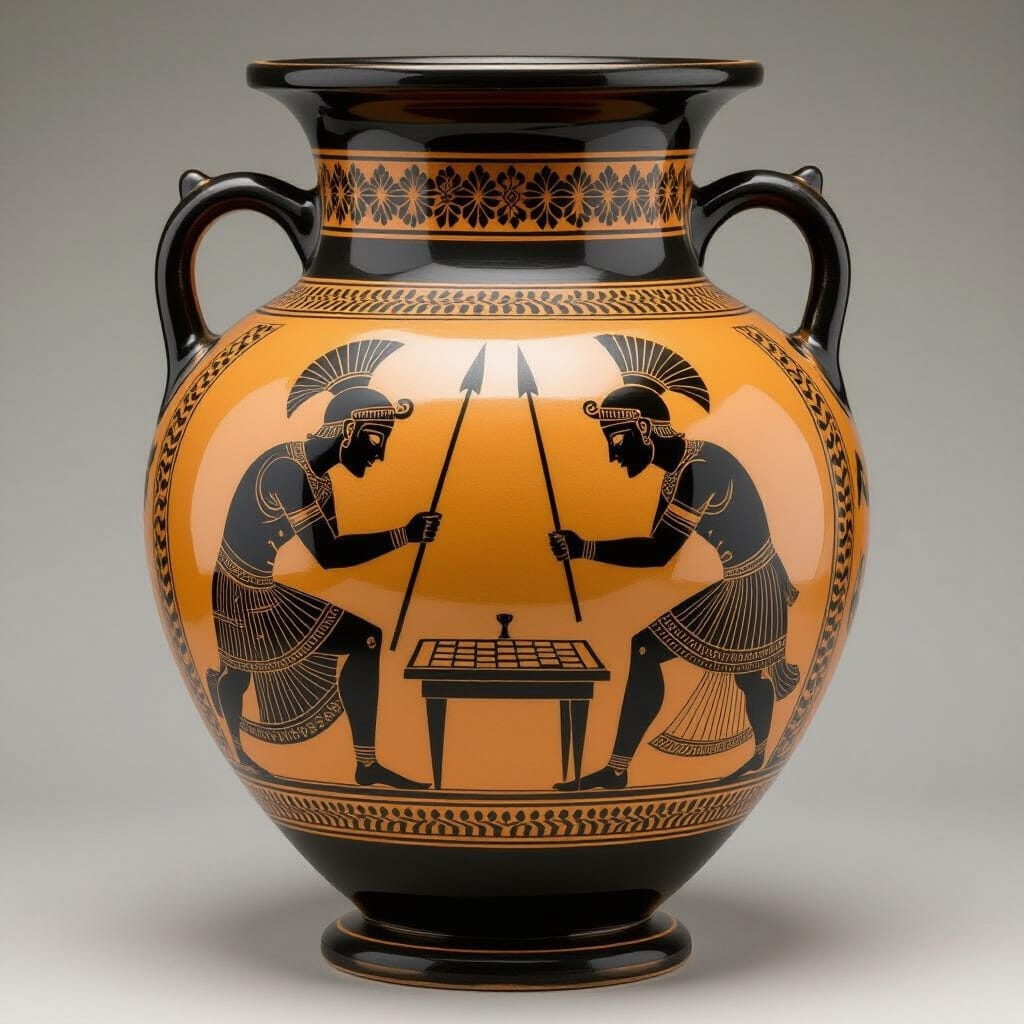
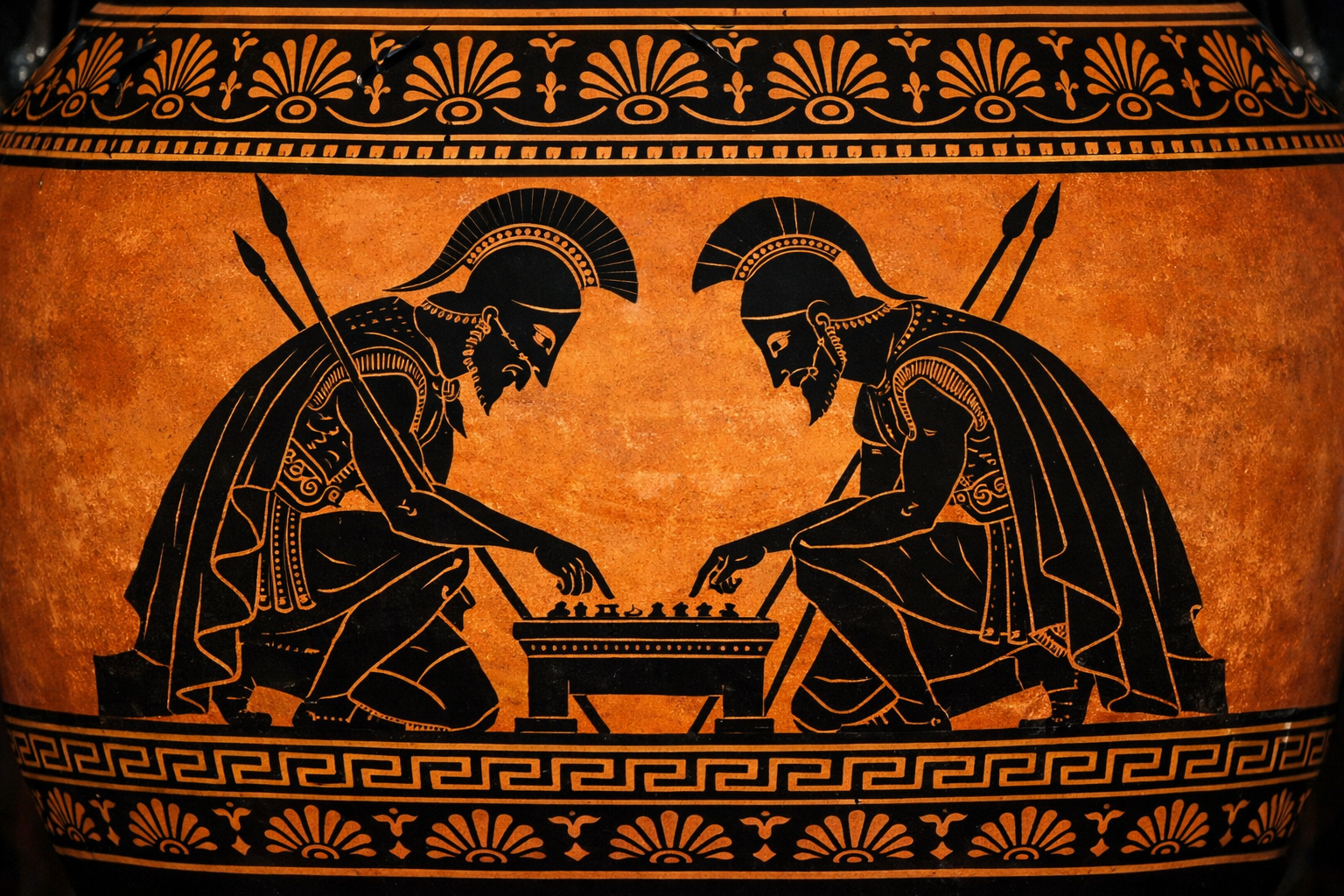
Art Prompt (Ancient Art): A black-figure ceramic scene wrapped around a tall amphora, showing two poised warriors leaning over a low game board in a moment of eerie stillness, their spears angled upward in elegant parallel lines while cloaks fall in crisp, rhythmic folds. The composition should feel ceremonial and balanced, with silhouettes rendered in deep iron-black against warm terracotta clay, enriched by finely incised details in the hair, armor, and decorative borders. Add ornamental bands of palmettes and meanders framing the figures, with a restrained palette of baked orange, charcoal black, and small touches of creamy slip. The mood is tense, refined, and timeless, as if strategy itself has been frozen into myth.
Video Prompt: Open on the curved surface of an ancient amphora as firelit reflections ripple across black-figure warriors bent over a game board. Let the camera orbit the vase with smooth, hypnotic motion while incised details catch the light in sharp flashes. Introduce subtle animated movement inside the painted scene: cloak edges tremble, spear tips glint, and a thin curl of kiln smoke drifts upward as if the figures are waking inside the clay. Use quick rhythmic push-ins on the hands, helmets, and patterned borders, then pull back to reveal the full vessel rotating against a dark museum-like backdrop. Keep the motion crisp, magnetic, and visually striking from the first second.
Two songs to pair with it:
- Only in My Dreams — The Marías
- A Calf Born in Winter — Khruangbin
For more long-form writing, wander over to this page.