Hey friends, pull up a chair (or your standing desk if you’re one of those people). Let’s have a real chat about the big scary question everyone’s whispering in Slack channels and yelling on X: Have AI tools finally made human developers as relevant as floppy disks?
Short answer: Nah. Not even close. But things have gotten wildly interesting, and if you’re still typing code like it’s 2023, you might be missing the party.
Picture this: You tell an AI “build me a full-stack app that tracks my coffee consumption and guilt-trips me when I hit three cups before noon.” Boom — ten minutes later, you’ve got routes, a database schema, some React components, and probably a passive-aggressive notification system. Impressive? Absolutely. Terrifying? Only if your entire skillset was “write boilerplate really fast.”
The truth is, AI in 2026 is an absolute beast at churning out code. Tools like Claude, Cursor, and the latest agentic setups can handle 70–90% of the grunt work in many projects. Juniors are feeling the squeeze hardest — entry-level roles have shrunk because one senior dev + AI can now output what used to take a small team. But here’s the plot twist nobody in the doomer threads wants to admit: the more AI writes, the more humans who understand what it’s writing become indispensable.
Why? Because AI is still hilariously bad at a few very human things:

- Judgment under ambiguity. Requirements change mid-sprint? Business stakeholder says “make it feel more premium” with zero specifics? AI will happily generate three versions and confidently pick the wrong one. A good dev smells the nonsense and steers the ship.
- Long-term thinking. AI loves the happy path. It rarely asks, “What happens when this runs in prod for two years, scales to 10 million users, and half the team has left?” Humans who care about maintainability, security debt, and tech evolution keep systems from turning into haunted houses.
- Context that spans people, not just tokens. Legacy codebases full of tribal knowledge? Inter-team politics? “This endpoint can’t change because Legal will have a meltdown”? AI doesn’t do water-cooler gossip or institutional memory. Humans do.
So yeah, you’re evolving into something closer to a conductor — or maybe an AI wrangler with strong opinions. You spend less time grinding out CRUD and more time on:
- Prompt engineering that actually works (it’s a skill, not magic)
- Reviewing, refactoring, and sometimes ruthlessly deleting AI slop
- Designing systems where AI agents can collaborate without imploding
- Focusing on product outcomes instead of syntax
Best practices have flipped in funny ways too. Remember when copy-pasting from Stack Overflow was the cardinal sin? Now it’s “if you didn’t at least ask an AI first, why are you like this?” Old-school over-engineering is out; rapid prototyping + thoughtful hardening is in. Writing tests? More important than ever, because AI can introduce bugs at warp speed. Security reviews? Non-negotiable when code velocity is through the roof.
And trust? That’s the new premium skill. Delivering software you can actually rely on means mastering verification layers: strong types, property-based testing, chaos engineering, canary deployments, observability. AI gets you to “it runs” — humans get you to “it won’t ruin my weekend.”

The punchline? Developers aren’t obsolete. Bad developers are obsolete. The ones who refuse to level up, who cling to “I type it all myself,” or who treat AI like a magic 8-ball instead of a very talented but occasionally drunk intern.
If you’re curious, embrace the chaos. Play with agentic workflows. Learn to spot when the AI is hallucinating architecture. Ship faster, break things (safely), and laugh when your prompt produces a 500-line component that could be 20.
The future isn’t humans vs. AI. It’s humans with really good taste in AI building cooler stuff than we ever could alone.
What do you think — feeling like a conductor yet, or still debugging AI-generated spaghetti? Drop a comment below, hit that follow button if you want more unfiltered takes on this wild ride, and let’s keep the conversation going. We’re all figuring this out together.
For some chill vibes while you ponder your new role as AI maestro, queue up this video art piece and these tracks:
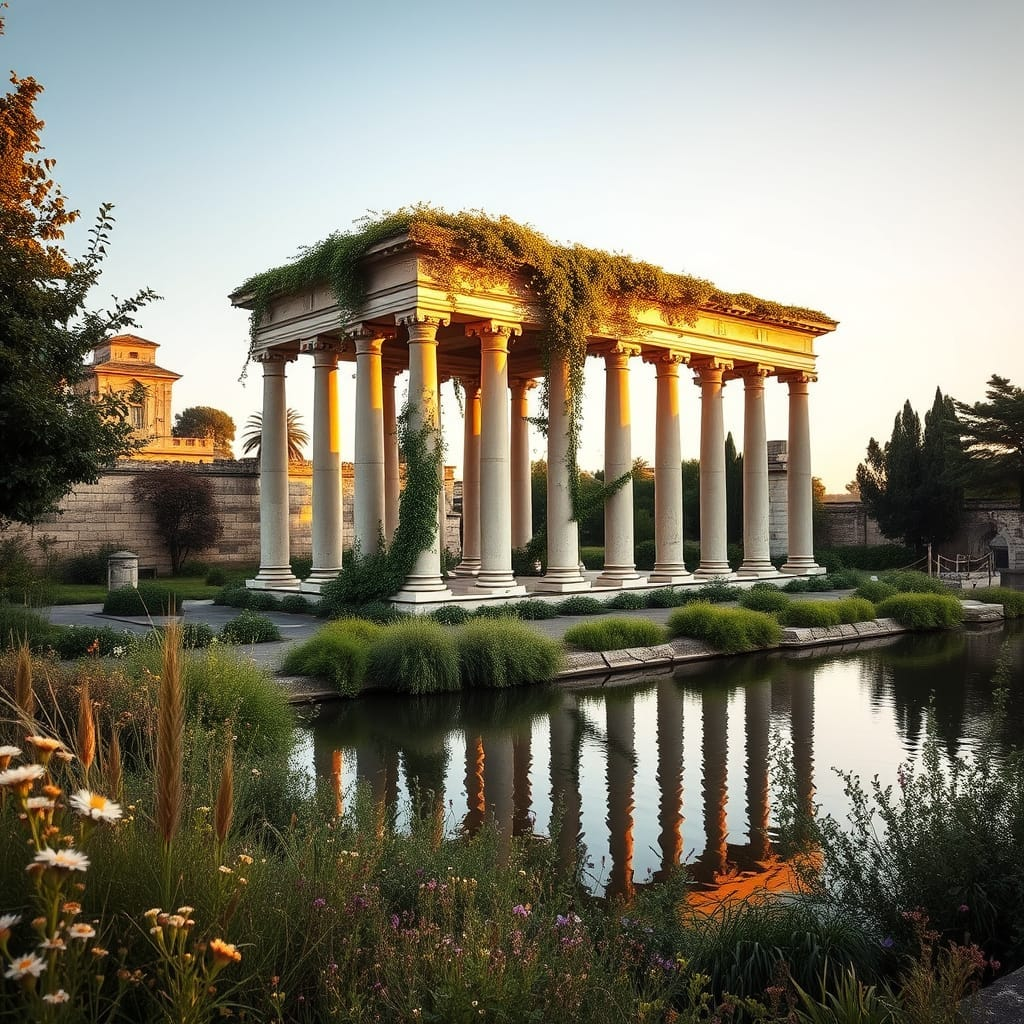
Art Prompt (Neoclassicism): A serene classical landscape at golden hour, featuring balanced architectural ruins overgrown with ivy and wildflowers, soft diffused light casting long gentle shadows across marble columns and still water reflecting a clear sky, harmonious composition with restrained elegance, muted earth tones blended with subtle luminous highlights, evoking timeless tranquility and ordered beauty.
Video Prompt: Smooth cinematic drift through the serene classical landscape at golden hour, camera gliding slowly over balanced architectural ruins covered in ivy and wildflowers, light shifting gently across marble columns and rippling water reflections, subtle wind moving leaves and creating sparkling highlights on the surface, peaceful harmonious motion building a sense of timeless calm.
Song recommendations to pair with the video:
- Northern Sky — Nick Drake
- La Ritournelle — Sébastien Tellier
See you in the comments — tell me your wildest AI coding win (or fail) this week!