Google asked me graph questions. Amazon asked me graph questions.
At some point I started to suspect this wasn’t a coincidence and that maybe the problem wasn’t the graphs. Maybe the problem was me.
I always thought graph theory was that dusty corner of computer science where math majors go to feel superior. Nodes, edges, arrows everywhere, and suddenly I’m being asked to solve a problem that looks like a subway map designed by a raccoon.
So let’s talk about what graph theory actually is, why interviewers love it so much, and why hating graphs is way more common than anyone admits.
So… What Is Graph Theory, Really?
Graph theory is the study of relationships.
That’s it. No magic. No secret handshake.
A graph is just:
- Things
- Connections between things
If that sounds suspiciously like the real world, that’s because it is.
Social networks. Road maps. Recommendation systems. File dependencies. Neural networks. Even your friend group where Steve somehow knows everyone.
All graphs. Every last one.
Nodes and Edges Without the Academic Trauma
Let’s demystify the vocabulary before it scares anyone off.
- Node (or vertex): a thing
A user, a city, a web page, a file, a neuron, a database record.
- Edge: a relationship
Friends with, connects to, depends on, links to, can travel to.
That’s it. If someone makes it sound harder than that, they are lying to you for sport.
Sometimes edges have direction (A follows B, but B ignores A). Sometimes they have weight (this road is longer, this connection is more expensive).
But underneath it all, it’s still just things and relationships.
Why This Shows Up in Interviews So Much
Here’s the uncomfortable truth.
Graph problems are not testing whether you remember graph theory.
They are testing whether you can:
- Model messy real-world problems
- Choose reasonable data structures
- Avoid panic when the problem doesn’t look like a list or an array
Graphs force you to stop thinking linearly.
Life is not a for-loop. Neither is most production software.
The Practical Stuff (a.k.a. Where Graphs Actually Live)
Graphs quietly power almost everything important:
- Maps and GPS: shortest path problems
- Social networks: who influences whom
- Search engines: which pages matter more
- Build systems: dependency resolution
- Distributed systems: service communication
- Databases: query planning and relationships
If you’ve ever wondered why a “simple change” broke twelve unrelated systems, congratulations, you just experienced a graph problem emotionally.
Why Graphs Click for AI (and Why That Matters)
AI doesn’t just consume data. It consumes relationships.
- Knowledge graphs connect facts.
- Recommendation systems connect users, items, and behaviors.
- Neural networks are literally graphs with math on the edges.
- Agent systems reason about states and transitions.
Graph thinking helps AI reason about context instead of just patterns. That’s why modern AI systems keep circling back to graph-based ideas.
If you want machines to understand the world, you don’t give them lists. You give them relationships.
The Top 5 Graph Questions FAANG Loves to Ask
These show up constantly, sometimes disguised, sometimes shamelessly obvious:
- Traversal problems Can you visit all nodes using BFS or DFS without getting lost?
- Shortest path problems Can you find the cheapest or fastest route between two points?
- Cycle detection Can you tell if something loops forever before production does?
- Connected components Can you identify isolated groups or clusters?
- Topological sorting Can you order things when dependencies exist without cheating?
If these feel overwhelming, it’s usually because they’re framed abstractly instead of as real systems.
The Real Reason People Hate Graphs
It’s not the math.
It’s the modeling.
Arrays tell you what to do. Graphs ask you to decide what matters.
You have to choose:
- What is a node?
- What is an edge?
- Is direction important?
- Does weight matter?
That ambiguity is uncomfortable, especially in interviews where time is limited and confidence is fragile.
But that’s also why graph problems are revealing. They expose how you think, not what you memorized.
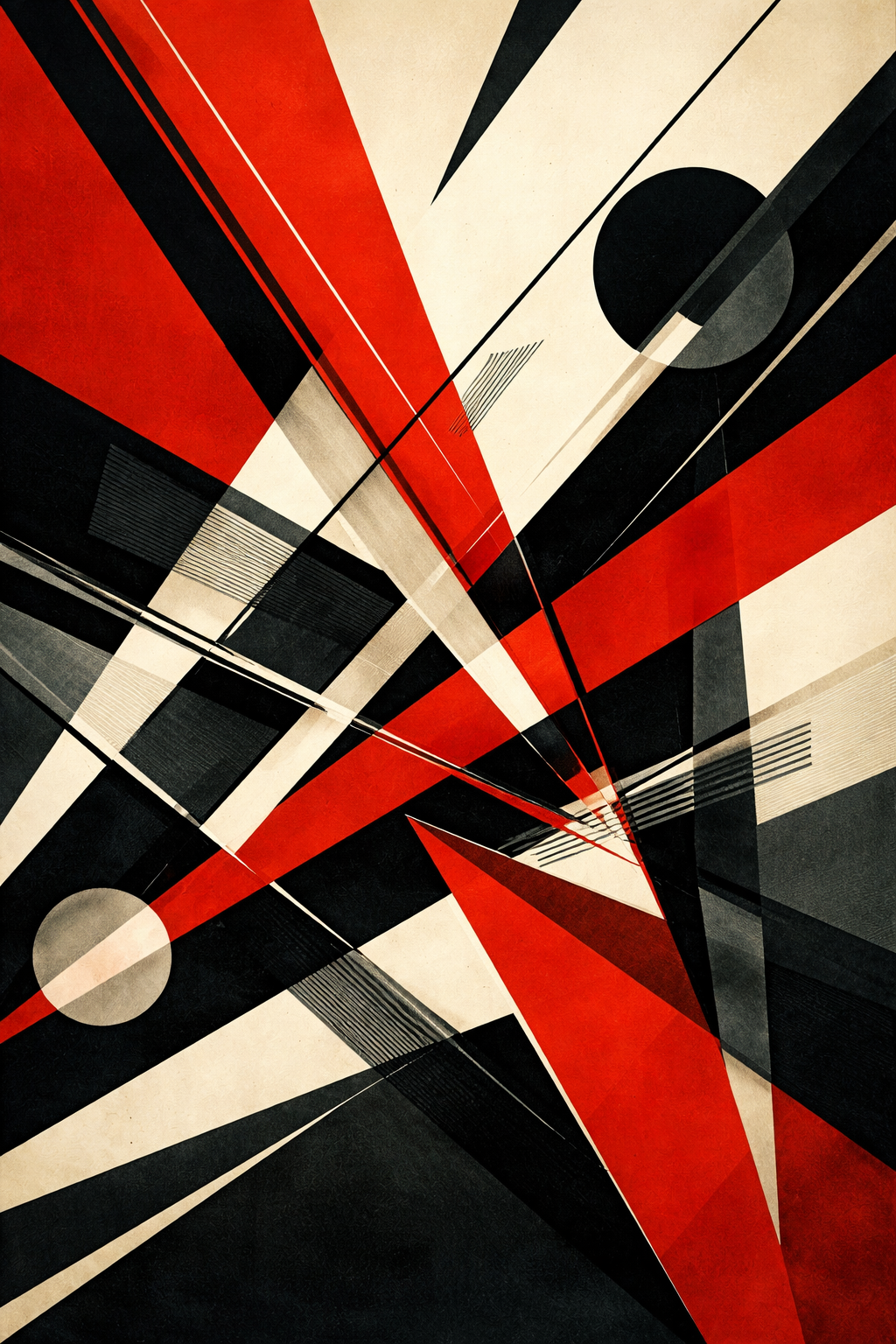
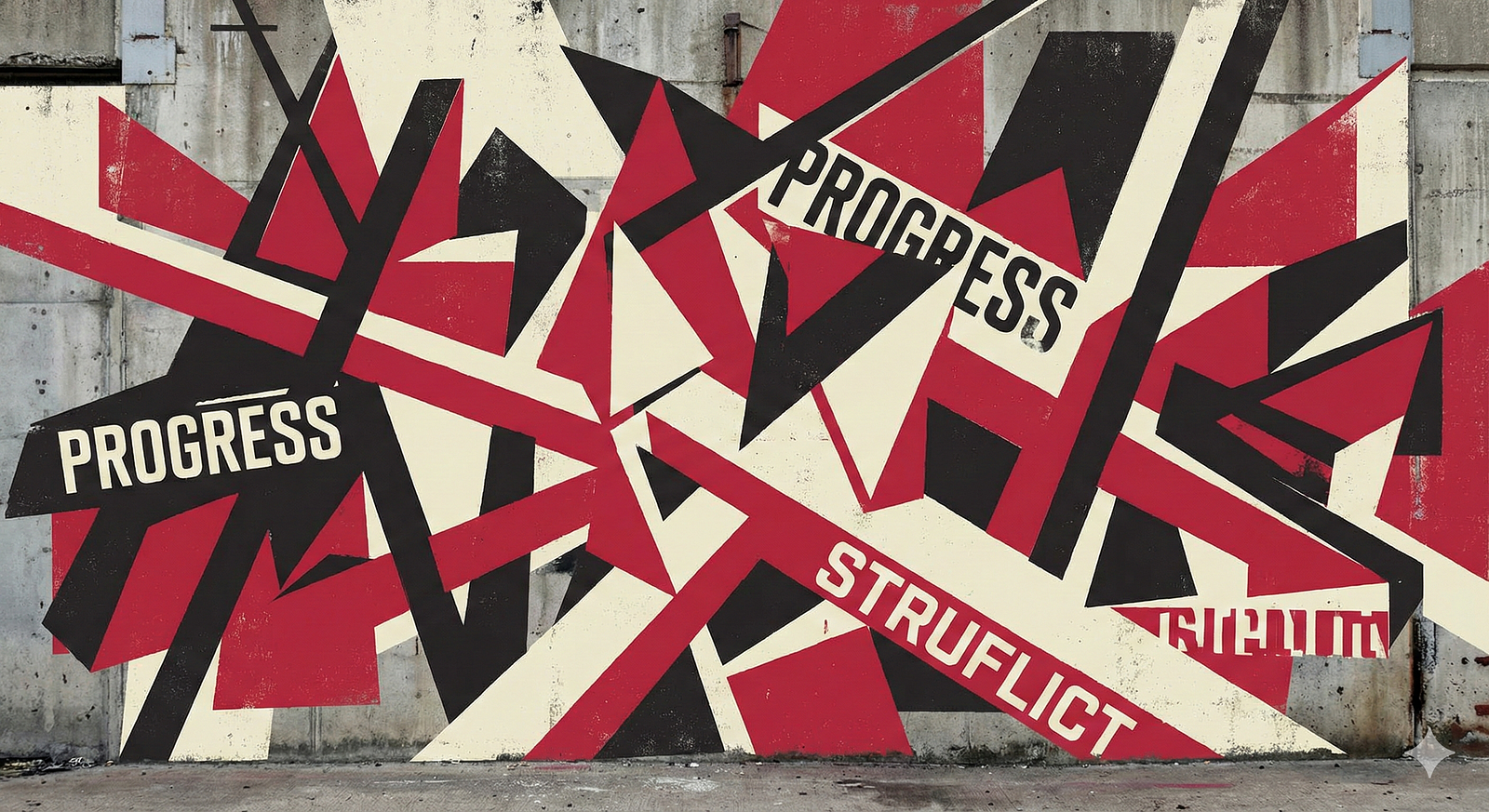
Are There Famous Artworks About Graph Theory?
Not directly, but artists have been obsessed with structure, connection, and abstraction for centuries.
Movements like Constructivism and Conceptual Art explored systems, relationships, and visual logic long before engineers put it into code.
Which is comforting, honestly. It means struggling with graphs puts you in very old company.
The Missing Mental Shift
The breakthrough moment usually comes when you stop seeing graphs as diagrams and start seeing them as stories.
Who connects to whom? Who depends on what? What happens if this link breaks?
Once you frame the problem that way, the algorithms stop feeling mystical and start feeling inevitable.
Graphs are not about clever tricks. They’re about understanding systems.
Want to Go Deeper (Without the Pain)?
If you want a clean, no-nonsense definition to anchor all of this, start with the graph theory overview at https://en.wikipedia.org/wiki/Graph_theory and then immediately look for real-world examples instead of proofs.
And if you enjoy seeing abstract ideas collide with creativity, you can explore more visual work at https://lumaiere.com where structure and experimentation tend to meet in interesting ways.

If this made graphs feel even slightly less hostile, let me know in the comments. If you still hate them, also tell me why.
Follow along for more gentle demystification of topics we were all supposed to understand years ago.
Art Prompt (Constructivism): A bold abstract composition built from sharp geometric planes and intersecting diagonals, dominated by striking reds, blacks, and off-whites. Strong contrast and dynamic angles create a sense of motion and ideological tension, as if visual elements are colliding with purpose. Flat color fields and crisp edges emphasize structure over ornament, with an energetic, poster-like intensity that feels industrial, modern, and intellectually charged.
Video Prompt: Animate the geometric forms so they slide, rotate, and collide rhythmically, with sudden shifts in scale and direction. Diagonal shapes snap into place, break apart, and reform in sync with sharp visual beats. Use punchy motion, abrupt transitions, and kinetic typography-style movement to create a fast, hypnotic visual flow that feels purposeful and mechanical.
Songs to Pair With the Video:
- Order From Chaos — Max Cooper
- Bless This Morning Year — Helios