
I once “optimized” a production server by deleting the folder that was, how to put this gently… the entire app. Nothing bonds a team like a spontaneous all-hands resurrection. In the spirit of “we’ve all borked something,” let’s tour some of history’s most spectacular faceplants. Laugh, learn, and maybe double-check before you hit delete.
The Spacecraft That Forgot to Do the Math
In 1999, the Mars Climate Orbiter vanished because one team calculated thrust in pound-seconds and another expected newton-seconds. Translation: someone mixed up imperial and metric, and $125 million went poof in the Martian atmosphere. NASA later immortalized the lesson in unit conversions; you can read the saga in all its cringe on Mars Climate Orbiter (Wikipedia).
Takeaway: Friends don’t let friends ship without units.

The Soda That Gaslit a Nation
Coca-Cola tried to dethrone itself in 1985 by replacing a beloved classic with New Coke. Spoiler: people hated it so much that the original recipe returned with a “Classic” label, like a sheepish apology printed in cursive. The whole fizzy fiasco is preserved at New Coke (Wikipedia).
Takeaway: If your brand is a security blanket, maybe don’t set it on fire.
A Ship That Mistook Ice for a Suggestion
RMS Titanic had watertight compartments — great! — that weren’t watertight at the top — less great. Combine that with too few lifeboats and a very confident iceberg, and you’ve got a maritime masterclass in risk mismanagement. Dive into the details at RMS Titanic (Wikipedia).
Takeaway: “Probably fine” is not a risk strategy.

The Merger That Set a Pile of Money on Fire
In 2000, AOL and Time Warner created a media super-chimera worth roughly $350 billion. By 2009, the marriage ended in one of the most catastrophic corporate splits of all time. All the high-tempo synergy in the world couldn’t fix a mismatch that fundamental. The post-mortem is at AOL–Time Warner (Wikipedia).
Takeaway: Culture eats strategy for breakfast… and sometimes lunch and dinner.
The Rocket That Kept Trying (and Exploding)
The Soviet N1 moon rocket launched four times. It failed four times. The second attempt basically turned the pad into modern art. Ambition: A+. Reliability: needs work. The whole boom-boom ballet is at N1 rocket (Wikipedia).
Takeaway: Iteration is noble. Also, test stands are your friends.

The “This Is Fine” O-Ring
In 1986, Space Shuttle Challenger launched in unusually cold weather. Engineers had warned about the O-rings; tragedy followed. It remains a sobering case study in how decision pressure and normalization of deviance can override caution. Start with Rogers Commission Report (Wikipedia).
Takeaway: If your system whispers “no,” don’t let the schedule shout “yes.”
When Privacy Took a Vacation
The Cambridge Analytica affair showed how a quiz app could siphon data from millions of users and fling it into the political arena. It kicked off years of platform soul-searching and regulatory interest. Peek at the timeline via Cambridge Analytica (Wikipedia).
Takeaway: “Move fast and break things” sometimes breaks trust.
The Car That Arrived Before Anyone Wanted It
Ford’s Edsel (1958) had a marketing budget so big it needed its own zip code — and still face-planted. Wrong price, confused positioning, funky styling, and the worst timing since my last dad joke. Autopsy here: Edsel (Wikipedia).
Takeaway: A product for “everyone” is a product for no one.
The Boat That Parked Sideways
In 2021, the Ever Given wedged itself across the Suez Canal, freezing ~12% of global trade like a cosmic “BRB.” Countless memes and a very tired excavator later, it floated free. The logjam that launched a thousand supply-chain think pieces lives at Ever Given (Wikipedia).
Takeaway: Single points of failure love to make headlines.

The City That Glowed (The Bad Kind)
The 1986 Chernobyl disaster wasn’t one blunder; it was a Jenga tower of them — flawed reactor design, unsafe test procedures, and delayed responses. It remade nuclear policy and emergency doctrine worldwide. Primer: Chernobyl disaster (Wikipedia).
Takeaway: Complex systems demand humility — and checklists.
So… What Do We Do With Our Own Oops?
- Document the dragon. Write what happened while it’s fresh. Future-you will hug you.
- Build guardrails, not guilt. Feature flags, backups, code reviews, change windows — boring and beautiful.
- Normalize the post-mortem. Blameless ≠ toothless. Name the causes, not the culprits.
- Cache the lesson. Turn fixes into habits: runbooks, linters, preflight checks, dashboards.
- Laugh (a little). Not at the damage, but at the absurdity. Humor is the WD-40 of learning.
If history can shrug, learn, and iterate, so can we. Today’s “I deleted prod” is tomorrow’s “I automated the recovery.” Drop your favorite historical blunder — or your own sanitized anonymized whoops — in the comments. I read them all (ideally before deleting anything important).

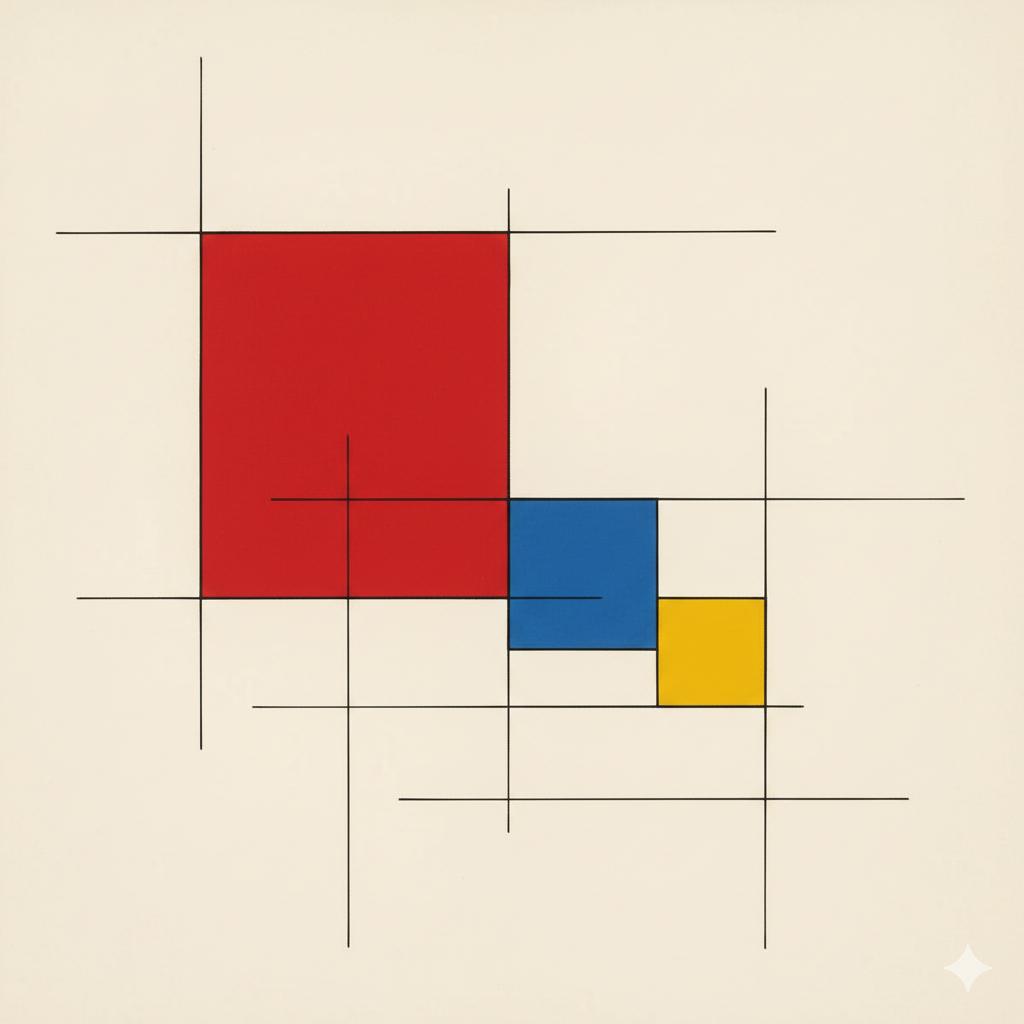
Art Prompt (Abstract/Geometric): A crisp, grid-driven composition of intersecting rectangles and primary colors on a clean ivory field, balanced by hairline black rules that anchor the plane. Emphasize asymmetrical harmony: a large red block offset by smaller blue and yellow forms, negative space doing as much work as pigment. Invoke the quiet rigor of early 20th-century geometric minimalism with matte textures and razor-sharp edges — calm, formal, and cool to the touch.
Video Prompt: Start on a blank ivory canvas. Snap in thin black lines that form a satisfying grid; rectangles slide into place with gentle, magnetic clicks. Primary color panels pulse softly in time with ambient beats, then shuffle positions in clean, jump-cut choreography. Brief close-ups reveal paper grain and brushed matte texture before pulling back to a pristine, looping composition that resolves on a perfectly balanced frame.
Song Pairings:
- “Dance Yrself Clean” — LCD Soundsystem
- “Genghis Khan” — Miike Snow
Follow for more delightful disasters and drop your best blunder below — bonus points for what you learned and how you’d prevent it next time. Let’s turn our “oh no” into “oh, now I get it.”