
Long before “good vibes only” became a lifestyle slogan, the ancient Persians were already running a cosmic drama featuring the OG positivity guru and his eternal buzzkill. On one side: Ahura Mazda, the Zoroastrian god of light, wisdom, and spiritual hygiene. On the other: Angra Mainyu, aka Ahriman, the original bringer of bad moods, malware, and metaphorical mold in the spiritual crawlspace.
Let’s break it down.
Ahura Mazda: The Big Lightbulb in the Sky
Ahura Mazda isn’t just a good guy. He’s the good guy. Supreme being, creator of everything worth Instagramming, and the mastermind behind the moral universe in Zoroastrianism. His name literally means “Wise Lord,” and he’s all about order, truth, and ethical to-do lists.
He doesn’t micromanage, though. He gives humans free will — probably with a little “choose wisely” wink. He created the world and stocked it with helpful things like fire, cows, and the concept of doing your taxes on time. And instead of constantly interfering like some divine helicopter parent, Mazda hands out wisdom and lets you decide whether you want to follow the path of Asha (truth and harmony) or be a total Ahriman.

Ahriman: Chaos in a Beard
Ahriman (Angra Mainyu if you’re feeling fancy) is the personification of all things awful. Think of him as the spiritual equivalent of a YouTube comment section during an election year.
He didn’t create the world — he infected it. According to Zoroastrian myth, he saw the good thing Mazda had going and decided to do his best “Home Alone villain” impression, booby-trapping the moral universe with lies, disease, and bad fashion choices. His main hobby? Ruining stuff. If Mazda gives you fire, Ahriman sends the smoke alarm into a panic. If Mazda offers wisdom, Ahriman slides into your DMs with misinformation.
But here’s the twist: Ahriman isn’t an equal rival. He’s a temporary blip. Zoroastrianism believes good will ultimately triumph, Ahriman will be banished, and the world will get a divine reset — no pop-ups, no viruses, just eternal peace and, presumably, really good hummus.

Free Will and Cosmic Drama
Zoroastrianism is one of the first religions to introduce the idea that humans get to pick sides in this spiritual WWE match. You’re not born guilty or saved by default — you make choices. You choose Asha (order) or Druj (chaos). Think of it like Pokémon, but your starter isn’t a critter — it’s your conscience.
Mazda and Ahriman don’t duke it out directly like some gods with rage issues. Instead, their conflict plays out in every human decision, every fire lit in honor of purity, and every moment you consider rage-tweeting but decide to just drink tea instead.
Legacy: More Than Just Ancient Fire Worship
Zoroastrianism inspired tons of later religions. Ideas like heaven and hell, angels and demons, final judgment? All part of the Mazda Starter Pack. Ahura Mazda was basically the template for later monotheistic gods, while Ahriman was the prototype bad guy who paved the way for Satan, Loki, and that one coworker who always steals your lunch.
So the next time you’re torn between doing the right thing or the deliciously chaotic one, remember: there’s a cosmic soap opera playing out, and you’ve got a guest-starring role. Just try not to side with the guy who invented paper cuts.

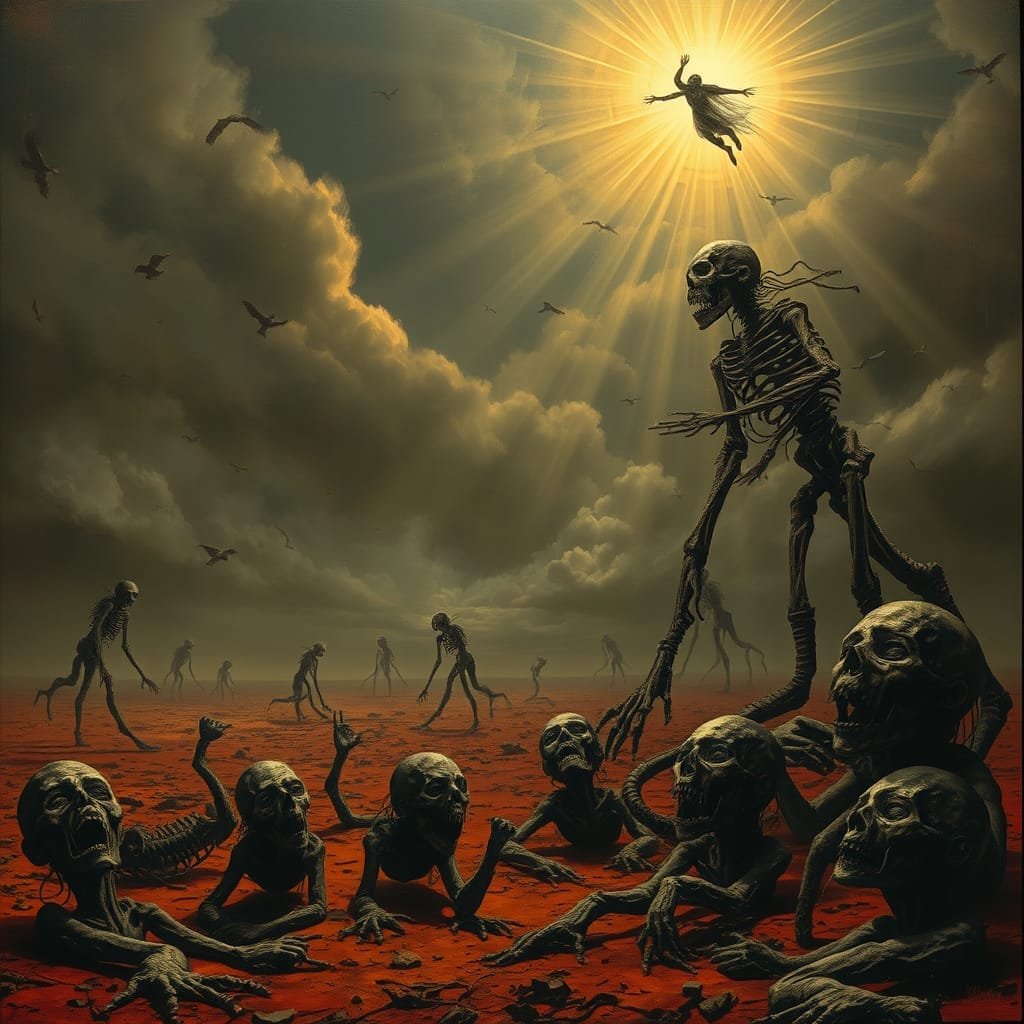
Art Prompt: A hauntingly beautiful surrealist composition in the style of Zdzisław Beksiński. The scene features a windswept, crumbling plain with skeletal structures twisted into strange, organic forms. A luminous figure radiates warmth from the sky above, casting gold and silver rays over a darkened, rust-red landscape. Below, shadowy forms writhe in chaotic disarray, their distorted faces captured mid-scream, echoing the battle between light and decay. The atmosphere is otherworldly, solemn, and layered with tension — a dreamscape born of cosmic struggle.
Video Prompt: Begin with slow, sweeping pans across a decaying alien terrain bathed in crimson twilight. Pulsing shadows shift and crawl as distorted echoes fill the air. As music swells, introduce a radiant figure descending in a shaft of golden light, scattering the shadows like broken glass. Transition into quick, rhythmic cuts of chaos and order colliding — cracked structures rebuilding in reverse, ghostly figures recoiling into smoke. Finish with a sudden stillness as light consumes the frame. A perfect visual parable of conflict, redemption, and silence.

Song Recommendations:
- “Elegia” by New Order
- “We Move Lightly” by Dustin O’Halloran
What do you think — do you side with the cosmic order of Mazda, or are you occasionally tempted by a little Ahriman-grade mischief? Drop your thoughts in the comments and don’t forget to follow for more ancient drama with a modern twist.